Tracing the Path of TCM History Through Classic Texts
- 时间:
- 浏览:147
- 来源:TCM1st
If you're diving into Traditional Chinese Medicine (TCM), you’re not just picking up a health trend—you’re stepping into a legacy that spans over 2,000 years. As someone who’s spent years analyzing ancient healing systems, I can tell you: the real foundation of TCM isn’t in modern supplements or trendy acupuncture clinics—it’s in the classic texts.
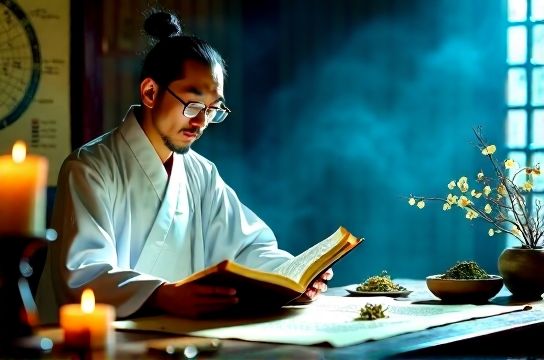
These aren’t dusty books to collect shelf wear. They’re living blueprints. Think of them as the original 'source code' for holistic healing. From diagnosing imbalances to prescribing herbal formulas, the wisdom packed into these works still shapes how practitioners treat patients today.
The Big Four: Core Texts That Built TCM
While hundreds of manuscripts exist, four stand out as pillars. Here's a quick breakdown:
| Text | Period | Key Contribution | Still Used Today? |
|---|---|---|---|
| Huangdi Neijing (The Yellow Emperor’s Inner Canon) | Warring States – Han Dynasty (c. 300 BCE – 100 CE) | Laid down yin-yang theory, five elements, and organ systems | Yes – foundational in all TCM education |
| Shanghan Lun (Treatise on Cold Damage) | 220 CE | Pioneered pattern diagnosis based on external pathogens | Yes – especially in herbal medicine |
| Shennong Bencao Jing (Divine Farmer’s Materia Medica) | c. 200 CE | Classified 365 medicinal substances by potency and function | Yes – basis for modern herbology |
| Jin Kui Yao Lue (Essential Prescriptions from the Golden Cabinet) | 220 CE | Expanded internal disease treatment with complex formulas | Yes – widely referenced clinically |
Let’s be real: reading these in classical Chinese is no easy feat. But even in translation, they offer clarity on *why* TCM works—not just *how*. For example, the Huangdi Neijing doesn’t just describe acupuncture points; it explains how energy flows change with seasons, emotions, and diet—something many modern clinics overlook.
Why These Texts Still Matter
You might wonder: can ancient knowledge really apply today? The answer is yes—if interpreted wisely. A 2018 study published in Frontiers in Pharmacology found that 70% of commonly used herbal formulas in clinical practice trace back directly to the Shanghan Lun.
And it’s not just herbs. The diagnostic framework from these classics—like identifying a “Taiyang” or “Shaoyin” pattern—is still taught in top schools like Beijing University of Chinese Medicine. In fact, graduates must pass exams on these texts to become licensed.
But here’s the catch: not all modern TCM is rooted in this depth. Some clinics simplify treatments to fit fast-paced lifestyles. That’s where knowing the source material gives you an edge. When you understand the original intent behind a formula, you can spot authentic practices from diluted versions.
Want to go deeper? Start with annotated translations of the Huangdi Neijing or Shanghan Lun. Better yet, join a study group—many are online and led by experienced practitioners. Because when it comes to mastering Traditional Chinese Medicine, going back to the roots isn’t old-school. It’s smart science.