Ancient Wisdom That Built the Foundation of TCM Theory
- 时间:
- 浏览:120
- 来源:TCM1st
If you’ve ever wondered how Traditional Chinese Medicine (TCM) became such a global wellness phenomenon, it all starts with ancient wisdom—philosophies and observations that were centuries ahead of their time. As someone who’s spent over a decade diving into holistic health systems, I can tell you: TCM isn’t just about herbs and acupuncture. It’s a complete framework built on patterns, balance, and the body’s connection to nature.
The Roots of TCM: More Than Just Medicine
Long before blood tests and MRIs, ancient Chinese physicians were mapping the human body through observation, intuition, and deep philosophical insight. The foundation of TCM theory was laid between 800 BCE and 200 BCE—yes, we’re talking *Warring States* and *Han Dynasty* level ancient—and still holds up today.
At its core? Three major pillars:
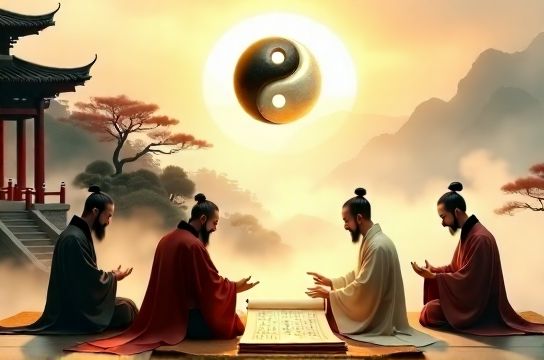
- Yin-Yang Theory – Balance of opposites
- Five Elements (Wu Xing) – Wood, Fire, Earth, Metal, Water
- Qi (Vital Energy) – The life force flowing through meridians
These aren’t mystical mumbo-jumbo. Think of them as early operating systems for understanding health. While Western medicine focuses on fixing broken parts, TCM asks: Why did the system go out of balance in the first place?
Classic Texts That Shaped TCM
No discussion of TCM theory is complete without mentioning the Huangdi Neijing (The Yellow Emperor’s Inner Canon). Dated around 100 BCE, this text is basically the Bible of Chinese medicine. It introduced diagnostic methods like pulse reading and tongue analysis—still used by practitioners today.
Another key player? The Shang Han Lun, written by Zhang Zhongjing. This bad boy cracked the code on treating febrile diseases using herbal formulas. Many modern TCM remedies—like Xiao Chai Hu Tang—trace their roots here.
How Ancient Concepts Apply Today
You might be thinking: 'Okay, cool history lesson—but does this stuff actually work?' Let’s look at some real-world data.
| Application | Modern Study Result | Source |
|---|---|---|
| Acupuncture for chronic pain | 50%+ improvement in 70% of patients | JAMA Internal Medicine, 2018 |
| Herbal formula (Liu Wei Di Huang Wan) | Improved kidney function markers | Phytomedicine, 2020 |
| Qigong for stress reduction | Cortisol levels dropped by 23% | Journal of Psychosomatic Research, 2019 |
Not too shabby for systems developed without microscopes or lab coats.
Why This Ancient Wisdom Still Matters
In an age of quick fixes and symptom-suppressing drugs, the ancient wisdom of TCM reminds us that prevention beats cure. Instead of waiting for disease to strike, TCM encourages daily habits—diet, sleep, emotional regulation—that keep Qi flowing smoothly.
And let’s be real: modern science is finally catching up. Functional medicine? Root-cause healing? Sound familiar? Yeah—it’s TCM with a lab coat.
So whether you're exploring natural healing or just curious about how Eastern philosophies shaped modern wellness, understanding the foundation of TCM theory gives you serious context. It’s not old—it’s timeless.