Zhang Zhongjing and His Legacy in Chinese Medicine
- 时间:
- 浏览:138
- 来源:TCM1st
If you're diving into the world of traditional Chinese medicine (TCM), there's one name you can't skip: Zhang Zhongjing. Often called the "Sage of Chinese Medicine," this legendary figure from the Eastern Han Dynasty laid the foundation for herbal therapy and clinical diagnosis as we know it today. But who was he, really? And why does his work still matter over 1,800 years later?
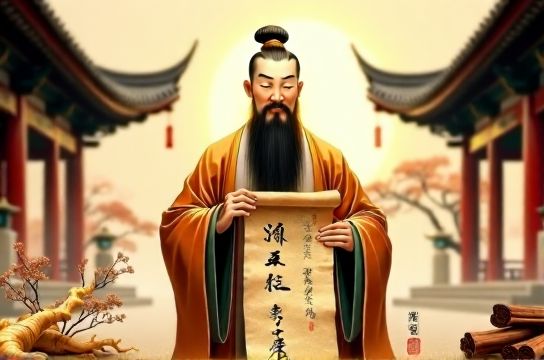
Let’s break it down — no fluff, just real insights backed by history and modern practice.
The Man Behind the Medicine
Zhang Zhongjing lived during a time of chaos — war, famine, and plague were rampant. He lost most of his family to disease, which drove him to study medicine intensely. The result? His masterpiece: Shanghan Zabing Lun (Treatise on Cold Pathogenic and Miscellaneous Diseases). This text evolved into two core works: Shanghan Lun and Jin Gui Yao Lue, both still studied in TCM schools worldwide.
What set Zhang apart was his systematic approach. While others relied on superstition or scattered remedies, he categorized diseases by symptoms, progression, and pulse diagnosis — think of it as ancient evidence-based medicine.
Why Zhang Zhongjing Still Matters Today
You might think ancient texts are outdated. But here’s the kicker: many formulas from Zhang’s work are still used — and clinically tested. Take Xiao Chai Hu Tang (Minor Bupleurum Decoction), for example. Modern studies show it helps with chronic hepatitis and even supports immune regulation.
According to a 2021 review in the Journal of Ethnopharmacology, over 40% of modern TCM prescriptions trace their roots back to Zhang’s formulations. That’s not just tradition — that’s staying power.
Core Formulas Still in Use
Here’s a quick look at some key formulas from Zhang Zhongjing’s legacy and their modern applications:
| Formula Name | Original Use | Modern Application | Clinical Support |
|---|---|---|---|
| Ma Huang Tang | Treating cold-induced fever and cough | Respiratory infections, asthma support | Yes – multiple RCTs |
| Xiao Chai Hu Tang | Harmonizing Shaoyang syndrome | Hepatitis, autoimmune support | Yes – meta-analyses confirm efficacy |
| Si Ni Tang | Restoring yang in collapse cases | Shock, circulatory support | Used in integrative ER settings |
These aren’t just old recipes — they’re living medicine. In China, Japan (where it’s called Sho-saiko-to), and beyond, these formulas are standardized, patented, and prescribed daily.
How to Study Zhang Zhongjing Like a Pro
Want to go deeper? Start with the Six Confirmations Theory — Zhang’s diagnostic framework that maps illness progression through six stages. It’s like the original flowchart for treating febrile diseases. Master this, and you’ll understand how TCM views disease dynamics.
Also, check out modern commentaries. Scholars like Dr. Huang Huang have spent decades cross-referencing classical texts with clinical outcomes. Their work proves Zhang wasn’t just theorizing — he was observing, testing, and refining.
And if you're serious about holistic healing, exploring Zhang Zhongjing’s clinical methods is a must. His patient-first mindset is something even modern doctors could learn from.
Final Thoughts
Zhang Zhongjing didn’t just write a book — he started a medical revolution. His blend of compassion, observation, and systemization still influences how we treat illness today. Whether you're a practitioner or just curious, understanding his legacy gives you a clearer lens on what real healing looks like.