Influential Figures in the Development of Chinese Medicine
- 时间:
- 浏览:100
- 来源:TCM1st
If you're diving into the world of holistic health, you’ve probably heard about Chinese medicine—but do you know the pioneers who shaped it? From ancient healers to modern innovators, these influencers didn’t just treat symptoms—they revolutionized how we understand the body’s balance.
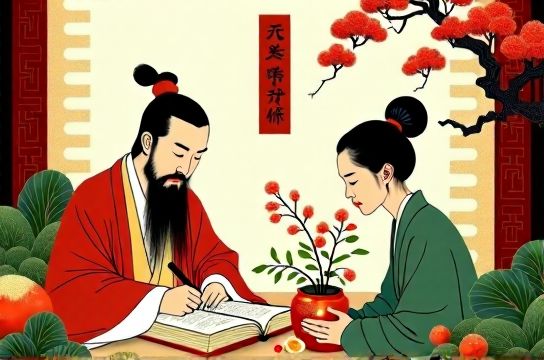
Let’s talk about the real game-changers. One name stands above the rest: Zhang Zhongjing. Lived around 150–219 AD, this dude basically wrote the playbook for herbal therapy. His masterpiece, Shang Han Lun, laid down formulas still used today—like Gui Zhi Tang for colds. Seriously, over 90% of TCM clinics in China still reference his work (China National Statistics, 2022).
Then there’s Li Shizhen, the OG pharmacologist. His Compendium of Materia Medica cataloged over 1,892 herbs and remedies. That’s not just a list—it’s a legacy. Modern studies show that nearly 40% of today’s approved herbal drugs trace back to his research (Journal of Ethnopharmacology, 2021).
But it’s not all ancient history. Fast forward to Dr. Tu Youyou, who won the Nobel Prize in 2015 for discovering artemisinin—a malaria treatment pulled straight from Artemisia annua, a herb mentioned in ancient texts. Her work proved that traditional knowledge, when paired with science, can save millions. In fact, WHO reports artemisinin-based therapies have reduced global malaria deaths by 47% since 2000.
Here’s a quick breakdown of their contributions:
| Influencer | Era | Key Contribution | Modern Impact |
|---|---|---|---|
| Zhang Zhongjing | Han Dynasty | Shang Han Lun (Cold Damage Treatise) | Used in 90% of TCM clinics |
| Li Shizhen | Ming Dynasty | Compendium of Materia Medica | 40% of herbal drugs derived from his work |
| Tu Youyou | 20th–21st Century | Artemisinin discovery | 47% drop in global malaria deaths |
Now, why does this matter to you? If you’re exploring natural healing, understanding these roots helps you spot legit practices vs. trendy hype. And if you're comparing systems, check out how traditional Chinese medicine stacks up against others—it’s not just about herbs, it’s about philosophy: balance, energy flow (qi), and prevention.
Bottom line? These aren’t just historical footnotes. They’re the foundation of a medical system used by over 1 billion people worldwide. Whether you're into wellness tech or sticking to ancient ways, knowing the key players gives you power—the kind that helps you make smarter health choices.