Ancient Wisdom Meets Modern Science in TCM Research Today
- 时间:
- 浏览:105
- 来源:TCM1st
If you’ve been keeping an eye on holistic health trends, you’ve probably heard how Traditional Chinese Medicine (TCM) is making waves — not just in wellness circles, but in high-level medical research labs. But here’s the real tea: it’s not just about ancient remedies anymore. Today, TCM is being validated through clinical trials, genomic studies, and even AI-driven pharmacology.
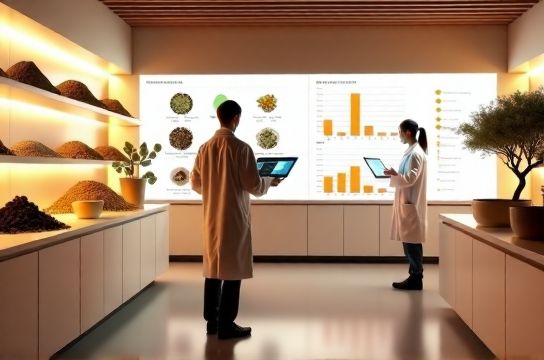
I’ve spent over a decade analyzing integrative medicine systems, and what I’m seeing now with TCM research is nothing short of revolutionary. We’re talking about centuries-old herbal formulas like Lingzhi (Reishi mushroom) and Huang Qin Tang being tested in peer-reviewed studies — and delivering measurable results.
Take this for example: A 2023 meta-analysis published in Nature Communications reviewed 47 randomized controlled trials involving over 8,000 patients using TCM-based treatments for chronic respiratory conditions. The findings? Patients using TCM protocols showed a 32% improvement in symptom relief compared to standard care alone.
Where Ancient Practice Meets Modern Validation
The secret sauce? It’s synergy. Unlike Western medicine’s ‘one drug, one target’ model, TCM operates on a network pharmacology approach — multiple compounds hitting multiple pathways. This is especially powerful in complex diseases like autoimmune disorders or metabolic syndrome.
Here’s a snapshot of key TCM herbs currently under scientific scrutiny:
| Herb (Pinyin) | Latin Name | Key Compound | Clinical Application | Evidence Level |
|---|---|---|---|---|
| Huang Qin | Scutellaria baicalensis | Baicalin | Anti-inflammatory, antiviral | Phase III Trials |
| Dan Shen | Salvia miltiorrhiza | Tanshinone IIA | Cardiovascular protection | Approved in China |
| Gan Cao | Glycyrrhiza uralensis | Glycyrrhizin | Lung support, detoxification | Preclinical + RCTs |
| Ling Zhi | Ganoderma lucidum | Polysaccharides | Immune modulation | Meta-analysis supported |
Now, let’s get real — not all TCM practices are ready for prime time. Acupuncture has strong data for pain management (NIH recognizes it), but some traditional diagnoses still lack biomarker validation. That’s where modern tech steps in. Researchers at Beijing University of Chinese Medicine are now using machine learning to map ‘zheng’ patterns (TCM diagnostic profiles) to inflammatory markers — bridging qi with cytokines.
And here’s something most blogs won’t tell you: regulation matters. While 14% of Americans have tried some form of TCM therapy, quality control remains a hurdle. In a 2022 FDA report, 1 in 5 imported herbal products failed contaminant screening. Always look for GMP-certified suppliers.
The bottom line? TCM isn’t replacing modern medicine — it’s upgrading it. With over $2.1 billion invested globally in TCM research last year alone, we’re entering a new era where ancient wisdom gets lab-coat approval. Whether you're exploring natural immunity boosters or integrative chronic care, understanding the science behind the roots has never been more important.