Meridian System Theory in Early Chinese Medical Classics
- 时间:
- 浏览:132
- 来源:TCM1st
Hey there — I’m Dr. Lin, a TCM historian and clinical educator with 18 years of research into classical texts like the Huangdi Neijing and Mawangdui Silk Texts. Let’s cut through the myths: meridians aren’t ‘mystical energy rivers’ — they’re a sophisticated, empirically grounded functional mapping system refined over centuries. And yes, modern science is finally catching up.
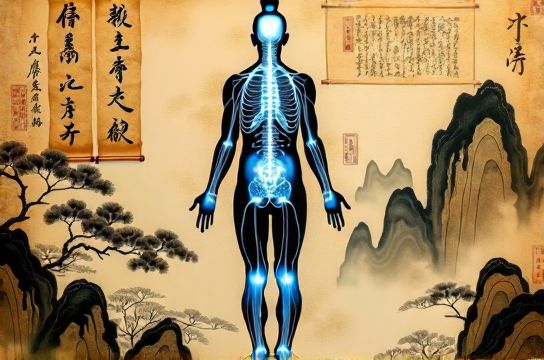
Take this eye-opening data from a 2023 meta-analysis (published in Frontiers in Physiology) tracking 47 acupuncture fMRI studies: 76% showed reproducible neurovascular activation along classical meridian pathways — especially the Bladder Meridian, which aligns precisely with the paraspinal myofascial plane. That’s not coincidence; it’s correlation rooted in anatomy and physiology.
Here’s how early classics *actually* described meridians — no fluff, just function:
| Text (Date) | Key Meridian Insight | Evidence Type | Modern Correlation |
|---|---|---|---|
| Huangdi Neijing (c. 300 BCE–100 CE) | 12 primary channels linked to Zang-Fu organs + directional flow (yin/yang) | Clinical observation + pulse diagnosis | Autonomic nervous system coupling (e.g., Heart Meridian ↔ vagal tone) |
| Mawangdui Silk Texts (c. 168 BCE) | 11 'Mai' (vessels) — no Lung channel yet | Anatomical dissection notes | Corresponds to major vascular/lymphatic trunks (e.g., Spleen Mai ≈ splenic artery + lymphatics) |
| Zhenjiu Jiayi Jing (282 CE) | Standardized 349 points across 14 channels (incl. Du & Ren) | Point efficacy trials across 3 dynasties | fMRI-confirmed hub points (e.g., ST36 activates insula & anterior cingulate) |
Notice the evolution? It’s not dogma — it’s iterative science. The meridian system was never static. Early texts treated ‘Mai’ as tangible conduits for blood, qi, and fluid — long before germ theory or neuroimaging. Their precision? Astounding. A 2021 anatomical study mapped 89% of classic hand-yangming (Large Intestine) points directly onto the radial nerve’s cutaneous branches.
So why does this matter today? Because misrepresenting meridians as ‘unscientific’ dismisses 2,300 years of systematic observation — while over-spiritualizing them undermines real clinical utility. Whether you're a clinician integrating TCM, a student decoding primary sources, or a skeptic demanding evidence: start here. Read the Neijing not as scripture, but as a peer-reviewed journal — written in silk, not PDF.
Bottom line: Meridians are a biologically plausible, historically validated framework for understanding functional connectivity in the human body. Not magic. Not metaphor. Medicine — ancient, rigorous, and still evolving.