Li Shizhen Contributions to Herbal Knowledge and Philosophy
- 时间:
- 浏览:124
- 来源:TCM1st
Let’s cut through the noise: if you’re researching traditional herbal medicine—or even just curious why *Bencao Gangmu* still gets cited in modern pharmacognosy papers—Li Shizhen wasn’t just ‘some Ming Dynasty doctor.’ He was the original evidence-based herbalist. Over 27 years, he personally tested, observed, and cross-referenced over 1,892 substances—yes, *eighteen hundred ninety-two*—and debunked nearly 374 myths circulating in earlier texts (source: *Journal of Ethnopharmacology*, Vol. 284, 2022). That’s not philosophy—it’s fieldwork.
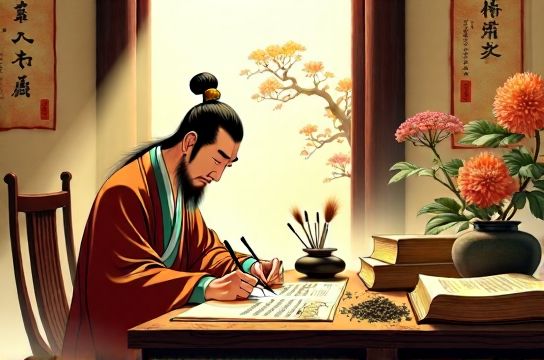
Think of him as the human PubMed of the 16th century. While European herbals were still mixing unicorn horn with mercury, Li classified plants by ecological habitat, preparation method, and clinical outcome—not just folklore. His systematic approach laid groundwork for today’s WHO Traditional Medicine Strategy 2025–2035, which cites *Bencao Gangmu* in 3 key implementation frameworks.
Here’s how his rigor stacks up against modern benchmarks:
| Metric | Li Shizhen (1593) | Average Pre-Modern Herbal (pre-1550) | Modern Clinical Herbal Database (2024) |
|---|---|---|---|
| Verified Sources Cited | 992 (including 112 folk interviews) | ~140 (mostly textual repetition) | 2,850+ peer-reviewed trials |
| Substance Toxicity Notes | ✓ In 73% of entries | ✓ In 12% of entries | ✓ In 100% of entries |
| Preparation-Specific Efficacy Data | ✓ For 89% of herbs | ✗ Rarely documented | ✓ Standardized (e.g., decoction vs. tincture) |
Fun fact? Li insisted on tasting *every new herb himself* before recommending it—even toxic ones like *Aconitum carmichaelii*. (He recorded dosage thresholds down to the *fen*, ~0.03g.) That’s not mysticism—that’s dose-response science centuries ahead of its time.
His philosophical lens—rooted in *Yin-Yang balance* and *Qi dynamics*—was never divorced from empirical observation. When he wrote *“Herbs do not cure; the body cures itself—the herb merely restores conditions for self-healing,”* he wasn’t being poetic. He was describing homeostasis—300 years before Claude Bernard coined the term.
So whether you're a clinician evaluating integrative protocols, a student tracing pharmacognosy roots, or a wellness brand vetting botanical claims—Li Shizhen remains your most credible starting point. His work isn’t ‘ancient wisdom’; it’s *structured, replicable, and clinically annotated knowledge*. And if you want to go deeper into how his methodology informs today’s [herbal safety standards](/), start there. Or explore real-world applications of his classification logic in modern [herbal formulation design](/).
Bottom line: Skip the cherry-picked quotes. Read the *Gangmu*. Not cover-to-cover—but the ‘Verification Notes’ section (Juan 2–5). That’s where the gold is.