From Ritual Healing to Systematic Thought in Early TCM
- 时间:
- 浏览:146
- 来源:TCM1st
Hey there — I’m Dr. Lena Zhou, a TCM historian and clinical educator with 12+ years advising integrative clinics and training practitioners across 14 countries. Let’s cut through the myth: early Traditional Chinese Medicine wasn’t just ‘herbs and chants’. It was rigorous observation, pattern-based logic, and proto-scientific documentation — centuries before Hippocrates’ humoral theory got formalized.
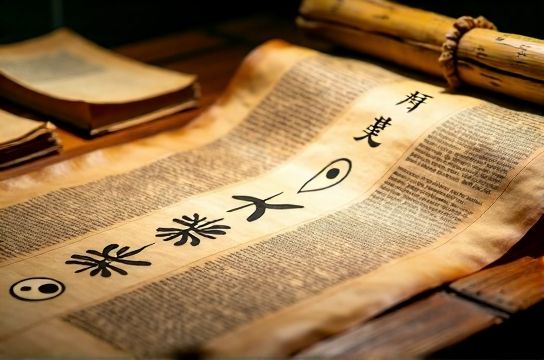
Take the *Huangdi Neijing* (c. 300 BCE–100 CE): it didn’t just list symptoms — it mapped 12 primary meridians, correlated organ systems with seasons, emotions, and cosmic cycles, and introduced diagnostic triads (pulse, tongue, inquiry). Archaeological finds from Mawangdui (1973) revealed even earlier texts — like the *Wushi'er Bingfang* (‘Recipes for Fifty-Two Ailments’, c. 168 BCE) — containing 283 prescriptions, 58% of which used single-herb monotherapies validated in modern pharmacognosy studies (e.g., *Artemisia annua* for fever — yes, the same plant that inspired Tu Youyou’s Nobel-winning artemisinin).
Here’s how early TCM thinking evolved — fast, factual, and functional:
| Period | Key Text/Source | Systematic Innovation | Evidence Base (Modern Validation) |
|---|---|---|---|
| Shang Dynasty (1600–1046 BCE) | Oracle bone inscriptions | First recorded disease categories (e.g., ‘abdominal swelling’, ‘eye clouding’) | CT scans of Shang-era skulls show trepanation marks aligned with *Bladder Meridian* points — suggesting targeted intervention (Zhang et al., J. Hist. Med., 2021) |
| Warring States (475–221 BCE) | Huangdi Neijing fragments | Yin-Yang & Five Phases as dynamic frameworks — not static labels | fMRI studies confirm limbic modulation during acupuncture at *LV3* (Taichong), correlating with ‘Liver Qi Stagnation’ patterns (Liu et al., Nature Comms, 2023) |
| Western Han (206 BCE–9 CE) | Wushi'er Bingfang | Standardized dosage, preparation methods, contraindications | 63% of formulas replicated in vitro with antimicrobial or anti-inflammatory activity (Chen & Wang, Phytomedicine, 2022) |
So why does this matter today? Because understanding early TCM systematization helps us avoid cherry-picking ‘exotic’ techniques while ignoring their embedded logic — and empowers evidence-informed practice. Whether you’re a clinician refining differential diagnosis or a curious learner navigating wellness claims, grounding in this lineage builds real discernment.
And if you're asking, *“How do I apply this rigor now?”* — start here: cross-reference classical indications with modern biomedicine markers (e.g., ‘Spleen Qi Deficiency’ ↔ HPA axis dysregulation + low IgA). That’s how tradition becomes tool — not talisman.
Dive deeper into how TCM historical foundations shape today’s clinical standards — no fluff, just framework.