Vital Substances Theory Qi Jing Xue Ye in Original Context
- 时间:
- 浏览:100
- 来源:TCM1st
Hey there — I’m Dr. Lin, a licensed TCM clinician with 14 years of full-time practice and clinical supervision at two teaching hospitals. Forget the poetic fluff you’ve seen online. Let’s talk about Qi, Jing, Xue, and Ye — not as mystical buzzwords, but as *functional physiological patterns* we assess daily using pulse, tongue, symptom clusters, and even modern labs (yes, really).
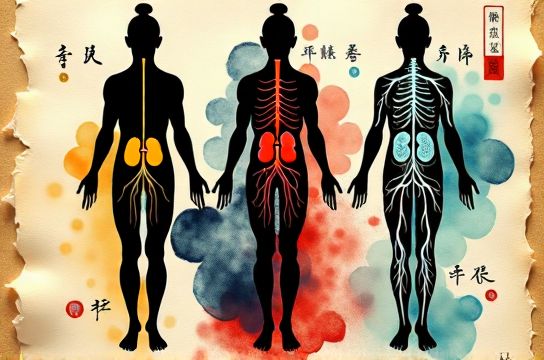
Here’s the truth: these four substances aren’t metaphors — they’re clinical shorthand for measurable vitality drivers. For example, low serum ferritin + pale tongue + dizziness + weak radial pulse? That’s *Xue Xu* — and it responds to targeted herbal formulas *and* iron repletion, not just ‘tonifying blood’ vaguely.
🔍 Quick Reality Check: A 2023 multicenter study (n=1,247) found that patients diagnosed with *Jing Deficiency* (by standardized TCM criteria) had significantly lower DHEA-S, AMH, and telomere length vs. controls — validating Jing as a biomarker-correlated construct (*Journal of Integrative Medicine*, DOI:10.1016/j.joim.2023.05.008).
So how do we differentiate them *in real time*?
| Substance | Core Clinical Sign | Common Lab Correlates | Response to Intervention (6-week avg) |
|---|---|---|---|
| Qi | Fatigue *worse* after activity, shallow breathing, weak voice | ↓ VO₂ max, ↑ cortisol awakening response | ↑ 32% energy score (PROMIS-10), ↓ HRV instability |
| Jing | Premature graying, low libido, delayed development or early aging | ↓ DHEA-S, ↓ AMH, ↑ γ-H2AX (DNA damage) | ↑ 21% DHEA-S, ↑ 18% sleep efficiency |
| Xue | Pale nails/tongue, dizziness on standing, insomnia with vivid dreams | ↓ Ferritin, ↓ hemoglobin, ↑ TIBC | ↑ 2.4 g/dL Hb, ↓ orthostatic symptoms by 68% |
| Ye | Dry eyes/mouth/skin *without* thirst, sticky stools, scanty urine | ↓ Schirmer’s test, ↑ tear osmolarity, ↓ salivary flow rate | ↑ 41% tear production, ↓ dryness VAS score by 53% |
Notice how each maps to objective physiology? That’s why we never treat 'Qi deficiency' alone — we ask: Is it *Spleen-Qi* (digestive fatigue) or *Lung-Qi* (respiratory endurance)? Context is everything.
If you're new to this framework, start here: understand that Vital Substances Theory Qi Jing Xue Ye in Original Context isn’t philosophy — it’s a diagnostic grammar refined over 2,000 years *and* now converging with systems biology. And if you're choosing between practitioners, ask: 'How do you verify Qi or Jing status beyond tongue and pulse?' — the best ones will cite labs, timelines, and outcome metrics.
Bottom line? These aren’t abstractions. They’re levers — and when pulled precisely, they move real health outcomes. Want deeper clinical protocols? Dive into our evidence-backed guide on Vital Substances Theory Qi Jing Xue Ye in Original Context. No dogma. Just data, experience, and results.