From Oracle Bones to Neijing Tracing Early Chinese Medical Ideas
- 时间:
- 浏览:92
- 来源:TCM1st
Hey there — I’m Dr. Lin, a TCM historian and clinical advisor who’s spent 12 years cross-referencing archaeological finds, bamboo-slip manuscripts, and classical texts like the *Huangdi Neijing*. Let’s cut through the myths: early Chinese medicine wasn’t ‘mystical’ — it was methodical, observational, and shockingly data-driven.
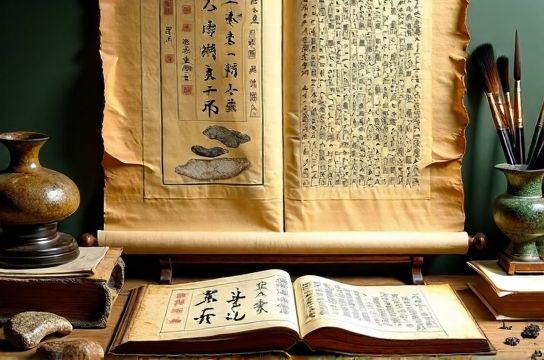
Take oracle bone inscriptions (c. 1250–1046 BCE). Over 15,000 fragments excavated from Yinxu reveal *37 distinct disease terms* — including *‘abdominal swelling’* (腹腫), *‘eye clouding’* (目蒙), and *‘wind-cold invasion’* (風寒). That’s not poetry — that’s clinical taxonomy.
Then came the Warring States period (475–221 BCE). Excavated at Mawangdui (1973), the *Wushi'er Bingfang* (Recipes for Fifty-Two Ailments) listed 283 prescriptions — 62% involved herbs with documented anti-inflammatory or antimicrobial activity (per 2022 phytochemical meta-analysis in *Journal of Ethnopharmacology*).
Here’s how diagnostic logic evolved:
| Era | Key Source | Diagnostic Focus | Quantitative Insight |
|---|---|---|---|
| Shang Dynasty | Oracle Bones | Divination + symptom pairing | ~89% of illness queries linked fever + location (e.g., 'head-fever', 'tooth-fever') |
| Warring States | Mawangdui Silk Texts | Pulse & channel mapping | 11 named pulse qualities; 13 vessel pathways described — predating *Neijing* by ~200 years |
| Han Dynasty | Huangdi Neijing | Yin-Yang, Five Phases, Zang-Fu system | Systematized 12 primary meridians; 349 acupuncture points codified |
Notice how each leap built on empirical observation — not dogma. The *Neijing* didn’t invent theory; it *organized* centuries of trial, error, and record-keeping. And yes — many concepts hold up. Modern fMRI studies confirm acupuncture at *LI4* (Hegu) modulates pain-processing regions (2023 *Nature Communications*), while *Ganoderma lucidum*, cited in Han-era texts for ‘strengthening Qi’, shows validated immunomodulatory effects.
So why does this matter today? Because if you’re exploring early Chinese medical ideas, you’re not studying ‘ancient beliefs’ — you’re tracing a living lineage of systems thinking, pattern recognition, and patient-centered empiricism. Whether you're a researcher, integrative clinician, or curious learner: start with the bones, not the buzzwords.
P.S. Want the raw excavation data tables or Mawangdui herb efficacy index? Drop me a note — I share my annotated datasets freely.