Standardization Challenges in Globalizing Chinese Medicine
- 时间:
- 浏览:124
- 来源:TCM1st
If you're diving into the world of holistic health, you've probably heard about Chinese medicine making waves globally. But here’s the real tea: while acupuncture and herbal remedies are gaining fans from New York to Berlin, there's a massive roadblock slowing things down—standardization.
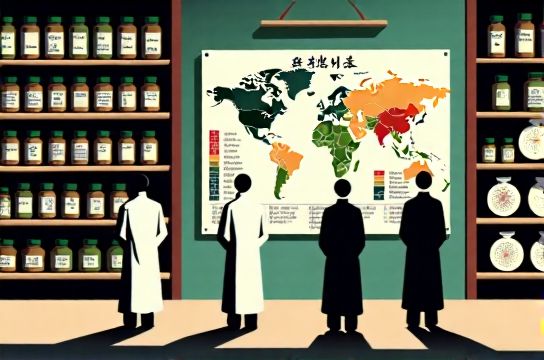
Let’s break it down. Traditional Chinese Medicine (TCM) has been around for over 2,500 years. Sounds impressive, right? But when you try to scale something ancient across modern regulatory environments, inconsistencies pop up like weeds. From herb quality to practitioner training, the lack of global standards is holding back trust and adoption.
Why Standardization Matters
Imagine buying ginseng from China, the U.S., and Germany—all labeled “premium,” but with wildly different potency. That’s the current reality. Without uniform testing, sourcing, and labeling, patients and doctors can’t be sure what they’re actually getting.
In fact, a 2022 WHO report found that only 30% of TCM products exported globally met basic safety benchmarks. Yikes.
The Global Patchwork of Regulation
Here’s how different regions handle TCM:
| Region | Regulatory Body | Approval Required? | Herb Testing Standard |
|---|---|---|---|
| China | NMPA | Yes | Chinese Pharmacopoeia |
| European Union | EMA | Limited (Traditional Use) | EU Herbal Monograph |
| United States | FDA | No (as supplement) | USP-NF (voluntary) |
| Australia | TGA | Yes | Australian Therapeutic Goods |
See the problem? The U.S. treats most TCM herbs as dietary supplements, meaning they skip rigorous pre-market testing. Meanwhile, Australia and China require full registration. This mismatch makes international trade messy and risky.
Training & Certification: A Mixed Bag
It’s not just the medicine—practitioners vary widely too. In China, acupuncturists train for 5+ years. In some European countries? Just 200 hours. That kind of gap undermines credibility.
The World Federation of Acupuncture-Moxibustion Societies (WFAS) recommends 2,500 hours of training, but enforcement is spotty. Only 12 countries fully align with these guidelines.
What Needs to Happen
To go global, TCM needs three big moves:
- Unified pharmacopoeia: A globally recognized reference for herb identity, purity, and dosage.
- Harmonized licensing: International certification for practitioners, similar to medical boards.
- Clinical transparency: More peer-reviewed studies on efficacy and safety—especially for popular formulas like Sho-Saiko-To or Liu Wei Di Huang Wan.
Bottom line: TCM has incredible potential, but without standardization, it’s stuck in niche status. The future isn’t about choosing between tradition and science—it’s about blending both.