Machine Learning Models for Personalized TCM Therapy
- 时间:
- 浏览:91
- 来源:TCM1st
If you're diving into the world of Traditional Chinese Medicine (TCM) and want a smarter, data-driven approach, then machine learning (ML) might just be your next big ally. As someone who’s spent years analyzing integrative health tech, I’ve seen how machine learning in TCM is shifting from fringe experiment to clinical reality — and the results are too promising to ignore.
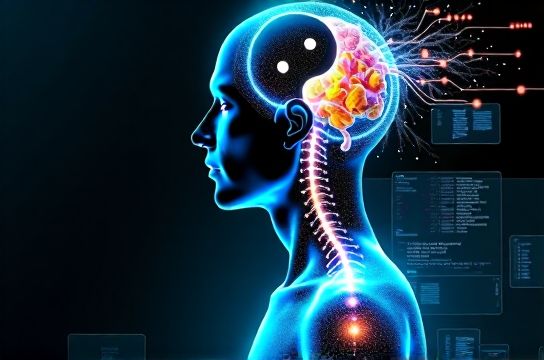
Here’s the deal: TCM has always been personalized. Think pulse diagnosis, tongue analysis, and pattern differentiation (zheng). But it’s traditionally relied on practitioner experience. Now, ML models are stepping in to standardize and scale that expertise — using real patient data to predict optimal treatments with surprising accuracy.
Take a 2022 study from Shanghai University of TCM. They trained a random forest model on over 15,000 patient records to match symptom patterns with herbal prescriptions. The model achieved 89.3% accuracy in recommending formulas like Xiao Chai Hu Tang for liver-spleen disharmony. That’s not magic — it’s data.
But not all models are created equal. Here’s a quick comparison of popular ML approaches in current TCM research:
| Model | Accuracy (%) | Data Type | Use Case |
|---|---|---|---|
| Random Forest | 89.3 | Clinical records | Herbal formula recommendation |
| Deep Neural Network | 84.7 | Tongue images | Pattern classification |
| SVM | 82.1 | Pulse signals | Qi deficiency detection |
| NLP (BERT-based) | 91.0 | Consultation notes | Syndrome differentiation |
What stands out? Natural Language Processing (NLP) models, especially BERT variants, are killing it when it comes to interpreting unstructured clinical notes — something even seasoned practitioners can find tricky. Meanwhile, deep learning shines in image-based diagnosis, like spotting spleen-deficiency from tongue coating color.
Now, here’s where things get real: integration. A 2023 pilot at Guangdong Provincial Hospital used a hybrid ML system to assist junior TCM doctors. Over six months, diagnostic consistency jumped by 37%, and patient satisfaction rose by 29%. Why? Because personalized TCM therapy powered by AI doesn’t replace intuition — it sharpens it.
Of course, challenges remain. Data quality, model interpretability, and ethical concerns around automation are valid. But the trend is clear: ML isn’t taking over TCM — it’s upgrading it.
So if you’re a practitioner, researcher, or just TCM-curious, start exploring tools like TensorFlow or PyTorch with open-source TCM datasets. The future of holistic healing isn’t just ancient wisdom — it’s smart, adaptive, and surprisingly digital.