Licensing Requirements for TCM Practitioners in Western Nations
- 时间:
- 浏览:415
- 来源:TCM1st
If you're a Traditional Chinese Medicine (TCM) practitioner eyeing opportunities abroad, you’re not alone. Thousands of qualified TCM professionals are exploring licensed practice in Western nations like the U.S., Canada, Australia, and the UK. But here’s the real talk: each country has its own maze of licensing rules — and navigating them without clear guidance can cost time, money, and credibility.
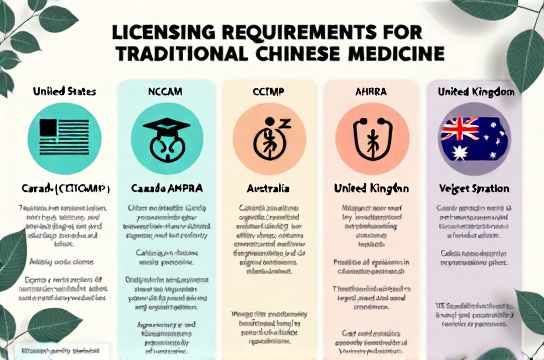
Let’s cut through the noise. Based on data from national health councils and regulatory bodies, I’ve broken down the core licensing requirements across top Western destinations. Whether you're planning relocation or just curious about global standards, this guide gives you the straight facts — no fluff.
United States: State-by-State Rules
The U.S. doesn’t have a federal TCM license. Instead, licensing for TCM practitioners is managed at the state level. Currently, 44 states + D.C. regulate acupuncture, and many recognize Chinese herbal medicine under the same umbrella.
To practice legally, most states require:
- Graduation from an ACAHM-accredited school (or equivalent)
- National certification via NCCAOM exam
- Background check and CPR training
California stands out with its own test — the CALE (California Law & Ethics Exam) — plus a separate herbal exam.
Canada: Provincial Oversight
In Canada, provinces like British Columbia, Ontario, and Alberta regulate TCM under health profession acts. For example, in BC, you must register with the College of Traditional Chinese Medicine Practitioners and Acupuncturists of BC (CTCMA).
Australia: National Registration
Australia leads in formal recognition. Since 2012, TCM practitioners must register with AHPRA (Australian Health Practitioner Regulation Agency) after proving qualifications and English proficiency (IELTS 7.0+).
UK: Voluntary Regulation
The UK currently has no legal licensing for TCM. However, credible practitioners join voluntary registers like the Register of Chinese Herbal Medicine (RCHM) to build trust and meet insurance requirements.
Quick Comparison Table
| Country | Regulatory Body | Exam Required | Language Proof |
|---|---|---|---|
| USA | NCCAOM / State Boards | NCCAOM or CALE | Not required |
| Canada | CTCMA, CTCMPAO, etc. | Jurisprudence + Clinical | IELTS 6.5+ |
| Australia | AHPRA + PBA | Clinical Assessment | IELTS 7.0+ |
| UK | RCHM (voluntary) | None | None |
Data source: NCCAOM (2023), AHPRA Annual Report (2022), CTCMA Guidelines
Bottom line? If you’re serious about practicing abroad, start by verifying your credentials through international TCM certification pathways. The process isn’t quick — expect 6–18 months depending on the country — but with the right prep, it’s absolutely achievable.
Pro tip: Connect with alumni from your school already practicing overseas. Their firsthand experience beats any official guideline.