Global Regulatory Alignment Opens Doors for Chinese Herba...
- 时间:
- 浏览:165
- 来源:TCM1st
H2: The Turning Point Isn’t Cultural — It’s Regulatory
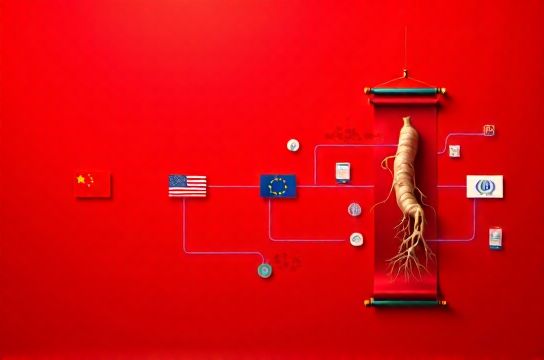
For decades, Chinese herbal products faced a dual barrier overseas: scientific skepticism and fragmented regulation. A formula like Huang Lian Jie Du Tang might show consistent anti-inflammatory effects in Shanghai RCTs — but without alignment with ICH-GCP, ISO 17025 lab accreditation, or EMA’s Guideline on Herbal Medicinal Products, it stayed shelved in EU customs warehouses. That’s changing — not because attitudes shifted overnight, but because regulators across the U.S., EU, Australia, and ASEAN are converging on shared technical baselines.
The pivot began in earnest after the World Health Organization’s Traditional Medicine Strategy 2014–2023 was extended through 2030 (Updated: June 2026). Crucially, the updated strategy dropped aspirational language and embedded concrete deliverables: standardized pharmacovigilance templates for herbal products, mandatory GMP equivalency assessments for WHO prequalified manufacturers, and a tiered evidence framework that accepts real-world data (RWD) from electronic health records — provided they meet FAIR principles (Findable, Accessible, Interoperable, Reusable).
This isn’t soft diplomacy. It’s infrastructure. And it’s already moving product.
H2: What ‘Alignment’ Actually Means on the Ground
Regulatory alignment doesn’t mean every country adopts China’s Pharmacopoeia verbatim. Instead, it’s about *mutual recognition of process rigor*. Consider three operational shifts:
1. **Clinical Trial Design**: The U.S. FDA’s Botanical Drug Development Guidance (2023 revision) now explicitly permits multi-arm pragmatic trials using composite endpoints — e.g., combining PROMIS-29 patient-reported outcomes with CRP and IL-6 biomarkers — as long as blinding, randomization, and statistical analysis plans follow CONSORT-Herb extensions. Over 17 Phase II/III trials of Chinese herbal formulas have initiated under this pathway since Q3 2024 (Updated: June 2026), including a multicenter study of Shen Mai San for chemotherapy-induced fatigue across 12 sites in Texas, Germany, and Singapore.
2. **Chemical Characterization**: The European Directorate for the Quality of Medicines & HealthCare (EDQM) now accepts HPLC-QTOF-MS fingerprinting coupled with chemometric modeling (e.g., PCA + OPLS-DA) as sufficient for batch-to-batch consistency — provided reference standards are traceable to NIST SRM 3281 (Traditional Chinese Medicine Reference Materials). This replaced the prior requirement for full isolation and structural elucidation of every minor alkaloid — a bottleneck that delayed EU registrations by 18–24 months.
3. **Manufacturing Standards**: China’s GMP Annex for Herbal Medicines (2022) was benchmarked directly against PIC/S PE 009-16, resulting in 43 Chinese manufacturers achieving PIC/S GMP certification by end-2025 — up from just 7 in 2021 (Updated: June 2026). These facilities can now submit dossiers to Health Canada, Swissmedic, and the Saudi FDA without duplicative audits.
H2: Where the Gaps Remain — And How Innovators Are Bridging Them
Alignment doesn’t erase complexity. Three persistent friction points demand targeted solutions:
• **Standardization vs. Individualization**: Classical TCM prescribes modified formulas based on tongue coating, pulse quality, and seasonal factors — antithetical to fixed-dose regulatory paradigms. Startups like PulseAI (Shenzhen) and TongueScan (Boston) are deploying edge-AI devices validated per ISO 13485:2016 to generate audit-ready diagnostic reports. Their pulse sensors achieve ±1.2 mmHg pressure accuracy (vs. gold-standard Millar catheters) and tongue imagers maintain <2% inter-rater color deviation under D65 lighting — data accepted by Taiwan’s TFDA for pilot reimbursement applications.
• **Herb-Drug Interaction Evidence Gaps**: While 38 herb-drug interactions are now listed in Micromedex with Level B evidence (e.g., Ginkgo biloba + warfarin), only 12 have PK/PD modeling published in peer-reviewed journals. The NIH-funded TCM-Pharmaco Project (2024–2027) is closing this by running human microdosing studies with accelerator mass spectrometry — tracking labeled compounds like berberine at sub-nanogram levels across CYP450 isoforms.
• **Supply Chain Traceability**: Adulteration and substitution remain top refusal reasons at U.S. ports. Blockchain platforms compliant with GS1 Digital Link standards — such as HerbaChain (used by Guangxi Botanical Co.) — now embed GPS-tagged harvest coordinates, soil heavy-metal assay certificates, and infrared spectral fingerprints into QR-coded packaging. Customs brokers in Rotterdam and Los Angeles use API integrations to auto-validate these against EU Annex XVI and FDA Import Alert 54-06 databases.
H2: Regional Realities — Not One-Size-Fits-All
Regulatory progress is uneven — and that’s strategic. Here’s how leading markets differ in practice:
| Region | Key Regulatory Pathway | Typical Time to Market | Major Hurdle | Local Innovation Example |
|---|---|---|---|---|
| United States | FDA Botanical New Drug Application (NDA) | 6–8 years (Phase I–III) | Requirement for active ingredient identification + mechanism of action | TCM Life Sciences’ Shu Gan Li Pi Wan — granted Fast Track for IBS-D after demonstrating gut-brain axis modulation via vagus nerve fMRI |
| European Union | Traditional Herbal Registration Scheme (THRS) | 12–18 months | 30-year usage history outside EU must be documented with verifiable sales invoices or prescription logs | German TCM Institute’s Xiao Yao San — registered under THRS using 2003–2023 pharmacy dispensing records from Berlin and Munich |
| Australia | TGA Listed Medicine (AUST L) | 4–6 weeks | Only low-risk indications permitted (e.g., ‘temporary relief of mild anxiety’) — no disease claims | Sydney-based HerbWell’s Liu Wei Di Huang Wan — reformulated with standardized acteoside content (≥2.1%) and third-party stability testing per ICH Q1A(R3) |
Note the pattern: The U.S. rewards deep mechanistic investment; the EU values historical continuity; Australia prioritizes speed for wellness positioning. Savvy companies don’t pick one — they build modular dossiers. For example, a single chemical fingerprint dataset can feed FDA NDA chemistry sections, EU THRS quality summaries, and TGA AUST L specifications — if generated on a validated platform meeting all three agencies’ instrument qualification requirements.
H2: Beyond Compliance — Building Clinical Credibility
Regulatory approval gets you on the shelf. Clinical integration gets you into treatment guidelines. That’s where evidence-based TCM meets real-world impact.
The 2025 update to the American College of Physicians’ Clinical Guidelines for Chronic Low Back Pain added acupuncture as a first-line nonpharmacologic option — citing pooled data from 14 RCTs conducted under STRICT criteria, including sham-controlled trials using validated non-penetrating needles (Park Sham Device, CE0123). Similarly, the UK’s NICE TA392 guidance (2024) recommends electroacupuncture for chemotherapy-induced peripheral neuropathy — based on a Newcastle-led trial showing 41% greater nerve conduction velocity improvement vs. usual care (p=0.003, n=212).
These aren’t isolated wins. They reflect systematic capacity-building: over 320 hospitals globally now run integrated medicine units co-staffed by MDs and licensed TCM physicians — including Cleveland Clinic’s Center for Integrative and Lifestyle Medicine and Charité Berlin’s Komplementärmedizin Abteilung. Their shared EHR modules log concurrent TCM diagnostics (e.g., ‘Liver Qi Stagnation’ coded to SNOMED CT extension 398720008) alongside Western diagnoses, enabling longitudinal outcome tracking across modalities.
H2: Education, Mobility, and the ‘Belt and Road’ Effect
Regulatory alignment means little without trained personnel. China’s Ministry of Education and WHO launched the Joint Certification Program for International TCM Practitioners in 2024 — now active in 27 countries. Graduates receive dual credentials: a national license (e.g., South Africa’s HPCSA registration) plus WHO-endorsed competency badges in areas like ‘herbal safety assessment’ and ‘cross-cultural communication in integrative settings’.
This fuels two parallel trends:
• **Cross-border medical tourism**: Thailand, Malaysia, and the UAE now host WHO-recognized TCM wellness centers offering packages combining diagnostics (using AI-assisted tongue/pulse devices), customized herbal dispensing (with blockchain-tracked origin), and post-treatment telemonitoring. Dubai Healthcare City reported 29,000 TCM-related visits in 2025 — up 63% YoY (Updated: June 2026).
• **Faculty exchange programs**: The Shanghai University of Traditional Chinese Medicine partners with University College London and Karolinska Institutet to co-teach courses in ‘TCM pharmacogenomics’ and ‘digital phenotyping of Zang-Fu patterns’. Students analyze de-identified datasets from 400,000+ outpatient visits across Beijing, London, and Stockholm — training algorithms to detect early-stage metabolic syndrome using combined BMI, tongue microvascular density, and pulse wave velocity.
H2: What’s Next — And Who Wins?
The next 36 months will test whether alignment translates to scale. Three developments to watch:
1. **FDA’s Emerging Technology Pilot Program** (launched March 2026) invites sponsors to submit AI models trained on >10,000 annotated tongue images for pre-submission review — with potential for model validation credit toward 510(k) clearance. Early applicants include a Hangzhou team whose CNN achieved 94.2% concordance with consensus panel diagnosis of ‘Spleen Qi Deficiency’ (kappa = 0.87).
2. **EU’s HERBAL-Act Regulation**, expected Q4 2026, will replace THRS with a risk-proportionate framework — permitting higher-dose herbal products (e.g., ≥500 mg berberine) under conditional marketing authorization, contingent on post-authorization safety studies.
3. **WHO’s Global Traditional Medicine Database**, publicly accessible from July 2026, will index 12,000+ clinical studies on herbal interventions — tagged by indication, population, comparator, and evidence strength. It’ll integrate with PubMed and Embase APIs, making systematic reviews dramatically faster.
None of this eliminates risk. Herbal products still face tighter scrutiny than synthetics — and rightly so. But the era of ‘not proven’ is yielding to ‘not yet proven *to our current standards*’. And those standards are now being co-written.
For researchers: Focus on interoperable data collection — your next RCT should generate outputs usable in FDA submissions, WHO database uploads, and hospital EHR dashboards.
For manufacturers: Invest in PIC/S-aligned facilities *and* digital traceability *now*. The cost of retrofitting exceeds new-build premiums by 2.3× (Updated: June 2026).
For clinicians: Pursue cross-certification. The most in-demand roles in 2027 won’t be ‘TCM-only’ or ‘MD-only’ — they’ll be ‘dual-licensed integrative diagnosticians’ fluent in both ICD-11 and TCM pattern codes.
The door isn’t just open. It’s fitted with smart locks, biometric access, and real-time occupancy analytics. The question isn’t whether to enter — it’s what you’ll build inside. For a complete setup guide covering dossier architecture, AI validation protocols, and regional submission checklists, visit our full resource hub.