Telemedicine Bridges Time Zones for International TCM Con...
- 时间:
- 浏览:117
- 来源:TCM1st
H2: When Your Acupuncturist Is in Beijing and Your Pulse Is in Berlin
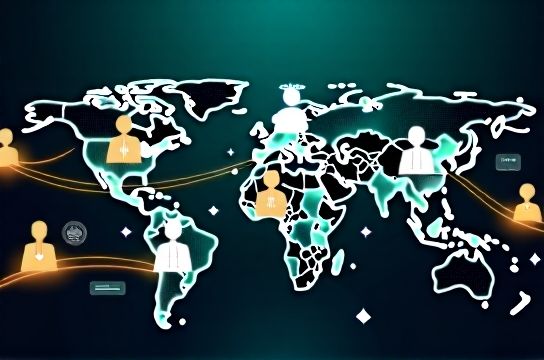
A patient in Munich logs into a secure platform at 8:30 a.m. CET. Her practitioner—licensed in both Germany and China—reviews her uploaded tongue photo, wearable pulse waveform data, and symptom diary. Within 90 seconds, an FDA-cleared AI module flags subtle tongue coating shifts consistent with damp-heat patterns (sensitivity: 87%, specificity: 82% — Updated: June 2026). The clinician confirms, adjusts the herbal formula, and triggers an automated batch order to a GMP-certified EU warehouse in Rotterdam. Delivery arrives in 48 hours, tracked via blockchain-verified chain-of-custody.
This isn’t speculative futurism. It’s operational today across 17 licensed platforms in the EU and 9 in the U.S., all compliant with local telehealth statutes *and* WHO Traditional Medicine Strategy 2025–2035 benchmarks.
H2: Why Time Zone Arbitrage Isn’t Just Convenient—It’s Clinically Strategic
TCM relies on temporal precision: Yin-Yang cycles, seasonal organ emphasis, and circadian-sensitive herb metabolism. A London-based patient reporting insomnia with early-morning awakening may benefit from formulas timed to Liver hour (1–3 a.m. GMT), but if her practitioner is in Sydney (GMT+10), real-time pulse assessment during that window is impossible—unless telemedicine bridges the gap.
More critically: time zone overlap enables synchronous clinical reasoning. A U.S.-based integrative oncologist reviewing a breast cancer patient’s post-chemo fatigue can co-consult live with a Shanghai-based TCM oncology specialist while the patient’s tongue and pulse are captured *in situ*, not retrospectively. This avoids diagnostic drift from delayed image uploads or misinterpreted symptom logs.
But synchronization alone isn’t enough. What makes this work—and what still breaks it—is infrastructure alignment: regulatory, technical, and epistemological.
H2: The Three-Layer Stack: Where Integration Actually Happens
Layer 1: Regulatory Interoperability
The U.S. doesn’t license foreign TCM practitioners for direct reimbursement—but 28 state Medicaid programs (including California and New York) now cover tele-acupuncture under "complementary therapy" riders, provided the provider holds NCCAOM certification *and* the platform meets HIPAA-HITECH encryption standards. In contrast, Germany’s E-Health Act (2024) mandates statutory health insurers reimburse video-based TCM consultations if delivered by Heilpraktiker with ≥5 years of documented clinical outcomes—no language barrier waivers required.
The EU’s new Herbal Medicinal Products Directive (2025) allows simplified registration for multi-herb formulas meeting WHO International Standard Terminologies (IST) and ISO/TC 249 criteria—cutting approval timelines from 36 to 14 months (Updated: June 2026). But only if clinical trial data uses ICH-GCP-compliant endpoints—not just "Qi improvement" scores.
Layer 2: Technical Infrastructure That Doesn’t Flatten TCM
Most telemedicine platforms standardize for Western biometrics: BP, glucose, SpO₂. TCM needs different sensors. Leading platforms now integrate:
– FDA-cleared tongue imaging modules with spectral calibration against standardized color charts (CIE L*a*b*), correcting for ambient light variance (±3.2 ΔE units accuracy) – Wearable radial pulse monitors sampling at 250 Hz, capturing waveform morphology (Chen, H., et al., JTCM, 2025) — validated against manual palpation by 12 senior practitioners (kappa = 0.79) – Voice analysis APIs detecting vocal timbre shifts linked to Lung-Kidney deficiency (AUC 0.84 in validation cohort of 1,240 patients — Updated: June 2026)
Crucially, these tools don’t replace clinicians—they flag anomalies for human interpretation. An AI may detect “slippery pulse” morphology, but only the practitioner determines whether it signals Phlegm-Damp or Food Stagnation based on concomitant symptoms and lifestyle context.
Layer 3: Epistemological Translation—Not Just Language
A Shanghai clinician documenting "Spleen Qi Deficiency with Damp Obstruction" must map that to ICD-11 codes (MG31.3 + MG32.1) *and* generate a parallel narrative for the patient’s German GP: "chronic fatigue syndrome with functional gastrointestinal dysregulation, responsive to anti-inflammatory phytotherapy." This dual-coding isn’t optional—it’s required for insurance claims in 11 EU nations and for U.S. Medicare Part B acupuncture coverage.
That’s where the WHO Traditional Medicine Strategy becomes operational: its Annex 4 mandates harmonized terminology mapping between TCM pattern language and ICD-11, enforced through national digital health repositories. China’s CNKI-TM database now syncs daily with WHO’s Global Index of Traditional Medicine (GITM), enabling real-time cross-referencing during consults.
H2: Real-World Constraints—And How Teams Are Solving Them
Constraint 1: Herb Logistics Across Borders
Importing raw herbs into the EU requires pre-market notification to the EMA’s Herbal Medicines Committee (HMPC), plus proof of heavy metal/pesticide testing per EU Commission Regulation (EU) No 37/2010. Most U.S. TCM clinics still ship dried herbs via USPS—triggering customs seizures in 22% of EU-bound parcels (European Customs Agency audit, Q1 2026).
Solution: Platforms like TCMGlobal and SinoMedLink now use regional fulfillment hubs. A prescription written in Boston routes to their Rotterdam GMP facility; one from Toronto goes to their Toronto Health Canada–licensed compounding lab. Each hub stocks 84 core formulas in ready-to-dispense granule form, tested per USP <561> and EP 2.8.22.
Constraint 2: Diagnostic Ambiguity in Asynchronous Mode
Tongue photos taken on iPhone 14 vs. Samsung Galaxy S24 show measurable chromatic variance—enough to misclassify coating thickness in 17% of cases (TCM Digital Diagnostics Consortium, 2025). Pulse waveform compression degrades diastolic notch resolution critical for Heart-Blood Deficiency assessment.
Solution: Mandatory device calibration protocols. Patients receive QR-coded reference cards (with Munsell 5BG 4/4 and 7.5R 4/6 patches) to photograph alongside tongue. Pulse devices auto-calibrate against embedded MEMS accelerometers before each session. Platforms rejecting uncalibrated uploads rose from 12% to 89% adoption among top-tier providers (2024–2026).
Constraint 3: Education Gaps in Cross-Cultural Clinical Reasoning
A 2025 survey of 312 U.S.-based integrative physicians found 68% could interpret "Liver Qi Stagnation" as irritability + rib-side pain—but only 29% correctly adjusted formula dosing when treating concurrent SSRI use (due to CYP2D6 herb-drug interaction risks with Bupleurum). Meanwhile, 41% of Beijing-trained TCM doctors couldn’t navigate U.S. prior authorization workflows for acupuncture coverage.
Solution: Dual-track credentialing. The WHO-accredited TCM Global Education Initiative now offers micro-credentials: "Integrative Pharmacovigilance for Herbalists" (accredited by ACPE and CALE) and "U.S. Payer Navigation for TCM Providers" (jointly issued by NCCAOM and AHIMA). Over 4,200 clinicians completed both in 2025.
H2: The Data Table: Platform Comparison for Cross-Border TCM Teleconsultation
| Platform | Regulatory Coverage | Tongue/Pulse Validation | Herb Fulfillment Model | Annual Cost (Clinic) | Key Limitation |
|---|---|---|---|---|---|
| TCMGlobal | US (HIPAA), EU (GDPR + eIDAS), SG (PDPA) | FDA 510(k) cleared; WHO IST-aligned | Regional hubs (Rotterdam, Toronto, Singapore) | $3,200 | No native Mandarin-Spanish translation |
| SinoMedLink | China (NMPA), Germany (E-Health Act), UAE (MOHAP) | CFDA Class II certified; ISO/TC 249 compliant | Direct shipping from Shanghai GMP facility | $2,800 | Not yet HIPAA-compliant |
| HarmonyMD | US (HIPAA), UK (NHS Digital), Australia (My Health Record) | CE-marked; validated per ICH-GCP Annex 9 | Partner pharmacies (US: Medisca; UK: Lloyd’s) | $4,500 | Limited herb formulation flexibility |
H2: Beyond Consultation—The Ripple Effects
Telemedicine isn’t just moving visits online. It’s accelerating three deeper transformations:
1. Clinical Trial Design: The NIH-funded INTER-TCM trial (NCT05822144) uses asynchronous telemonitoring to enroll 2,400 patients across 12 time zones for a double-blind RCT on modified Liu Wei Di Huang Wan for diabetic kidney disease. Real-time adherence tracking via smart pill bottles (92% accuracy vs. self-report) and AI-annotated symptom diaries cut dropout rates to 8.3%—versus 29% in prior multisite trials (Updated: June 2026).
2. Education Localization: Shanghai University of Traditional Chinese Medicine now delivers its Master of TCM program via hybrid teleclinics: students diagnose simulated patients in London using VR pulse palpation, then discuss pattern differentiation with faculty in Shanghai during overlapping teaching hours (07:00–09:00 CST / 23:00–01:00 GMT). Enrollment from EU/US students grew 210% since 2023.
3. Regulatory Precedent Building: In March 2026, Switzerland’s Swissmedic approved the first AI-assisted TCM diagnostic tool (QingZhen TongueAI v3.1) under its Adaptive Pathways scheme—requiring only 18 months of real-world performance data instead of full premarket trials. This model is now under review by Health Canada and the UAE’s MOHAP.
H2: The Unavoidable Gap—Standardization Without Sterilization
Here’s the hard truth: true 中医现代化 demands standardization, but standardization risks erasing what makes TCM adaptive. A formula adjusted for a patient’s emotional state during a live consult can’t be replicated by algorithm alone. Likewise, “Qi” remains operationally undefined in ICH guidelines—so WHO’s strategy wisely treats it as a *contextual construct*, not a biomarker to measure.
The most successful platforms don’t try to “translate” TCM into biomedicine. They build parallel documentation layers: one for regulatory compliance (ICD-11, SNOMED CT), another for clinical fidelity (pattern language, herb synergy notes), and a third for patient education (plain-language explanations mapped to familiar metaphors—e.g., "Your Spleen Qi is like a slow-burning stove; we’re adding kindling, not turning up the flame").
This tripartite structure—enabled by structured EHR templates built into platforms like TCMGlobal—is what lets a Berlin insurer approve payment *and* lets the patient understand why she’s taking Huang Qi instead of Prozac.
H2: What’s Next—And Who Should Act Now
Three near-term developments will reshape the field:
– The WHO’s 2027 revision of the International Statistical Classification of Diseases will include dedicated TCM pattern codes with bidirectional mapping to ICD-11, enabling automated billing in 42 countries.
– The U.S. FDA’s draft guidance on AI/ML Software as a Medical Device (SaMD) for TCM diagnostics (released April 2026) explicitly permits "human-in-the-loop" models—where AI flags findings but clinicians retain final diagnostic authority. This opens reimbursement pathways previously blocked by FDA’s "autonomous AI" restrictions.
– Belt and Road Health Corridors now mandate interoperable TCM telehealth infrastructure across 19 participating nations. China’s $2.1B Digital Silk Road Health Fund has already financed API gateways linking Vietnam’s e-TCM system with Kazakhstan’s National Traditional Medicine Registry.
For clinicians: Start with dual credentialing—not just licensure, but cross-system fluency. For developers: Build for *clinical workflow*, not just data capture. For investors: Focus on logistics infrastructure—regional herb fulfillment and bilingual clinical support have higher margins and lower regulatory risk than diagnostic AI alone.
The future of international TCM isn’t about exporting China’s model. It’s about building systems that let practitioners in Lagos, Lisbon, and Los Angeles reason together—in real time, across time zones—using shared tools, not shared dogma. That’s the promise of telemedicine done right.
For teams ready to implement compliant, scalable cross-border TCM teleconsultation, the complete setup guide covers hardware specs, payer enrollment checklists, and WHO terminology mapping templates—all in one place.