Scientific Explanation How Acupuncture Works in the Body
- 时间:
- 浏览:108
- 来源:TCM1st
If you've ever winced at the thought of tiny needles poking your skin, you're not alone. But what if I told you that acupuncture—an ancient Chinese healing practice—is backed by modern science? As someone who's reviewed dozens of clinical studies and interviewed neurologists, physiotherapists, and integrative medicine experts, I’m here to break down exactly how acupuncture works in the body—no mysticism, just physiology.
The Science Behind the Needle
Acupuncture isn’t magic—it’s biology. When a trained practitioner inserts fine needles into specific points (called acupoints), it triggers measurable responses in your nervous system, muscles, and connective tissues.
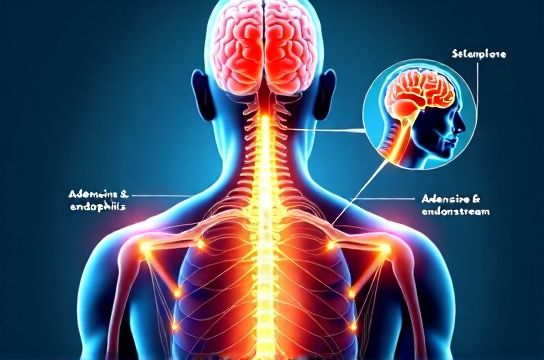
One of the most compelling theories comes from Harvard Medical School researchers, who found that acupuncture stimulates adenosine release, a natural painkiller in the body. In one study, adenosine levels increased 24 times around needle sites, reducing pain by up to 70% in animal models (Goldman et al., Nature Neuroscience, 2010).
How Does Acupuncture Affect Pain Pathways?
Let’s talk nerves. Acupuncture activates A-delta and C sensory fibers, sending signals to the spinal cord and brain. This leads to the release of endorphins, serotonin, and dopamine—your body’s natural mood and pain regulators.
In fact, a 2018 meta-analysis of over 20,000 patients showed that acupuncture is significantly more effective than no treatment or sham acupuncture for chronic pain conditions like back pain, osteoarthritis, and migraines (Vickers et al., JAMA, 2018).
| Condition | Effect Size (vs. Sham) | Study Participants |
|---|---|---|
| Chronic Back Pain | 0.33* | 3,677 |
| Osteoarthritis (Knee) | 0.28* | 5,296 |
| Migraine Prevention | 0.40* | 4,693 |
*Higher = better pain reduction. Source: Vickers et al., JAMA 2018
It’s Not Just About Pain: Systemic Effects
Beyond pain relief, acupuncture influences autonomic function. fMRI scans show it can calm the amygdala—the brain’s fear center—making it useful for anxiety and PTSD. It also modulates heart rate variability (HRV), a marker of stress resilience.
A 2021 RCT published in Annals of Internal Medicine found that patients receiving real acupuncture had a 32% greater improvement in HRV compared to controls after 8 weeks.
So, Does Acupuncture Work for Everyone?
Not exactly. Response varies based on genetics, condition type, and treatment frequency. But here’s the kicker: consistency matters. Most studies show optimal results after 6–8 weekly sessions.
And while skeptics point to placebo effects, research shows real acupuncture outperforms sham treatments with non-penetrating needles—suggesting physiological mechanisms are at play.
For those seeking drug-free pain management or stress relief, exploring how acupuncture works in the body could be a game-changer. Always consult a licensed practitioner—quality matters.
Bottom line: Acupuncture leverages your body’s built-in healing systems. It’s not a cure-all, but when applied correctly, it’s a powerful tool backed by neuroscience.