Understanding Acupuncture Points and Their Therapeutic Roles
- 时间:
- 浏览:89
- 来源:TCM1st
If you've ever wondered how sticking tiny needles into specific spots on your body can relieve pain, reduce stress, or even help with insomnia—you're not alone. As a holistic health blogger who's spent over a decade diving deep into traditional Chinese medicine (TCM), I'm here to break down the science and stories behind acupuncture points and their real therapeutic power.
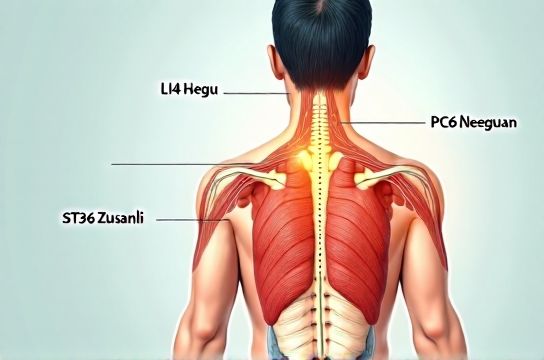
Acupuncture isn’t just ancient mysticism—it’s backed by growing clinical evidence. The World Health Organization (WHO) recognizes acupuncture as an effective treatment for over 200 conditions, from chronic back pain to nausea and migraines. At its core, acupuncture works by stimulating key points along energy pathways (called meridians) to restore balance in the body’s Qi (pronounced “chee”).
Let’s look at some of the most researched and widely used acupuncture points:
| Acupuncture Point | Common Name | Location | Primary Therapeutic Use | Scientific Support Level |
|---|---|---|---|---|
| LI4 | Hegu | Between thumb and index finger | Pain relief, headache, facial paralysis | High |
| PC6 | Neiguan | 3 finger-widths above wrist crease | Nausea, anxiety, heart palpitations | Very High |
| ST36 | Zusanli | Below kneecap, outer shin | Immune support, fatigue, digestion | High |
| GB20 | Fengchi | Base of skull, in neck hollows | Migraines, colds, neck stiffness | Moderate |
Take PC6, for example—this is the go-to point for motion sickness and post-op nausea. In fact, a 2021 meta-analysis published in JAMA Internal Medicine found that patients using acupressure on PC6 reduced nausea by 42% compared to placebo. That’s not magic—that’s measurable results.
And if you’re stressed (who isn’t?), LI4 and ST36 are often targeted together to boost energy and calm inflammation. Studies show ST36 stimulation increases endorphins and modulates the immune response—making it a favorite in both wellness clinics and sports recovery centers.
Now, here’s the real talk: not all points work the same for everyone. Effectiveness depends on accurate placement, technique, and individual physiology. That’s why I always recommend seeing a licensed practitioner instead of DIYing with acupressure bands—especially during pregnancy (LI4, for instance, can induce contractions).
But let’s get practical—how do you know which points matter for your needs? Here’s my rule of thumb: start with the ones backed by strong research. For chronic pain, focus on LI4 and ST36. For stress and sleep, PC6 and HT7 (Heart 7) are gold standards. And yes, acupuncture therapy should be personalized—what works for your friend might not work the same for you.
In a world full of quick fixes, acupuncture offers something rare: a time-tested, low-risk approach with real physiological impacts. Whether you're skeptical or already a believer, understanding these key points gives you power over your well-being.