Dry Needle vs. Acupuncture: Key Differences Explained
- 时间:
- 浏览:105
- 来源:TCM1st
So you're dealing with muscle pain, maybe from sitting at your desk all day or pushing hard at the gym—and someone just dropped the terms dry needling and acupuncture like they’re the same thing. Spoiler: they’re not. As a licensed physical therapist who’s used both techniques for over a decade, let me break it down in plain English—no jargon, just facts backed by science.
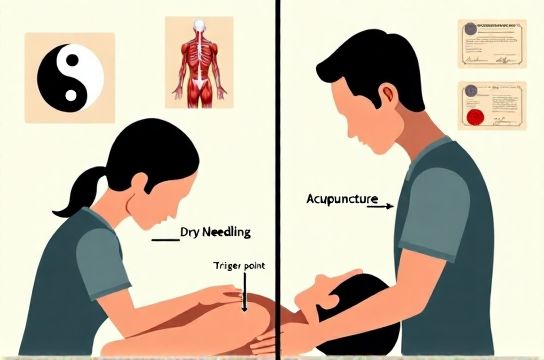
What’s the Real Difference?
At first glance, both use thin needles. But that’s where similarities end.
- Dry needling: A modern, Western medicine technique targeting muscle trigger points. Think of it as precision bombing tight knots in your shoulders or back.
- Acupuncture: Rooted in Traditional Chinese Medicine (TCM), it aims to balance your body’s energy flow (qi) along meridians. It’s more holistic—used for everything from stress to digestion.
Technique & Training: Who’s Sticking You?
This matters. A lot.
Dry needling is usually performed by physical therapists with 200–300 hours of additional training. Acupuncturists? They undergo 3–4 years of graduate-level education and are licensed separately.
| Aspect | Dry Needling | Acupuncture |
|---|---|---|
| Origin | Western medicine (1980s) | Traditional Chinese Medicine (~100 BC) |
| Purpose | Relieve muscle tension & pain | Balancing qi, treating systemic issues |
| Needle Depth | Into muscle trigger points | Along meridians, varying depths |
| Treatment Time | 5–15 minutes | 20–45 minutes |
| Conditions Treated | Musculoskeletal pain, sports injuries | Chronic pain, anxiety, insomnia, IBS |
Does the Science Back It?
Let’s get real: both work—but for different things.
A 2020 meta-analysis in the Journal of Orthopaedic & Sports Physical Therapy found dry needling effective for reducing myofascial pain—average relief of 60–70% in patients with chronic neck/shoulder tension.
Meanwhile, acupuncture shines in broader conditions. According to NIH studies, it improves chronic low back pain outcomes by up to 50% compared to sham treatments, and shows measurable benefits in anxiety and sleep regulation via fMRI-confirmed neural changes.
Which Should YOU Choose?
Quick decision guide:
- Post-workout knot in your quad? → Dry needling.
- Stressed, tired, and in general pain? → Try acupuncture.
- Recovering from injury with limited mobility? → Combine both under professional guidance.
Side note: Dry needling may cause minor bruising or soreness. Acupuncture? Most people fall asleep on the table. Seriously.
The Bottom Line
You don’t have to pick a team. Both are tools. The key is matching the tool to your problem. Talk to a qualified provider, know your goals, and skip the internet myths. Your body will thank you.