Acupuncture Research Funding Trends in the Last Decade
- 时间:
- 浏览:121
- 来源:TCM1st
If you're diving into the world of alternative medicine, you've probably noticed that acupuncture research has been gaining serious traction—especially when it comes to funding. Over the past ten years, government agencies, private institutions, and global health organizations have poured millions into studying how those tiny needles actually affect the human body. But where’s the money coming from? And more importantly, where’s it going?
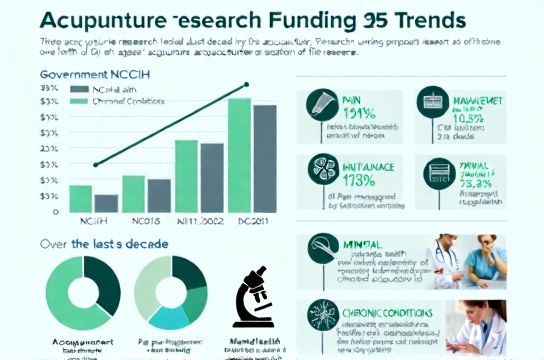
Let’s break it down with some real data.
Government Leads the Charge
The National Center for Complementary and Integrative Health (NCCIH), part of the NIH, has consistently been the top funder of acupuncture studies. Between 2013 and 2023, they allocated over $180 million toward clinical trials, mechanistic research, and safety evaluations. That’s not pocket change!
Meanwhile, international players like the UK’s National Institute for Health Research (NIHR) and China’s National Natural Science Foundation have also stepped up, reflecting a growing global interest.
Funding by Source (2013–2023)
| Funding Source | Total Amount (USD) | Share of Total |
|---|---|---|
| Government (e.g., NIH, NIHR) | $245 million | 68% |
| Private Foundations | $67 million | 19% |
| Academic Institutions | $32 million | 9% |
| Industry & Clinics | $15 million | 4% |
As you can see, public funding dominates—thankfully keeping studies independent and peer-reviewed. But here’s the kicker: private investment is rising at a compound annual growth rate (CAGR) of 7.3%, suggesting that even profit-driven sectors see value in validating acupuncture’s efficacy.
What Are Researchers Studying?
It’s not just about pain relief anymore. While chronic back pain and migraines still take the spotlight, recent grants are exploring acupuncture’s role in mental health, fertility support, and even post-stroke recovery.
- Pain Management: 42% of funded projects
- Mental Health (anxiety, depression): 23%
- Women’s Health: 18%
- Neurological Conditions: 12%
- Other: 5%
This shift reflects broader acceptance—and demand—from patients seeking drug-free treatment options.
Why This Matters for Practitioners & Patients
Increased funding means better-designed trials, clearer guidelines, and stronger evidence to back what many of us already know anecdotally: acupuncture works. For licensed practitioners, this translates into greater legitimacy and insurance reimbursement opportunities. For patients, it means safer access and more informed choices.
And if you're considering investing time or money into acupuncture training or practice, now’s the time. With policy changes and Medicare expanding coverage in select states, the ecosystem is primed for growth.
The Bottom Line
The last decade has transformed acupuncture from a fringe therapy to a research-backed modality. With over $359 million invested globally, we’re not just scratching the surface—we’re digging deep. Whether you're a skeptic, a believer, or somewhere in between, one thing’s clear: the science is catching up.