Acupuncture Education Requirements for Licensed Practitioners
- 时间:
- 浏览:118
- 来源:TCM1st
If you've ever thought about becoming a licensed acupuncturist in the U.S., or maybe you're just curious what it takes to stick those tiny needles with confidence, let’s pull back the curtain. Spoiler: It’s way more rigorous than binge-watching a YouTube tutorial. Acupuncture isn’t just alternative wellness—it’s a science-backed medical practice requiring serious training, exams, and ongoing education.
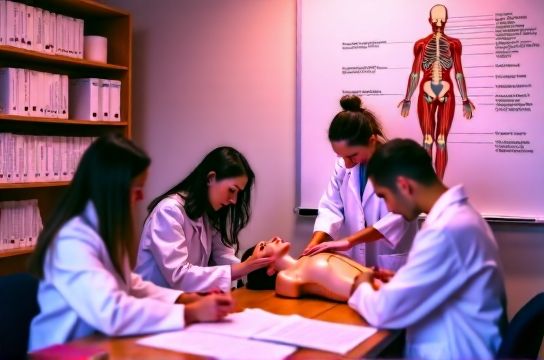
What Does It Take to Become a Licensed Acupuncturist?
In most states, becoming a licensed acupuncture practitioner means completing a graduate-level program accredited by the Accreditation Commission for Acupuncture and Oriental Medicine (ACAOM). We’re talking about a Master’s degree—yes, really. The standard path? A Master of Acupuncture (MA) or Master of Science in Traditional Chinese Medicine (MSTCM).
These programs typically take 3 to 4 years of full-time study, totaling around 1,905 to 3,900 hours of coursework and clinical training. That includes anatomy, physiology, pathology, diagnostics, needle techniques, herbal medicine, and biomedical ethics.
Key Education Milestones
Here’s a quick breakdown of what your journey might look like:
| Stage | Duration | Hours Required | Key Focus Areas |
|---|---|---|---|
| Pre-Program | Varies | None (but 60+ college credits often required) | Biology, chemistry, psychology |
| Graduate Program | 3–4 years | 1,905–3,900 | TCM theory, point location, clinical internship |
| National Board Exam (NCCAOM) | One-time | N/A | Passing required for licensure |
| State Licensure | Ongoing | Varies by state | Background checks, jurisprudence exams |
| Continuing Education | Every 4 years | 60 PDAs (Professional Development Activities) | Maintain NCCAOM certification |
Source: ACAOM & NCCAOM Guidelines (2023)
Why Certification Matters
You can’t just open shop after graduation. Most states require passing the National Certification Commission for Acupuncture and Oriental Medicine (NCCAOM) exam. Think of it like the bar exam—but for qi flow. This certifies you as a qualified acupuncture professional and is recognized in over 40 states.
Without NCCAOM certification? You’re basically practicing off the grid—legally risky and professionally limiting.
State-by-State Variations
While federal standards set the baseline, licensing rules vary. For example:
- California: Requires its own CALE exam instead of NCCAOM.
- New York: Accepts NCCAOM but mandates infection control training.
- Texas: Requires a jurisprudence exam on state laws.
Always check your state’s board—don’t assume one license fits all.
Bottom Line: Is It Worth It?
Absolutely—if you're passionate about integrative health. The U.S. Bureau of Labor Statistics projects a 14% job growth for health diagnosing practitioners (including acupuncturists) through 2032. Median pay? Around $91,210/year.
But remember: this isn’t a shortcut career. The acupuncture education requirements exist to protect patients and uphold professional integrity. And honestly? That’s something to respect.