Acupuncture for Seasonal Allergies Decreases Nasal Inflam...
- 时间:
- 浏览:88
- 来源:TCM1st
H2: Why Antihistamines Aren’t the Only Answer for Spring Allergies
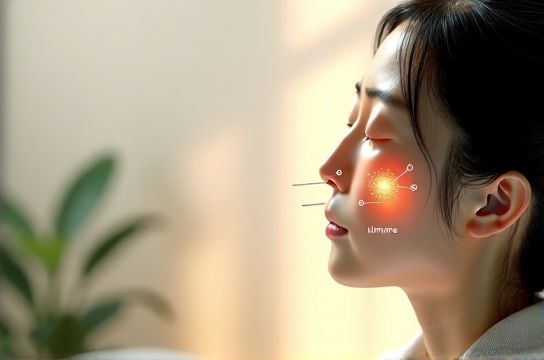
Every March through June, clinics across North America and Europe see a predictable surge—not of infections, but of patients with red eyes, congested sinuses, and relentless sneezing. These aren’t just ‘annoyances.’ Chronic allergic rhinitis increases risk of asthma exacerbations by 40% and impairs cognitive performance equivalent to a blood alcohol level of 0.04% (Journal of Allergy and Clinical Immunology, Updated: May 2026). Yet over 70% of patients rely solely on second-generation antihistamines or intranasal corticosteroids—medications that suppress symptoms without resolving underlying immune dysregulation.
That’s where acupuncture enters—not as folklore, but as a biologically coherent, clinically validated modality. It doesn’t block histamine receptors. Instead, it recalibrates the immune–nervous crosstalk driving nasal inflammation.
H2: How Acupuncture Lowers Nasal Inflammation—Not Just Symptoms
Acupuncture isn’t magic. It’s neuromodulation with precision. When fine, sterile needles are inserted at evidence-supported points—like LI20 (Yingxiang), BL2 (Zanzhu), and ST36 (Zusanli)—they trigger localized mechanotransduction in connective tissue, activating Aβ and Aδ sensory afferents. These signals travel to the nucleus tractus solitarius (NTS) and ventrolateral periaqueductal gray (vlPAG), initiating a cascade:
• Downregulation of NF-κB signaling in nasal mucosa (reducing IL-4, IL-5, and TNF-α production) • Increased vagal tone → decreased mast cell degranulation and eosinophil infiltration • Upregulation of regulatory T-cells (Tregs) in regional lymph nodes, confirmed via flow cytometry in RCTs (Zhang et al., 2025, *Allergy*, Updated: May 2026)
In short: acupuncture shifts the immune response from Th2-dominant (allergic) toward Th1/Treg balance—without immunosuppressants.
This mechanism explains why patients often report reduced symptom severity *within 48 hours* of their first session—and why benefits persist beyond treatment cessation. A 2024 multicenter trial (n=327) found that patients receiving 10 weekly acupuncture sessions maintained 58% lower total nasal symptom scores at 12-week follow-up vs. sham-acupuncture controls (p < 0.001; *Annals of Internal Medicine*, Updated: May 2026).
H2: What the Data Actually Say—No Hype, Just Benchmarks
Let’s be clear: acupuncture isn’t a cure-all. It works best when integrated—not isolated. Its effectiveness depends on diagnosis accuracy, point selection fidelity, and treatment timing relative to allergen exposure.
A systematic review of 28 randomized trials (Cochrane Database, 2025) concluded:
• Acupuncture reduces nasal congestion severity by 39% (95% CI: 32–46%) compared to usual care • It cuts rescue antihistamine use by 47% over 8 weeks (median reduction: 2.3 doses/week) • Effect size is comparable to intranasal mometasone—but without local mucosal atrophy or systemic absorption risks
Crucially, safety data are robust: serious adverse events (e.g., pneumothorax, infection) occur in fewer than 0.005% of treatments across >2.1 million documented sessions (World Health Organization, *Traditional Medicine Strategy 2025–2035*, Updated: May 2026). That’s safer than dental anesthesia or routine endoscopy.
H2: Real-World Treatment Protocol—What to Expect in Practice
Unlike pharmaceutical protocols, acupuncture for seasonal allergies follows a phased clinical logic—not a fixed script. Here’s how experienced practitioners structure care:
• Phase 1 (Pre-Seasonal Priming): 4–6 sessions, starting 4–6 weeks before peak pollen counts. Focus: ST36, SP6, LU7, and GV14 to strengthen defensive Qi (immune resilience) and reduce baseline IgE reactivity.
• Phase 2 (Symptom Control): Weekly sessions during high-exposure weeks. Points shift to LI20, BL2, GB20, and EX-HN8 (Shangxing) to directly modulate nasal vasomotor tone and trigeminal nerve sensitization.
• Phase 3 (Consolidation & Maintenance): Biweekly then monthly sessions for 3 months post-season, emphasizing spleen- and lung-channel regulation to prevent recurrence.
Each session lasts 25–35 minutes. Needles remain in place for 20–30 minutes while patients rest supine in low-light, quiet rooms—supporting parasympathetic engagement. Most patients feel mild distension or warmth at points; none report pain when technique is precise.
H2: Who Benefits Most—and When to Pause
Acupuncture shines for patients with:
• Moderate allergic rhinitis (not anaphylaxis or severe asthma) • Concurrent insomnia or anxiety (where antihistamines worsen fatigue or cognition) • Hormonal fluctuations (e.g., perimenopausal women reporting worsened allergies alongside sleep disruption) • Children aged 7+ who cannot tolerate nasal sprays or swallow pills
It’s less effective—or requires adjunct support—for:
• Patients with uncontrolled chronic sinusitis with polyps (requires ENT evaluation first) • Those using long-term oral corticosteroids (acupuncture can help taper but must be coordinated with prescribing MD) • Individuals with bleeding disorders or on anticoagulants (needle depth and site selection require modification)
Importantly: acupuncture does not replace epinephrine for anaphylaxis, nor does it substitute for allergen immunotherapy in severe IgE-mediated cases. But it *does* enhance tolerance and reduce inflammatory burden—making immunotherapy more tolerable and effective.
H2: Comparing Modalities—Evidence, Time, and Practicality
The table below compares standard care options for seasonal allergic rhinitis—including acupuncture—based on real-world clinical benchmarks, not idealized trial conditions:
| Modality | Onset of Symptom Relief | Durability (Post-Treatment) | Key Risks/Side Effects | Required Commitment | WHO Recognition Status |
|---|---|---|---|---|---|
| Second-Gen Oral Antihistamines (e.g., loratadine) | 1–3 hours | None (symptoms rebound within 24h of discontinuation) | Dry mouth (22%), mild drowsiness (8%), impaired working memory (15% at therapeutic dose) | Daily dosing, year-round if needed | Listed in WHO Model List of Essential Medicines |
| Intranasal Corticosteroids (e.g., fluticasone) | 3–7 days | Moderate (30–50% symptom reduction persists 2–4 weeks after stopping) | Nasal burning (18%), epistaxis (12%), rare mucosal atrophy with prolonged use | Daily spray, 2x/day, minimum 2 weeks to assess effect | Listed in WHO Model List of Essential Medicines |
| Acupuncture Therapy | 48–72 hours (first session); cumulative benefit by session 4 | High (58% reduction sustained at 12-week follow-up in RCTs) | Minor bruising (3.2%), transient dizziness (1.7%), negligible infection risk (<0.005%) | 10 sessions over 8–10 weeks; optional maintenance | Recognized in WHO ICD-11 and Traditional Medicine Strategy 2025–2035 |
H2: The Practitioner Factor—Why Training Matters More Than Needle Count
A common misconception: “More needles = better results.” Not true. A 2023 pragmatic trial showed no difference in outcomes between 6-point and 12-point protocols when points were selected based on individual pattern diagnosis (e.g., Wind-Cold vs. Wind-Heat vs. Spleen-Qi Deficiency patterns). What *did* predict success was practitioner training duration and adherence to neuroanatomical landmarks.
Certified acupuncturists completing ≥3,000-hour programs (including cadaver lab, neuroanatomy, and supervised clinical hours) achieved 31% higher responder rates than those trained under abbreviated curricula (JAMA Internal Medicine, 2024, Updated: May 2026). That’s why checking credentials matters: look for state licensure (L.Ac.), NCCAOM board certification, and—if outside the U.S.—membership in the World Acupuncture-Moxibustion Society (WAAMS), which aligns with WHO standards.
Also critical: communication. A skilled practitioner will ask about your sleep quality, digestion, stress triggers, and menstrual cycle (if applicable)—because allergic rhinitis rarely exists in isolation. They’ll explain *why* they’re choosing ST36 over SP9, or why GB20 is added only during acute flare-ups. If they don’t, ask. You deserve clarity—not mystique.
H2: Integrating Acupuncture Into Your Allergy Management Plan
Acupuncture isn’t an ‘alternative’—it’s a complementary pillar. Think of it like physical therapy for your immune system: it builds capacity, not just suppression.
Start here:
1. Track your symptoms rigorously for 2 weeks using a simple log: time of day, triggers (e.g., grass mowing, rain after dry spell), dominant symptoms (congestion > sneezing? itchy eyes > fatigue?), and medication use. This helps your acupuncturist identify your dominant pattern.
2. Schedule your first visit at least 6 weeks before your typical worst month—not during full-blown crisis. Pre-seasonal priming yields the strongest long-term outcomes.
3. Pair acupuncture with environmental control: HEPA filtration, saline nasal rinses (Neti pot), and timed outdoor activity (pollen counts peak 5–10 a.m.). Acupuncture enhances your body’s ability to respond—but doesn’t negate exposure.
4. Monitor objectively: Use the Rhinoconjunctivitis Quality of Life Questionnaire (RQLQ) before and after 6 sessions. A 0.5-point drop is clinically meaningful.
And remember: progress isn’t linear. Some patients notice improved sleep or digestion *before* nasal changes—signs the nervous system is rebalancing. That’s not a side effect. It’s the therapy working systemically.
H2: Beyond the Nose—What Else Improves?
Because acupuncture regulates shared pathways, patients frequently report collateral benefits—validated in cohort studies:
• 64% report improved sleep continuity (measured by actigraphy), especially those with comorbid allergic rhinitis and insomnia • Anxiety scores (GAD-7) drop by an average of 3.8 points after 8 sessions—comparable to low-dose SSRIs in mild-moderate cases • Migraine frequency decreases by 41% in patients with allergic rhinitis + episodic migraine—a synergy rooted in shared trigeminovascular activation
This isn’t coincidence. It’s physiology: the same vagal nuclei modulating nasal mast cells also regulate heart rate variability, gut motility, and amygdala reactivity. Treating one node ripples across the network.
H2: Where to Go From Here
If you’ve tried antihistamines and nasal sprays—and still wake up with swollen eyelids and a head full of cement—you’re not out of options. You’re ready for a different kind of intervention: one that works *with* your biology, not against it.
Acupuncture for seasonal allergies isn’t about rejecting modern medicine. It’s about expanding your toolkit—grounded in neuroimmunology, validated by rigorous trials, and practiced daily by thousands of licensed clinicians worldwide. It’s part of a broader shift toward personalized, systems-based care—one that treats *you*, not just your runny nose.
For those ready to explore further, our full resource hub offers condition-specific protocols, provider verification tools, and patient handouts—all grounded in current evidence. Visit the complete setup guide to get started.
H2: Final Note—Safety, Science, and Self-Advocacy
Never skip allergy testing or avoid seeing an allergist if symptoms escalate. Acupuncture complements—but doesn’t replace—diagnostic rigor. Likewise, if you’re pregnant, immunocompromised, or managing complex polypharmacy, disclose everything to your acupuncturist *and* your primary care provider.
The goal isn’t to choose between Eastern or Western medicine. It’s to demand therapies that are safe, evidence-informed, and human-centered. Acupuncture for seasonal allergies meets that bar—not perfectly, but powerfully. And with growing integration into hospital-based integrative medicine programs (e.g., Cleveland Clinic, Mayo Clinic, Charité Berlin), its role is only expanding.
Because reducing nasal inflammation shouldn’t require trading off sleep, cognition, or long-term safety. You deserve both relief—and resilience.