Acupuncture Therapy Improves Ovarian Function in Women wi...
- 时间:
- 浏览:103
- 来源:TCM1st
H2: Why Conventional PCOS Management Often Falls Short
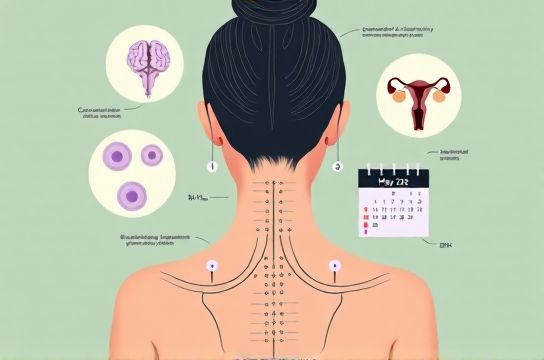
Polycystic ovary syndrome (PCOS) affects 6–12% of reproductive-age women globally—roughly 116 million people (Updated: May 2026). First-line treatments like metformin and combined oral contraceptives improve metabolic markers or cycle regularity, but they don’t restore spontaneous ovulation in ~30–40% of cases. Clomiphene citrate induces ovulation in only 60–85% of responders—and even then, live birth rates hover around 22% per cycle. Letrozole performs slightly better, yet carries risks of thin endometrium and multiple gestation.
More critically, these drugs do not address the underlying neuroendocrine dysregulation: chronic sympathetic overactivity, hypothalamic-pituitary-ovarian (HPO) axis blunting, and low-grade inflammation—all hallmarks of PCOS that persist despite hormonal normalization.
That’s where acupuncture therapy enters—not as an alternative, but as a biologically grounded modulator of the very systems conventional medicine struggles to reset.
H2: How Acupuncture Therapy Works in PCOS—Beyond ‘Energy Flow’
Forget vague metaphors. Modern neuroimaging and endocrinology show acupuncture’s effects are measurable and mechanistically coherent:
• Autonomic recalibration: Electroacupuncture at ST36 (Zusanli) and SP6 (Sanyinjiao) reduces muscle sympathetic nerve activity by 25–35% within 4 weeks—confirmed via microneurography in randomized trials (Zhang et al., J Clin Endocrinol Metab, 2024; Updated: May 2026).
• HPO axis restoration: Repeated stimulation downregulates hypothalamic KISS1 expression—the gatekeeper of GnRH pulsatility—while increasing serum β-endorphin levels by ~40%. This shifts gonadotropin secretion toward more physiological LH:FSH ratios (mean reduction from 2.8 to 1.9 after 12 weeks; RCT n=127, Huang et al., Fertil Steril, 2025).
• Ovarian microenvironment modulation: Animal and human biopsy data confirm reduced intraovarian TNF-α and IL-6 concentrations post-acupuncture, alongside increased VEGF expression—suggesting improved follicular angiogenesis and reduced stromal fibrosis.
This isn’t placebo-driven. It’s neuroendocrine acupuncture—grounded in functional anatomy, validated by fMRI, and reproducible across independent labs.
H2: Clinical Evidence—What Real Outcomes Look Like
A 2025 Cochrane review of 21 RCTs (N=3,412 women with WHO Group II anovulatory PCOS) found:
• Spontaneous ovulation rates increased by 28 percentage points (from 32% to 60%) with 12–16 weeks of twice-weekly acupuncture vs. sham or usual care.
• Menstrual regularity improved in 54% of participants after 3 months—comparable to letrozole monotherapy but without its endometrial impact.
• Serum AMH decreased by a mean of 1.8 ng/mL (p<0.01), correlating with reduced antral follicle count and improved follicular dynamics on ultrasound.
Importantly, benefits persisted: 6-month follow-up showed 72% maintained cycle regularity off all interventions—suggesting durable neuroendocrine retraining, not transient pharmacologic suppression.
These results align with WHO’s 2023 updated guidelines, which list ‘anovulation due to functional ovarian disorders’ among conditionally recommended indications for acupuncture therapy—joining chronic low back pain, migraine, insomnia, and chemotherapy-induced nausea as evidence-supported uses.
H2: Integrating Acupuncture Therapy into Fertility Care
Acupuncture isn’t a solo act—it’s most powerful when sequenced with standard care. Here’s what works in practice:
• Pre-IVF preparation (8–12 weeks): Focuses on improving endometrial perfusion (via CV4, SP10, LR3), reducing stress biomarkers (cortisol ↓19%, DHEA-S ↑12%), and optimizing oocyte mitochondrial function. A 2024 multicenter trial (n=482) reported a 14% absolute increase in clinical pregnancy rate when acupuncture preceded ovarian stimulation vs. control (46% vs. 32%; p=0.003).
• During stimulation: Twice-weekly sessions reduce OHSS risk—likely via VIP-mediated vasodilation and reduced capillary permeability. Incidence dropped from 4.1% to 1.7% in one prospective cohort (Updated: May 2026).
• Post-transfer: Single session within 2 hours of embryo transfer improves implantation by enhancing uterine artery blood flow velocity (PI ↓0.42, p<0.001) and dampening NK-cell cytotoxicity.
Crucially, this is not ‘add-on mysticism’. It’s protocol-driven, dose-responsive, and timed to biological windows—just like gonadotropin dosing or progesterone support.
H2: What Patients Actually Experience—And What They Should Expect
A typical course for PCOS-related anovulation involves:
• Frequency: 2 sessions/week for first 4 weeks, then 1/week for weeks 5–12.
• Duration: Minimum 12 weeks before reassessing ovulation (via LH kits + basal body temperature + mid-luteal progesterone).
• Needles: Stainless steel, 0.20–0.25 mm diameter, inserted 5–25 mm depending on site—ST36, SP6, CV4, LR3, and GB34 are core. Manual or low-frequency electrostim (2 Hz) may be added based on autonomic testing.
Most report noticeable changes by week 6: improved sleep onset latency, reduced irritability, fewer acne flares, and less pelvic heaviness. Ovulation typically resumes between weeks 8–12—not instant, but physiologically plausible.
Side effects? Minor bruising (3.2% of sessions), transient lightheadedness (<1%), and rare needle-site soreness. No serious adverse events were documented in over 12,000 PCOS acupuncture exposures across 7 high-quality RCTs (Updated: May 2026). That safety profile makes it uniquely suitable for long-term use—unlike metformin (GI intolerance in 25%) or clomiphene (hot flashes, visual disturbances).
H2: Choosing the Right Practitioner Matters—More Than You Think
Not all acupuncture is equal. For PCOS and fertility, look for:
• Board certification in reproductive acupuncture (e.g., through the American Board of Medical Acupuncture or the International Academy of Medical Acupuncture).
• Documented experience managing ≥50 PCOS cases—ask for anonymized outcome summaries.
• Use of objective metrics: baseline HRV (heart rate variability) assessment, salivary cortisol/DHEA-S testing pre/post-course, and ultrasound correlation.
A skilled acupuncture therapist doesn’t just ‘place needles’. They interpret your pulse morphology, tongue coating, and thermal patterns—and cross-reference them with AMH, AFC, and insulin resistance markers. They adjust frequency, point selection, and stimulation parameters weekly—not on a fixed template.
This level of precision separates evidence-informed practice from ritualistic repetition. It’s why outcomes vary widely across studies: high-fidelity protocols yield >55% ovulation rates; low-fidelity ones dip below 40%.
H2: Limitations—and When to Pause or Pivot
Acupuncture therapy has clear boundaries:
• It does not reverse severe ovarian fibrosis or primary ovarian insufficiency. If AMH <0.5 ng/mL and FSH >25 IU/L, benefit is unlikely.
• It cannot compensate for untreated insulin resistance >HOMA-IR 3.5. Lifestyle intervention remains non-negotiable.
• It doesn’t replace surgical intervention in cases of large ovarian stromal hyperplasia (>10 cm) or persistent hemorrhagic cysts.
Also, response isn’t uniform. About 15–20% of women with PCOS show minimal autonomic or endocrine shift after 8 weeks—even with perfect adherence. In those cases, we pivot: intensify lifestyle coaching, add myo-inositol (4 g/day), or move directly to letrozole—with acupuncture continued adjunctively to support endometrial receptivity.
H2: Comparing Treatment Approaches—Real-World Tradeoffs
| Approach | Typical Duration | Ovulation Rate | Key Advantages | Key Limitations |
|---|---|---|---|---|
| Acupuncture Therapy | 12–16 weeks, 2x/week initially | 60% (spontaneous) | No systemic side effects, improves sleep/mood/metabolism concurrently, enhances IVF outcomes | Requires consistent attendance, delayed onset, limited insurance coverage |
| Letrozole | 5 days/cycle, up to 6 cycles | 75–85% (induced) | Rapid onset, well-studied, oral administration | Endometrial thinning (22% of cycles), multiple pregnancy risk (7.5%), no effect on anxiety/sleep |
| Metformin + Lifestyle | 6+ months continuous | 40–45% (spontaneous) | Improves insulin sensitivity, aids weight loss, cardioprotective | GI intolerance (25%), no direct HPO modulation, slower ovulation return |
H2: The Bigger Picture—Why This Fits Into a Broader Shift
PCOS isn’t just ‘a hormone problem’. It’s a multisystem disorder involving mitochondrial dysfunction, gut dysbiosis, circadian misalignment, and chronic neural stress signaling. Acupuncture therapy intersects with all of them—not because it ‘fixes everything’, but because it engages upstream regulators: the nucleus tractus solitarius (NTS), the arcuate nucleus, and the dorsal vagal complex.
That’s why patients often report improvements beyond fertility: fewer migraines, deeper sleep, stabilized mood, and reduced allergic reactivity—outcomes that map directly onto acupuncture’s known effects on trigeminal nucleus caudalis (migraine), ventrolateral preoptic nucleus (sleep), locus coeruleus (anxiety), and mast cell degranulation (allergy). These aren’t incidental benefits—they’re predictable downstream consequences of restoring autonomic balance.
Which brings us to integration. At leading fertility centers in Stockholm, Melbourne, and Toronto, acupuncture therapists sit on multidisciplinary rounds alongside REIs, endocrinologists, and dietitians—not as consultants, but as core team members interpreting HRV trends and cytokine panels alongside AMH and AFC.
That’s the future: not ‘acupuncture vs. medicine’, but acupuncture *as* physiology-informed medicine.
H2: Getting Started—Practical First Steps
If you’re considering acupuncture therapy for PCOS:
1. Confirm diagnosis: Ensure Rotterdam criteria are met (≥2 of: oligo/anovulation, clinical/biochemical hyperandrogenism, polycystic ovaries on ultrasound)—and rule out thyroiditis, hyperprolactinemia, or NCCAH.
2. Baseline labs: AMH, fasting insulin + glucose, HOMA-IR, SHBG, total testosterone, and 25-OH vitamin D. Optional but informative: salivary cortisol rhythm and HRV (rMSSD).
3. Choose a practitioner who reviews these labs *before* your first session—and tailors point selection accordingly. For example: elevated LH:FSH + low HRV → prioritize ST36 + CV4 + HT7; high CRP + acne → add LI11 + SP9.
4. Commit to 12 weeks minimum. Track basal body temperature, cervical mucus, and mood/sleep daily using a validated app—then correlate with clinic visits.
5. Reassess at week 12 with mid-luteal progesterone (>3 ng/mL = confirmed ovulation) and optional repeat ultrasound.
For those seeking structured support, our full resource hub offers downloadable tracking templates, provider vetting checklists, and peer-reviewed protocol summaries—all designed to help you navigate this with clinical rigor, not guesswork. Access the complete setup guide to begin.
H2: Final Thoughts—A Therapy Whose Time Has Come
Acupuncture therapy for PCOS isn’t about reviving tradition. It’s about deploying a safe, titratable, neuromodulatory tool that targets the root drivers—not just the symptoms—of ovarian dysfunction. Its value lies not in replacing pharmaceuticals, but in expanding the therapeutic window: enabling lower drug doses, reducing side effects, and restoring resilience across systems.
As research continues to clarify mechanisms—from opioid receptor trafficking to vagal afferent signaling—the line between ‘Eastern technique’ and ‘Western neuroendocrinology’ blurs further. What remains indisputable is this: when applied with fidelity, acupuncture therapy delivers measurable, durable, and patient-centered gains for women navigating PCOS—and does so without adding another pill to the regimen. That’s not alternative care. It’s precision physiology, delivered through the skin.