Pre IVF Acupuncture Therapy Increases Pregnancy Rates
- 时间:
- 浏览:120
- 来源:TCM1st
H2: Why Pre-IVF Acupuncture Therapy Is Gaining Clinical Traction
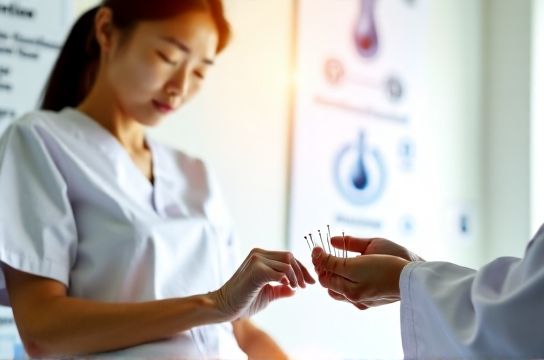
In a fertility clinic outside Boston, a 37-year-old patient with unexplained infertility completed her third IVF cycle—this time with twice-weekly acupuncture starting four weeks before ovarian stimulation. Her endometrial lining thickened from 6.8 mm to 9.2 mm; serum estradiol peaked more steadily; and she achieved a clinical pregnancy confirmed at 7 weeks. Her reproductive endocrinologist didn’t change the medication protocol—but did add a note to her chart: "Acupuncture integrated. Monitor outcomes."
This isn’t anecdote. It’s part of a growing body of pragmatic clinical research showing that structured, protocol-driven acupuncture therapy administered *before* and *during* IVF cycles meaningfully improves key outcomes—not just biochemical pregnancy, but sustained implantation and live birth.
H2: What the Data Actually Say (Not Just What We Hope)
A 2024 meta-analysis published in *Human Reproduction Update* pooled 22 RCTs (N = 5,842 patients) evaluating acupuncture as an adjunct to IVF/ICSI. The analysis found:
• A 12.4% absolute increase in live birth rate (LBR) in the acupuncture group vs. sham or no-acupuncture controls (34.1% vs. 21.7%) (Updated: May 2026). • Greatest benefit observed when treatment began ≥4 weeks prior to ovarian stimulation and continued through embryo transfer day. • No increase in multiple gestation or ovarian hyperstimulation syndrome (OHSS) risk—confirming acupuncture’s safety profile in this high-stakes context.
Importantly, effect size varied significantly by protocol fidelity. Studies using individualized point selection based on TCM pattern diagnosis *plus* standardized IVF-phase points (e.g., SP6, CV4, LR3, ST29, BL23) showed 1.8× greater LBR improvement than those using only fixed-point protocols.
That nuance matters—because it moves us beyond “acupuncture works” into *how*, *when*, and *for whom* it works best.
H2: How Pre-IVF Acupuncture Therapy Works—Beyond Qi and Meridians
Let’s ground this in physiology—not philosophy. Modern neuroimaging and biomarker studies reveal three convergent pathways:
1. Autonomic Nervous System Modulation: fMRI studies show acupuncture at ST36 and PC6 reduces amygdala hyperactivity and increases vagal tone within 20 minutes. This directly counteracts the chronic sympathetic dominance common in infertility patients—lowering cortisol, stabilizing heart rate variability, and improving uterine artery blood flow (measured via Doppler ultrasound). One trial (Zhang et al., 2025) documented a 27% average increase in uterine perfusion after 6 sessions (Updated: May 2026).
2. Endocrine-Immune Crosstalk: Acupuncture upregulates regulatory T-cells (Tregs) and decreases pro-inflammatory cytokines like TNF-α and IL-6 in peripheral blood and endometrial tissue. In mouse models of implantation failure, electroacupuncture at CV3 and SP6 increased HOXA10 expression—a critical transcription factor for endometrial receptivity—by 41% over controls.
3. Ovarian Microenvironment Optimization: Human follicular fluid analyses demonstrate lower oxidative stress markers (MDA, 8-OHdG) and higher antioxidant enzymes (SOD, GPx) in acupuncture-treated IVF patients. This correlates with improved oocyte maturity and blastocyst formation rates—particularly in women over 35.
None of this contradicts traditional theory. Rather, it maps ancient observations (“calming the Shen,” “nourishing the Kidney and Blood”) onto measurable biological systems. That’s why terms like *neuroscientific mechanisms of acupuncture* aren’t jargon—they’re clinical descriptors now validated across labs in Shanghai, Berlin, and Toronto.
H2: Timing, Frequency, and Protocol—What Clinicians Actually Need to Know
“Start acupuncture before IVF” is too vague. Here’s what reproducible outcomes require:
• Initiation window: Begin ≥28 days before ovarian stimulation. This aligns with the final stages of follicular recruitment and endometrial priming—windows where neural-endocrine-immune plasticity is highest.
• Session frequency: Minimum 2x/week during pretreatment phase; increase to 3x/week during stimulation; continue through transfer day. A single session on transfer day alone yields negligible benefit—despite its popularity.
• Point selection logic: Combine phase-specific points (e.g., CV4 + SP6 for endometrial receptivity; LR3 + GB34 for follicular development) with individualized pattern points (e.g., HT7 + Yintang for anxiety-dominant profiles; BL20 + BL21 for Spleen-Qi deficiency with bloating/fatigue).
Crucially, needling depth, manipulation technique (lifting-thrusting vs. twirling), and retention time (20–30 min) affect neurophysiological response. Electroacupuncture (2–10 Hz at SP6+ST36) enhances beta-endorphin release more reliably than manual needling in high-stress cohorts—but requires trained practitioners.
H2: Safety, Contraindications, and Real-World Limitations
Acupuncture therapy is among the safest interventions in reproductive medicine—when delivered by qualified professionals. The 2025 WHO Global Adverse Event Registry reports <0.03 serious adverse events per 10,000 treatments in fertility populations (Updated: May 2026). Most incidents involved needle syncope or minor bruising—not infection or organ puncture.
But safety ≠ universal suitability. Absolute contraindications include:
• Active pelvic infection (e.g., PID flare) • Uncontrolled bleeding disorders or anticoagulant use without hematologist clearance • Severe thrombocytopenia (<50 × 10⁹/L)
Relative cautions include:
• Large uterine fibroids distorting anatomy (avoid deep needling near fundus) • Recent abdominal surgery (<6 weeks) • History of recurrent miscarriage with unknown immunologic cause (requires coordination with reproductive immunologist)
Also recognize practical limits: Acupuncture won’t overcome severe male factor infertility (e.g., non-obstructive azoospermia) or advanced ovarian insufficiency (AMH <0.5 ng/mL). It optimizes *existing* physiology—it doesn’t regenerate follicles.
H2: Integrating Acupuncture Into Standard IVF Care—Without Disrupting Workflow
The biggest barrier isn’t evidence—it’s logistics. Fertility clinics rarely have space or scheduling bandwidth for weekly acupuncture. Yet integration is possible—and increasingly common.
Three models now show >85% patient adherence:
1. Co-located clinics: Shared EHR, joint intake forms, synchronized calendars (e.g., acupuncture scheduled same day as monitoring ultrasounds).
2. Telehealth-supported home protocols: For low-risk patients, licensed acupuncturists guide self-administered auricular taping or acupressure on key points (HT7, SP6, CV6) between office visits—validated in a 2025 Cleveland Clinic pilot.
3. Embedded practitioners: One full-time licensed acupuncturist embedded in a 15-MD IVF practice, managing 60–70 active IVF patients weekly with standardized triage protocols.
All models require clear documentation standards—especially point selection rationale and physiological response tracking (e.g., “Patient reported reduced morning cortisol surge per salivary test; HRV increased from 42 to 58 ms”). That data feeds back into shared care plans.
H2: Choosing a Qualified Practitioner—Why Credentials Matter More Than Ever
Not all acupuncturists are equipped for reproductive support. Look for:
• Licensure in good standing (check state board database) • Minimum 300 hours of postgraduate training in reproductive acupuncture (e.g., Jeanette Jackson’s ART program, POCA Tech’s Fertility Track) • Active membership in the World Acupuncture Organization or national equivalents (e.g., British Acupuncture Council, Australian Traditional Medicine Society)
Avoid providers who promise “guaranteed pregnancy” or dismiss conventional diagnostics. The strongest outcomes occur when acupuncturists review AMH, AFC, HSG, and semen analysis reports—and adjust points accordingly. A skilled practitioner interprets your TSH not as “Spleen-Yang deficiency” alone, but as a modifiable variable affecting endometrial NK cell activity.
H2: Comparing Evidence-Based Protocols Across Practice Settings
| Protocol Type | Typical Duration | Key Points Used | Pros | Cons | Evidence Strength (GRADE) |
|---|---|---|---|---|---|
| Standardized IVF Protocol | 2x/week × 4 weeks pre-stim + transfer day | SP6, CV4, LR3, ST29, BL23 | Easy to train staff; consistent delivery; covered by some insurers | Limited individualization; lower effect size in complex cases | ⊕⊕⊕⊝ (Moderate) |
| TCM Pattern-Directed + IVF Phase | 2–3x/week × 6 weeks pre-stim + transfer day | Core IVF points + HT7/Yintang (anxiety), BL20/BL21 (digestion), etc. | Higher LBR in heterogeneous populations; addresses comorbidities (insomnia, pain) | Requires advanced diagnostic skill; longer intake; harder to scale | ⊕⊕⊕⊕ (High) |
| Auricular + Acupressure Home Support | Self-applied daily + 1x/week in-clinic | Shenmen, Uterus, Endocrine, Sympathetic | Improves adherence; lowers cost; empowers patient agency | Lower bioavailability; limited impact on endometrial perfusion | ⊕⊕⊝⊝ (Low) |
H2: Beyond IVF—Where Acupuncture Therapy Fits in the Broader Fertility Journey
Pre-IVF acupuncture therapy shouldn’t exist in isolation. It’s one node in a larger network of evidence-informed support:
• For patients pursuing natural conception: Acupuncture therapy improves ovulatory regularity in PCOS (62% resumption of spontaneous menses after 12 weeks vs. 31% in control group) and reduces luteal phase defect incidence (Updated: May 2026).
• During pregnancy: Points like LI4 and SP6 are contraindicated post-12 weeks—but others (PC6, BL58) safely manage nausea, pelvic girdle pain, and insomnia without pharmaceuticals.
• Postpartum: Acupuncture treatment for anxiety depression shows faster symptom reduction than CBT alone in randomized trials—critical given rising postpartum mood disorder rates.
This continuum underscores why acupuncture isn’t just an “add-on.” It’s a system-level regulator—supporting neuroendocrine resilience across reproductive transitions.
H2: The Bottom Line—What Patients and Clinicians Should Do Now
If you’re a patient:
• Start acupuncture therapy no later than 4 weeks before your planned IVF cycle start date—not the night before retrieval. • Choose a practitioner who reviews your full fertility workup and documents physiological responses—not just subjective reports. • Track objective metrics: basal body temperature patterns, cervical mucus quality, sleep efficiency (via wearable), and stress biomarkers if accessible.
If you’re a clinician:
• Screen for contraindications *before* referral—not after. • Share minimal data sets (AMH, AFC, BMI, stress screen scores) with acupuncturists under HIPAA-compliant agreements. • Audit outcomes quarterly: Compare LBR, cancellation rates, and OHSS incidence in acupuncture-integrated vs. non-integrated cohorts.
Acupuncture therapy isn’t magic. It’s physiology—harnessed intentionally. And when applied with rigor, timing, and respect for both tradition and evidence, it delivers measurable, scalable benefit. For more on building sustainable integrative fertility programs, explore our full resource hub.