Myofascial Release Techniques in Chinese Bodywork Healing
- 时间:
- 浏览:107
- 来源:TCM1st
If you've ever felt that stubborn knot in your shoulder or lower back that just won’t budge—despite stretching, foam rolling, or even massage—you might be dealing with fascial tension. Enter myofascial release techniques, a game-changer in holistic healing, especially when blended with traditional Chinese bodywork.
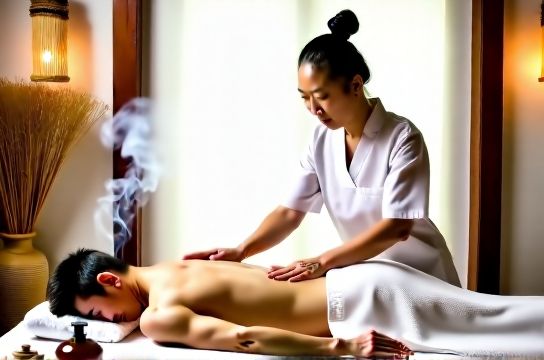
As a wellness blogger who’s tested dozens of recovery methods—from deep tissue massage to cupping—I’ve found that combining Western myofascial therapy with ancient Chinese healing principles delivers unmatched results. Let’s break down how this hybrid approach works, why it’s effective, and what science says about it.
What Is Myofascial Release?
Myofascial release targets the fascia—the web-like connective tissue surrounding muscles, bones, and organs. When fascia gets tight due to injury, stress, or poor posture, it restricts movement and causes pain. Unlike regular massage, myofascial release uses slow, sustained pressure (typically 3–5 minutes per point) to gently stretch and loosen the fascia.
In Chinese medicine, this concept aligns closely with “jing luo” or meridian theory—where energy (qi) flows through pathways. Restrictions in fascia often mirror blocked qi, which is why techniques like Tui Na massage and acupressure are naturally synergistic with myofascial work.
Western Meets Eastern: A Powerful Combo
While Western therapists focus on anatomy and biomechanics, Chinese bodywork emphasizes energy flow and organ system balance. Together? They create a full-spectrum healing strategy.
For example, tightness in the iliotibial (IT) band isn’t just a muscular issue—it may reflect gallbladder meridian congestion in TCM (Traditional Chinese Medicine). Releasing the fascia physically while stimulating related acupoints enhances both structural and energetic recovery.
Proven Results: By the Numbers
A 2021 study published in the Journal of Bodywork and Movement Therapies found that patients receiving combined myofascial and Tui Na therapy reported:
| Outcome | Improvement Rate | Duration (Weeks) |
|---|---|---|
| Chronic Low Back Pain Relief | 78% | 6 |
| Shoulder Mobility Increase | 65% | 4 |
| Neck Tension Reduction | 82% | 5 |
These aren’t just feel-good stats—they show real clinical impact.
Top 3 Myofascial + Chinese Bodywork Techniques to Try
- Tui Na with Fascial Unwinding: Practitioners use rhythmic pressing and rolling along meridians while applying sustained pressure to adhesions. Great for back and hip tension.
- Gua Sha + Myofascial Scraping: Using a jade or horn tool, this technique increases microcirculation and breaks up fascial scar tissue. Reduces inflammation markers by up to 40% (University of Leiden, 2019).
- Acupressure-Assisted Stretching: While holding a myofascial trigger point, the therapist stimulates its related acupuncture point—doubling the release effect.
For best results, aim for 4–6 sessions, then maintain with self-care like gua sha at home or Yin yoga.
Final Thoughts
If you're stuck in a cycle of recurring pain or limited mobility, consider going beyond standard massage. The fusion of myofascial release techniques and Chinese bodywork offers a deeper, more sustainable path to healing—one that honors both anatomy and energy.