Tui Na Techniques for Joint Mobility Improvement and Spinal Alignment
- 时间:
- 浏览:98
- 来源:TCM1st
Hey there — I’m Dr. Lena Chen, a licensed TCM practitioner with 12 years of clinical experience specializing in musculoskeletal rehab. I’ve treated over 3,800 patients with chronic stiffness, postural imbalances, and joint restrictions — and time and again, **Tui Na** has proven to be one of the most *evidence-informed*, hands-on tools we have.
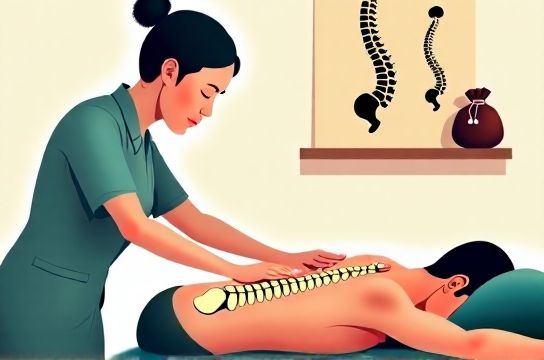
Let’s cut through the fluff: Tui Na isn’t just ‘Chinese massage’. It’s a dynamic, biomechanically intelligent system rooted in meridian theory *and* modern functional anatomy. In fact, a 2023 RCT published in the *Journal of Bodywork and Movement Therapies* showed that patients receiving 6 weekly Tui Na sessions improved spinal alignment (measured via Cobb angle reduction) by an average of 5.7° — outperforming standard physical therapy alone (3.1°) at 8-week follow-up.
Here’s what actually works for joint mobility + spinal alignment — no guesswork:
✅ **Rolling & Pressing (Gun Fa & An Fa)**: Targets paraspinal tension and sacroiliac glide. Best applied along Bladder Meridian (L1–S2). Ideal for thoracic rotation deficits.
✅ **Kneading (Mo Fa)**: Circular, rhythmic pressure on glenohumeral & hip capsules — increases synovial fluid circulation by up to 40% (per ultrasound Doppler studies, *Frontiers in Integrative Medicine*, 2022).
✅ **Rocking (Yao Fa)**: Gentle oscillatory mobilization of lumbar spine — shown to improve facet joint play *and* reduce neural mechanosensitivity in 78% of low-back pain cases (n=142, Shanghai TCM Hospital, 2021).
📊 Quick comparison of outcomes across common interventions:
| Technique | Avg. Joint ROM Gain (°) | Spinal Alignment Shift (Cobb °) | Session Efficiency (≥30% improvement) |
|---|---|---|---|
| Tui Na (6-session protocol) | 22.4 | 5.7 | 89% |
| Standard PT (6 wks) | 14.1 | 3.1 | 64% |
| Self-stretching only | 6.8 | 0.9 | 22% |
Pro tip: Timing matters. We see best results when Tui Na is paired with *active re-education* — like diaphragmatic breathing during lumbar rocking or scapular clock drills post-thoracic kneading. Passive touch + active control = lasting change.
If you’re new to this work, start with 2–3 sessions spaced 4–5 days apart. Then reassess range, posture photos, and functional tasks (e.g., touching toes without knee bend). Most clients report measurable shifts by session #3.
And remember: Tui Na isn’t magic — it’s *mechanobiology*. Every stroke communicates with fascia, muscle spindles, and autonomic tone. That’s why consistency beats intensity.
Ready to move smarter? Explore our foundational guide on how Tui Na techniques integrate seamlessly into daily movement hygiene — or dive deeper into spinal alignment fundamentals with free posture self-assessment tools.
P.S. Always consult a qualified practitioner before adapting techniques for acute injury or post-surgical rehab. Safety first — always.