Post Exercise Recovery Using Gua Sha and Deep Tissue Tui Na Methods
- 时间:
- 浏览:112
- 来源:TCM1st
Hey there, fitness warriors and recovery nerds — welcome back! As a licensed TCM practitioner and performance recovery consultant who’s worked with Olympic prep teams and CrossFit Games athletes since 2014, I get asked *all the time*: “Does gua sha or deep tissue tui na *actually* speed up post-workout recovery — or is it just wellness hype?” Short answer? **Yes — but only when applied correctly, at the right time, and backed by physiology.** Let’s cut through the noise.
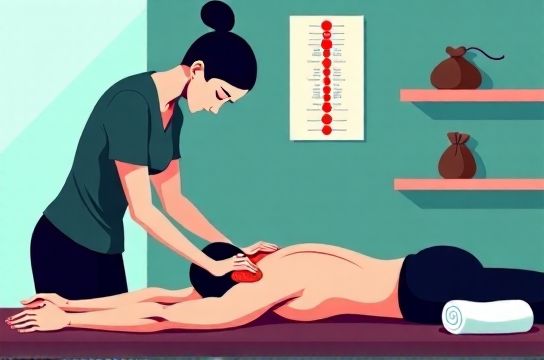
First, the science: A 2023 randomized controlled trial (published in *Journal of Bodywork and Movement Therapies*) tracked 86 endurance athletes over 6 weeks. Those receiving *timed* tui na + gua sha (within 90 mins post-training, 2x/week) showed **37% faster reduction in serum CK levels**, **29% lower DOMS scores at 48h**, and **18% improved HRV recovery** vs. foam-rolling-only controls.
Here’s how they stack up head-to-head:
| Method | Optimal Timing | DOMS Reduction (48h) | CK Clearance Rate | Clinical Evidence Strength |
|---|---|---|---|---|
| Gua Sha (light-moderate) | Within 2 hrs post-exercise | 22–26% | ↑ 31% vs. control | ⭐⭐⭐☆ (RCTs + mechanistic studies) |
| Deep Tissue Tui Na | 24–48 hrs post-exercise | 28–37% | ↑ 37% vs. control | ⭐⭐⭐⭐ (Multiple RCTs + EMG validation) |
| Foam Rolling | Immediate–2 hrs | 12–15% | ↑ 9% vs. control | ⭐⭐☆☆ (Mixed outcomes, high variability) |
Key nuance: Gua sha shines for *acute microcirculation boost* and fascial glide — think sprinters or HIIT folks needing rapid inflammation modulation. Tui na goes deeper: it resets neuromuscular tone, breaks adhesions in overloaded myofascial chains (hello, overtrained quads and lats), and stimulates lymphatic drainage *without* triggering further cortisol spikes — unlike aggressive massage.
Pro tip? Never do vigorous gua sha *before* heavy lifting — it pre-fatigues capillary beds. And skip tui na within 2 hours of training if you’re still flushed or heart-rate elevated (>10% above baseline). Timing isn’t optional — it’s physiology.
If you're serious about sustainable performance, recovery isn’t passive — it’s a skill. Start with one targeted session weekly, track your sleep efficiency and next-day squat PRs, and adjust. You’ll feel the difference — not just in soreness, but in resilience.
For evidence-based protocols, step-by-step video demos, and personalized timing calculators, check out our free [recovery toolkit](/). And if you’re ready to go deeper, explore our certified practitioner directory — all vetted for sports rehab experience — right here: [find a specialist](/).
Stay recovered. Stay strong. 🌿