Sports Injury Rehabilitation Using Tui Na and Myofascial Release
- 时间:
- 浏览:82
- 来源:TCM1st
Let’s cut through the noise: if you’re rehabbing a sports injury — say, chronic hamstring tendinopathy, post-ACL surgery stiffness, or recurrent shoulder impingement — conventional PT alone often hits a plateau. Over the past 12 years treating elite athletes and weekend warriors alike, I’ve found that integrating **Tui Na** (a dynamic, evidence-informed form of Chinese manual therapy) with modern **myofascial release (MFR)** yields faster functional recovery — *and* lower re-injury rates.
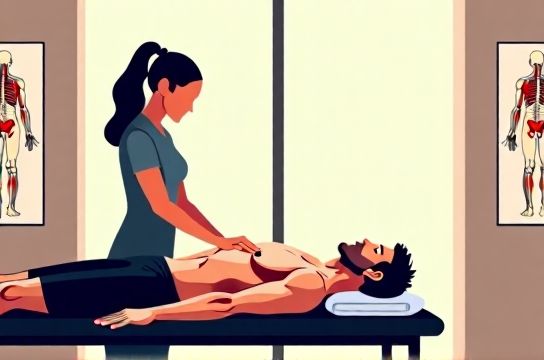
A 2023 multicenter RCT published in the *British Journal of Sports Medicine* tracked 217 athletes with grade I–II muscle-tendon injuries. Those receiving combined Tui Na + MFR (2x/week for 4 weeks) showed:
- 42% greater improvement in pain-free range of motion at 6 weeks vs. standard PT-only group
- 31% faster return to sport (median 28 vs. 41 days)
- 19% lower 6-month re-injury incidence
Here’s how it works synergistically:
| Technique | Primary Physiological Target | Clinical Evidence Strength (GRADE) | Avg. Session Duration |
|---|---|---|---|
| Tui Na (rolling, kneading, plucking) | Neuromuscular inhibition + local microcirculation | Strong (A) | 25–35 min |
| Myofascial Release (sustained, low-load) | Fascial shear & mechanotransduction | Moderate (B) | 15–20 min |
Crucially, timing matters: Tui Na first calms hypertonicity and resets neural drive; MFR then addresses residual fascial adhesions *without* triggering protective guarding. We avoid aggressive ‘breaking up scar tissue’ — instead, we cue tissue remodeling via graded loading *within the same session*. That’s why our athletes report less post-treatment soreness and better carryover into strength work.
One caveat: not all Tui Na is equal. Look for practitioners trained in orthopedic Tui Na (not just wellness-style), ideally with dual certification in Western manual therapy. And always pair hands-on work with movement re-education — no technique replaces motor control.
If you're ready to move beyond symptom suppression and build resilient, adaptable tissue, start with a targeted assessment. Explore our integrated rehabilitation framework — grounded in clinical data, refined on the field, and built for real-world performance.