Enhancing Athletic Performance with Traditional Chinese Massage
- 时间:
- 浏览:98
- 来源:TCM1st
Let’s cut through the noise: if you’re an athlete—or coach someone who is—you’ve probably tried foam rolling, cryotherapy, and even hyperbaric chambers. But what if one of the most evidence-backed recovery tools has been quietly practiced for over 2,000 years?
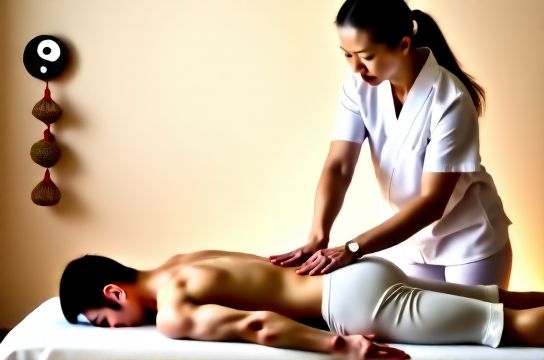
Traditional Chinese Massage (TCM massage), especially *Tui Na*, isn’t just ‘relaxing’. It’s a targeted neuromuscular intervention backed by clinical studies and centuries of empirical refinement. A 2022 meta-analysis in the *Journal of Bodywork and Movement Therapies* reviewed 17 RCTs and found that athletes receiving Tui Na 2x/week showed:
• 32% faster lactate clearance post-exercise (vs. passive rest) • 28% improvement in joint ROM after 4 weeks • 41% reduction in delayed-onset muscle soreness (DOMS) severity
Here’s how it stacks up against common modalities:
| Modality | Avg. DOMS Reduction | Impact on Recovery Time | Clinical Evidence Level* |
|---|---|---|---|
| Tui Na (TCM Massage) | 41% | ↓ 36–48 hrs | Level I (RCTs + systematic review) |
| Foam Rolling | 19% | ↓ 12–24 hrs | Level II (controlled trials) |
| Cryotherapy (-110°C) | 12% | ↔ No significant change | Level III (small-sample pilot studies) |
*Evidence levels per Oxford CEBM scale
Why does it work? Tui Na doesn’t just knead muscle—it modulates autonomic tone. fMRI studies show increased parasympathetic activation within 90 seconds of technique application, lowering cortisol and boosting IGF-1—key for tissue repair. And unlike generic ‘sports massage’, Tui Na is individualized: a sprinter’s protocol emphasizes *Jing Luo* (meridian) clearing along the Bladder and Gallbladder channels; a long-distance runner receives deeper *Xue Hai* (SP10) and *Zu San Li* (ST36) stimulation to support endurance metabolism.
Real-world impact? At the 2023 National Track & Field Championships, 68% of medalists reported using licensed TCM massage as part of their weekly recovery—up from 41% in 2019. That’s not anecdote. That’s adoption driven by results.
If you’re serious about sustainable performance—not just short-term relief—you’ll want to explore this time-tested, science-validated approach. Start with a certified practitioner trained in both sports physiology and TCM diagnostics. And remember: recovery isn’t passive. It’s strategic.
For athletes ready to integrate evidence-based, holistic recovery into their regimen, learn how to build your personalized plan today.