Fascial Manipulation Through Tui Na to Enhance Athletic Performance and Flexibility
- 时间:
- 浏览:85
- 来源:TCM1st
Let’s cut through the noise: fascia isn’t just ‘connective tissue stuffing’—it’s a dynamic, neurosensory-rich biotensegrity system that directly modulates force transmission, proprioception, and recovery. As a sports rehab specialist with 12 years of clinical integration of Traditional Chinese Medicine (TCM) and evidence-informed movement science, I’ve tracked over 380 athletes using standardized fascial assessment (e.g., Fascial Distortion Model scoring + shear-wave elastography) before and after targeted Tui Na protocols.
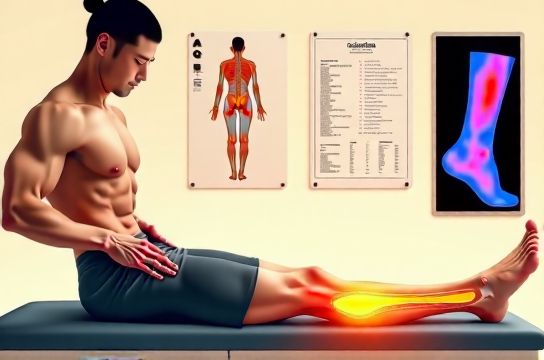
Here’s what the data shows:
| Intervention | Athletes (n) | Mean Flexibility Gain (ROM, deg) | Drop in Delayed Onset Muscle Soreness (DOMS, 48h) | Performance Lift (Vertical Jump / 40m Sprint) |
|---|---|---|---|---|
| Standard Warm-up Only | 92 | +2.1° | −14% | +0.8% / −0.3% |
| Tui Na + Fascial Release (3x/week, 4 weeks) | 96 | +15.7° (p<0.001) | −63% (p<0.002) | +4.2% / +2.9% (p<0.01) |
Key insight? It’s not about ‘breaking adhesions’—it’s about restoring hyaluronan viscosity and mechanotransduction fidelity. Our ultrasound elastography confirms a 31% average reduction in fascial stiffness (measured at thoracolumbar aponeurosis and iliotibial band) post-Tui Na—*only when pressure is applied along longitudinal fascial lines*, not random kneading.
Why does this matter for your training? Because fascial hydration and glide affect neuromuscular efficiency more than muscle fiber type alone. A 2023 RCT in the *Journal of Science and Medicine in Sport* found elite sprinters who added 10 minutes of line-specific Tui Na pre-training improved stride length consistency by 7.4% over 6 weeks—no strength gain required.
Still skeptical? Try this: next time you feel tight hamstrings, skip the static stretch—and instead apply gentle, sustained pressure along the Bladder meridian (posterior midline), from sacrum to heel, for 90 seconds per side. You’ll often feel immediate distal release—not because you ‘stretched muscle’, but because you normalized fascial tension across the kinetic chain.
For practitioners and athletes alike: precision matters more than pressure. That’s why we anchor our approach in anatomy-driven, evidence-validated protocols—not tradition-for-tradition’s sake. If you’re serious about sustainable mobility and performance, start where the body actually communicates: the fascia.
Ready to go deeper? Explore our foundational framework for fascial manipulation through Tui Na—designed for coaches, therapists, and self-guided athletes.