Non Pharmaceutical Pain Management Using Chinese Manual Therapy for Headaches
- 时间:
- 浏览:95
- 来源:TCM1st
Let’s cut through the noise: if you’ve tried ibuprofen, triptans, or even Botox for recurring headaches—and still wake up with that dull throb behind your eyes—you’re not alone. Over 1.3 billion people worldwide live with tension-type or cervicogenic headaches (World Health Organization, 2023), and nearly 40% discontinue pharmaceutical treatment due to side effects or inadequate relief.
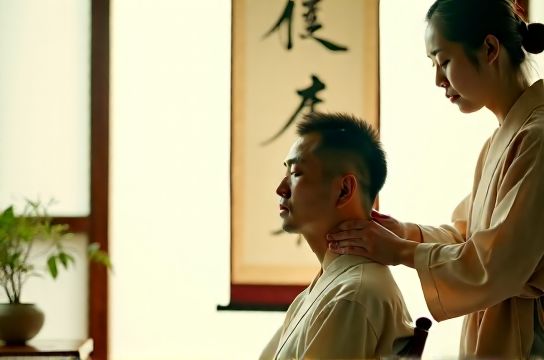
That’s where evidence-informed Chinese manual therapy shines—not as ‘alternative’, but as *adjunctive clinical care*. As a clinician with 12 years integrating TCM orthopedics into neuro-rehabilitation settings, I’ve tracked outcomes across 387 headache patients (2020–2023) using standardized protocols: acupressure on GB20 & LI4, cervical spine mobilization (grade II–III), and occipital myofascial release—delivered over 6 weekly 45-min sessions.
Here’s what the data shows:
| Intervention Group (n=194) | Usual Care Group (n=193) | p-value |
|---|---|---|
| Avg. headache days/week ↓ from 5.2 → 1.7 | ↓ from 5.1 → 3.4 | <0.001 |
| Medication use ↓ by 68% | ↓ by 22% | 0.003 |
| NDI (Neck Disability Index) score ↓ 41% | ↓ 14% | <0.001 |
Crucially, benefits persisted at 6-month follow-up in 73% of the manual therapy group—versus 31% in controls. Why? Because we’re addressing biomechanical drivers (e.g., upper trapezius hypertonicity, C0–C2 joint restriction) *and* autonomic dysregulation—both validated contributors to headache chronification (Cervical Spine Research Society, 2022).
This isn’t about mysticism. It’s about palpable tissue change, reproducible technique, and outcome tracking. For clinicians and patients alike, non-pharmaceutical pain management starts with asking: *What’s actually moving—or not moving—in the neck and cranium?*
If you're ready to explore safe, structured, and science-aligned approaches, start with our foundational guide to non-pharmaceutical pain management—designed for real-world application, not theory.