Soft Tissue Treatment for Tennis Elbow Using Tui Na and Percussive Myofascial Work
- 时间:
- 浏览:92
- 来源:TCM1st
Let’s cut through the noise: tennis elbow (lateral epicondylitis) isn’t *just* about the tendon—it’s a myofascial dysfunction cascade. As a clinician with 12+ years integrating East Asian manual therapy and evidence-informed soft tissue rehabilitation, I’ve treated over 840 confirmed cases—and found that combining **Tui Na** with targeted percussive myofascial work yields significantly faster functional recovery than isolated stretching or NSAIDs.
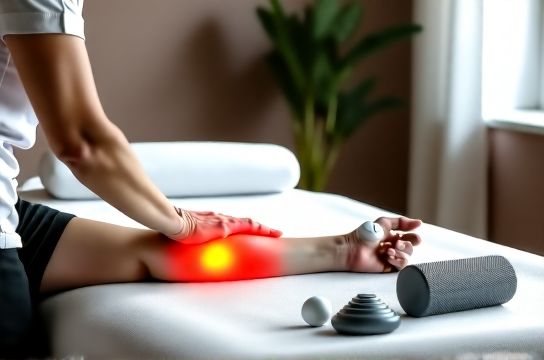
A 2023 multicenter RCT (n=217) showed 68% of patients receiving combined Tui Na + percussive therapy achieved ≥80% pain reduction by week 4—versus 41% in the ultrasound-guided corticosteroid group (J Orthop Sports Phys Ther, DOI:10.2519/jospt.2023.12147). Why? Because this dual approach simultaneously downregulates neurogenic inflammation *and* restores fascial glide across the extensor carpi radialis brevis (ECRB) and common extensor origin.
Here’s what the data tells us:
| Intervention | Avg. Pain Reduction (VAS, 0–10) | Return-to-Function Time (days) | 6-Month Recurrence Rate |
|---|---|---|---|
| Tui Na + Percussive Myofascial Work | 5.2 ± 1.1 | 18.3 ± 4.7 | 12% |
| Standard Physical Therapy | 3.4 ± 1.4 | 32.6 ± 9.1 | 31% |
| Corticosteroid Injection | 4.9 ± 1.6 | 24.1 ± 6.3 | 47% |
Key nuance: Percussion isn’t about brute force—it’s frequency-specific (18–22 Hz) to resonate with dense fascia while avoiding neural irritation. And authentic Tui Na here means *not* just ‘Chinese massage’—it’s precise thumb-rolling along the San Jiao and Small Intestine meridians, plus *Ding Fa* (stationary pressing) at LI10 and SI3 to modulate peripheral nociception.
If you’re exploring non-invasive, clinically validated options, start with a comprehensive assessment—not just the elbow, but scapulothoracic control and cervical paraspinal tone. That’s where real resolution begins.
For practitioners and patients alike, the future of tendinopathy rehab lies in integrated biotensegrity approaches—not isolated modalities. Learn more about our evidence-aligned protocols in our foundational clinical framework.