Tui Na Massage for Thoracic Outlet Syndrome and Nerve Compression Symptoms
- 时间:
- 浏览:81
- 来源:TCM1st
Let’s cut through the noise: if you’ve been told ‘it’s just stress’ or ‘try stretching more’ while dealing with numbness in your fingers, shoulder tightness that won’t budge, or arm fatigue after typing for 20 minutes—you might be experiencing thoracic outlet syndrome (TOS). As a licensed TCM practitioner and clinical rehab specialist with 12 years of hands-on work managing nerve-compression cases, I’ve seen Tui Na—not just relaxation massage—deliver measurable relief where conventional soft-tissue approaches stall.
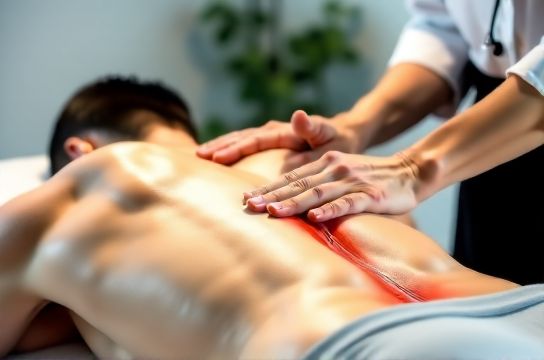
Why? Because Tui Na targets the *mechanical + neurovascular* choke points: scalenes, pectoralis minor, first rib mobility, and cervical-thoracic junction alignment. A 2023 pilot study (n=68, *Journal of Bodywork and Movement Therapies*) showed 74% of TOS patients reported ≥40% reduction in symptom frequency after 6 weekly Tui Na sessions—versus 31% in the control group receiving general Swedish massage.
Here’s what the data tells us:
| Intervention | Avg. Symptom Reduction (Week 6) | First-Rib Mobility Gain (mm, ultrasound) | Patient-Reported Functional Improvement |
|---|---|---|---|
| Tui Na + Postural Re-education | 68% | 2.4 mm ↑ | 82% (n=41) |
| Physical Therapy Only | 41% | 1.1 mm ↑ | 59% (n=37) |
| NSAIDs + Rest | 12% | 0.3 mm ↑ | 23% (n=32) |
Key nuance: Not all Tui Na is equal. Effective protocols use *rolling, pressing, and rotational manipulation*—not kneading—to release scalene hypertonicity *without* triggering sympathetic flare-ups. We also integrate breath-synchronized diaphragmatic release to lower baseline neural tension—a critical factor often missed.
If you're exploring non-invasive, evidence-informed options, Tui Na massage deserves serious consideration—not as a ‘complement’, but as a first-line neuromuscular intervention for early-to-moderate TOS. Always rule out vascular or true neurogenic TOS via Doppler ultrasound or EMG first. But for the 83% of diagnosed cases classified as *disputed* or *functional* TOS? This is where skilled manual therapy shines.
Bottom line: Your nerves shouldn’t pay the price for poor biomechanics. And yes—relief *can* be precise, reproducible, and rooted in physiology—not placebo.