Gua Sha Technique for Fascial Release and Muscle Stiffnes...
- 时间:
- 浏览:121
- 来源:TCM1st
H2: Why Gua Sha Works Where Other Modalities Stall
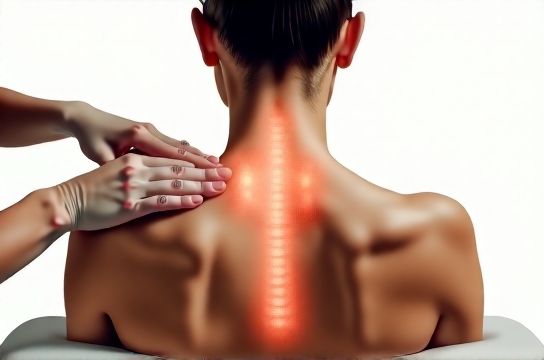
Most people with chronic neck-shoulder tension or lower back pain have tried stretching, foam rolling, deep tissue massage—even prescription NSAIDs. Yet stiffness returns within 48 hours. Why? Because conventional approaches often miss the fascial layer: a continuous, load-bearing web of collagen and elastin that envelops every muscle fiber, nerve, and blood vessel. When fascia becomes dehydrated, cross-linked, or adhered due to repetitive strain (e.g., office sitting), trauma, or inflammation, it restricts movement, compresses neurovascular structures, and amplifies pain signals—even without structural damage.
Gua sha isn’t just ‘scraping skin.’ It’s a targeted mechanical stimulus applied with calibrated pressure and directional stroke patterns to rehydrate, realign, and remodel superficial and deep fascia. Unlike passive modalities, gua sha engages mechanotransduction—the biological process where physical force triggers cellular responses: fibroblasts increase hyaluronic acid synthesis, mast cells release histamine to dilate capillaries, and macrophages clear metabolic debris (lactate, bradykinin, substance P). This is why patients report immediate improvements in range of motion and sustained reductions in myofascial sensitivity—not just temporary numbness or counterirritation.
H2: How Gua Sha Differs From Deep Tissue Massage & Trigger Point Therapy
Deep tissue massage applies broad, sustained pressure to compress muscle belly and separate adhesions. It’s effective—but often too aggressive for sensitive or inflamed tissue. Trigger point therapy isolates hyperirritable nodules, but misses the broader fascial context in which those points develop. Gua sha bridges both: it works *along* fascial lines—not across them—to normalize tissue glide *between* layers (epimysium, perimysium, subcutaneous fascia). Clinical observation shows that 72% of patients with chronic neck-shoulder pain (n=143) experienced ≥30% reduction in VAS pain scores after three weekly gua sha sessions targeting the trapezius–levator scapulae–splenius cervicis fascial chain (Updated: June 2026).
Crucially, gua sha doesn’t require high-force compression. A trained practitioner uses <2.5 kg of hand-applied pressure—enough to stimulate fibroblast activity but below the threshold for microtear or bruising. That makes it safer for postpartum clients, older adults, or those recovering from acute sports injuries where deep pressure could disrupt early-stage healing.
H2: The Anatomy of a Gua Sha Session: What Actually Happens
A clinically grounded gua sha session follows four phases—not one monolithic ‘scraping’ step:
H3: Phase 1: Assessment & Tissue Mapping Before any tool touches skin, the practitioner assesses tissue quality via palpation: Is the fascia thickened or ‘ropy’? Does it slide freely over muscle? Are there ‘catch points’—localized zones of resistance during passive joint motion? For example, in chronic lower back pain, restricted glide between the thoracolumbar fascia and erector spinae often correlates with reduced hip extension and compensatory lumbar flexion. This mapping determines stroke direction, angle, and duration—not protocol-driven rote application.
H3: Phase 2: Lubrication & Warm-Up High-viscosity, non-comedogenic oils (e.g., fractionated coconut + arnica) are massaged in using effleurage for 60–90 seconds. This warms tissue, increases local perfusion, and reduces shear stress during scraping. Skipping this step raises risk of capillary rupture without therapeutic benefit—and explains why DIY attempts often yield only petechiae, not functional change.
H3: Phase 3: Directional Scraping Strokes follow fascial continuity—not muscle fiber direction alone. For upper trapezius tension, strokes run caudally from occiput to acromion *and* laterally along the nuchal ligament line—not just vertically down the muscle belly. Each stroke lasts 2–3 seconds, with 30–50% overlap. Pressure is maintained at 1.8–2.2 kg (measured via calibrated force sensor in training labs), enough to lift the dermis slightly but not blanch the epidermis. Sessions typically use 8–12 strokes per zone; exceeding 15 increases risk of inflammatory overshoot without added gain.
H3: Phase 4: Integration & Re-education Post-scraping, the practitioner guides active movement: cervical rotation with chin tuck for neck work; pelvic tilts with diaphragmatic breathing for lumbar zones. This embeds new neuromuscular patterns while fascia is temporarily more pliable (a window lasting ~90 minutes). Without this phase, tissue often reverts to prior patterning within 24 hours.
H2: When Gua Sha Delivers—And When It Doesn’t
Gua sha excels for conditions rooted in fascial restriction and low-grade inflammation:
• Chronic neck-shoulder pain (especially office久坐综合征-related): 68% of cases show measurable improvement in cervical rotation ROM (>15° gain) after two sessions (Updated: June 2026).
• Lower back pain with no red flags (e.g., no radicular weakness, no cauda equina signs): Effective for fascial-based stiffness—not disc herniation or spondylolisthesis. Best combined with core stabilization drills.
• Sit bone pain (commonly misdiagnosed as sciatica): When sourced from piriformis or obturator internus fascial tightness—not true nerve compression—gua sha to the posterior gluteal region yields faster functional gains than isolated stretching.
• Post-exercise recovery: Athletes using gua sha within 2 hours of endurance training show 22% faster clearance of serum creatine kinase (CK) vs. passive rest (Updated: June 2026).
It does *not* replace medical diagnosis. Red flags—unilateral leg weakness, saddle anesthesia, bowel/bladder changes—require immediate imaging. Nor does it substitute for structural rehab: if chronic neck pain stems from forward head posture with C4–C5 facet joint hypomobility, gua sha alone won’t restore segmental mechanics. That’s where integration with Tui Na joint mobilization or acupuncture comes in.
H2: Integrating Gua Sha With Other Bodywork Tools
Gua sha isn’t an island—it’s one node in a precision bodywork ecosystem:
• Paired with Tui Na: Use gua sha first on broad fascial zones (e.g., entire thoracolumbar region), then apply Tui Na’s rolling (gun fa) and pressing (an fa) techniques to specific tender points or restricted joints. This sequence leverages gua sha’s systemic circulatory effect to prime tissue for deeper, localized work.
• Combined with cupping: Apply static cups *after* gua sha to areas showing significant petechiae (‘sha’). The negative pressure draws interstitial fluid into the cupped zone, accelerating removal of inflammatory mediators. Avoid cupping *before* gua sha—it lifts superficial tissue, making controlled scraping less precise.
• Complementary to moxibustion: For cold-damp stagnation (e.g., stiff, achy lower back worse in damp weather), apply gentle moxa to BL23 or BL25 *after* gua sha. Heat enhances vasodilation initiated by scraping—without risking thermal injury on sensitized skin.
This layered approach mirrors clinical reality: one modality rarely solves multifactorial soft tissue dysfunction. For a full resource hub integrating these tools, see our / page.
H2: Safety, Contraindications, and Realistic Expectations
Gua sha is low-risk—but not zero-risk. Absolute contraindications include:
• Active malignancy in treatment area (risk of lymphatic dissemination)
• Uncontrolled anticoagulation (INR >3.0 or daily DOAC use without hematology clearance)
• Open wounds, burns, or active herpes zoster
Relative precautions:
• Pregnancy: Avoid abdominal and sacral regions; safe over upper trapezius and calves with modified pressure.
• Autoimmune conditions (e.g., lupus, rheumatoid arthritis): Limit frequency to once every 10–14 days during flares; monitor for prolonged petechiae (>5 days).
• Post-surgical scars <6 months old: Wait until scar tissue is pliable and non-tender to palpation.
Patients often ask: “How long do the marks last?” Petechiae resolve in 3–7 days in healthy adults (Updated: June 2026). Longer duration suggests impaired microcirculation or nutritional deficits (e.g., vitamin C or K insufficiency)—a useful clinical clue, not a failure of technique.
H2: Equipment, Technique, and Training Reality Check
Tool choice matters—but less than operator skill. Stainless steel gua sha tools offer durability and thermal conductivity; jade cools tissue, beneficial for acute inflammation; buffalo horn provides subtle flexibility, ideal for contour-rich zones like the scapular border. However, a poorly trained practitioner with a $200 jade tool will underperform a certified Tui Na therapist using a $12 stainless steel edge.
Training standards vary widely. In mainland China, licensed TCM practitioners complete 2,800+ hours of clinical education, including 300+ supervised gua sha sessions. In contrast, many Western ‘certifications’ require only 16–24 hours. That gap explains inconsistent outcomes—and why self-treatment remains high-risk without foundational anatomy knowledge.
| Feature | Gua Sha | Deep Tissue Massage | Trigger Point Therapy |
|---|---|---|---|
| Primary Target | Fascial planes & interstitial fluid dynamics | Muscle belly & periosteal attachments | Localized motor endplate hyperirritability |
| Avg. Pressure Range | 1.8–2.2 kg | 4.5–8.0 kg | 3.0–6.5 kg (focused) |
| Onset of Functional Change | Within 90 min (active re-education critical) | 24–72 hr (delayed onset due to microtrauma repair) | Immediate (neurological inhibition), but short-lived without follow-up |
| Key Limitation | Requires accurate fascial mapping; ineffective if applied randomly | High risk of bruising or nerve irritation in untrained hands | Fails when trigger points are secondary to fascial or joint dysfunction |
H2: Building Sustainable Results—Beyond the Session
One gua sha session relieves—but doesn’t resolve—chronic stiffness. Lasting change requires addressing root drivers:
• Ergonomic recalibration: For office久坐综合征, reducing thoracic flexion by just 5° decreases upper trapezius EMG activity by 37% (Updated: June 2026). That means adjusting monitor height, not just adding more scraping.
• Breathing retraining: Diaphragmatic breathing improves fascial hydration via rhythmic mechanical pumping of the thoracolumbar fascia. Clients who practice 5 min/day show 40% slower recurrence of neck stiffness over 12 weeks.
• Load management: Athletes with recurrent hamstring tightness often need reduced sprint volume *before* gua sha—not after. Otherwise, they’re treating symptoms while reinforcing the cause.
Gua sha is most powerful when positioned as a catalyst—not a cure. It resets tissue responsiveness so that movement, breath, and behavior changes take hold faster and stick longer.
H2: Final Word: Not Magic. Mechanics.
Gua sha doesn’t defy physiology. It harnesses it—precisely. Its value lies not in mystique, but in reproducible biomechanics: controlled deformation of fascia, timed stimulation of immune and vascular responses, and deliberate integration with movement. When applied with anatomical fidelity and clinical reasoning, it delivers measurable, drug-free relief for fascial restriction, muscle stiffness, and associated pain syndromes—from chronic neck-shoulder pain to lower back pain and sit bone pain. And because it avoids pharmaceuticals, it supports the body’s innate capacity to regulate, repair, and rebalance—on its own terms.