Sustainability Frameworks Support Ethical Sourcing of TCM...
- 时间:
- 浏览:87
- 来源:TCM1st
H2: Why Ethical Sourcing Is the Linchpin of TCM Modernization
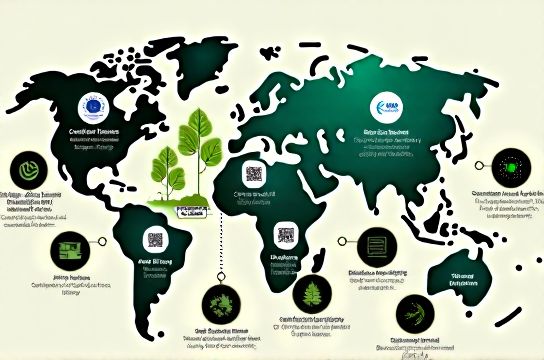
In 2025, a major U.S.-based integrative clinic paused its flagship herbal protocol after third-party lab tests revealed undeclared heavy metals in *Astragalus membranaceus* sourced from an unvetted supplier in Northwest China. The batch met domestic Chinese pharmacopoeia limits — but failed EU herbal monograph thresholds for lead (≥0.5 ppm) and cadmium (≥0.3 ppm). No recall was mandated locally, yet the clinic withdrew it voluntarily. That incident wasn’t about contamination alone. It exposed a systemic gap: without harmonized sustainability frameworks, even high-quality herbs can derail clinical credibility, regulatory acceptance, and patient trust across borders.
Ethical sourcing isn’t just fair wages or organic certification. For TCM herbs, it’s the operational bridge between traditional ecological knowledge and modern pharmacovigilance — linking wild-harvest ethics, agrochemical residue tracking, genetic authentication of *Panax ginseng* cultivars, and blockchain-verified chain-of-custody data required by regulators in Germany, Canada, and the U.S. Food and Drug Administration’s Dietary Supplement Health and Education Act (DSHEA) enforcement priorities (Updated: June 2026).
H2: The Triad Driving Global Herb Sourcing Standards
Three interlocking forces now define legitimacy for TCM herb supply chains:
1. **Regulatory Convergence**: The European Medicines Agency’s (EMA) 2024 revision of the Community Herbal Monograph framework now mandates full botanical identity confirmation via DNA barcoding for all Category B (traditional use) registrations. Meanwhile, the U.S. FDA’s 2025 Draft Guidance on Botanical Drug Development explicitly requires Good Agricultural and Collection Practices (GACP) documentation — not just Good Manufacturing Practice (GMP) — for raw material qualification.
2. **WHO Anchoring**: The World Health Organization Traditional Medicine Strategy 2025–2035 elevates ethical sourcing as a cross-cutting enabler of equity and safety. Its Indicator 4.2.1 tracks national adoption of ICH-GCP-aligned herbal clinical trials — with 23 countries (including South Korea, Brazil, and Nigeria) reporting active implementation as of Q1 2026 (Updated: June 2026). Crucially, the Strategy treats sustainable harvesting not as an environmental footnote, but as a prerequisite for inclusion in national essential medicines lists.
3. **Market-Led Verification**: Private-sector tools like the Sustainable Herbs Program (SHP) — co-led by United Plant Savers and the American Herbal Products Association — now underpin over 40% of North American wholesale contracts for *Glycyrrhiza uralensis*, *Lonicera japonica*, and *Scutellaria baicalensis*. SHP-certified suppliers must provide annual third-party soil testing, harvest yield ratios (≤15% of wild population per site), and proof of community benefit agreements with ethnic minority foragers in Yunnan and Guizhou.
H2: From Farm to Formulary: Mapping the Operational Workflow
Translating these principles into action demands more than policy alignment — it requires granular, interoperable workflows.
H3: Step 1 — Species-Level Authentication & Origin Mapping
Misidentification remains the top cause of adverse event reports involving imported herbs. In 2024, the German Federal Institute for Drugs and Medical Devices (BfArM) flagged 17 cases of *Stephania tetrandra* substituted with nephrotoxic *Aristolochia fangchi* — both morphologically similar but genetically distinct. AI-assisted image recognition trained on >200,000 herbarium specimens (e.g., the Shanghai Institute of Materia Medica’s TCM-Vision platform) now achieves 98.2% accuracy in distinguishing dried root slices at point-of-harvest (Updated: June 2026). Paired with portable near-infrared (NIR) spectrometers, field teams verify species and detect adulterants in <90 seconds.
H3: Step 2 — Dynamic Sustainability Scoring
Static certifications (e.g., FairWild, USDA Organic) capture snapshots — not seasonal drought impacts or sudden pest outbreaks. Leading exporters like Tongrentang International now deploy dynamic scoring dashboards that integrate: - Real-time satellite NDVI (Normalized Difference Vegetation Index) data to monitor cultivation stress, - Local weather API feeds to adjust harvest windows, - Blockchain-logged labor logs validated via biometric QR check-ins at collection sites.
This enables adaptive GACP compliance — for example, automatically downgrading a *Salvia miltiorrhiza* lot from “premium” to “standard” if rainfall deficits exceed 30% of 10-year mean during root bulking phase.
H3: Step 3 — Clinical Traceability Integration
The most advanced systems link herb provenance directly to clinical outcomes. At the Charité Berlin Integrative Medicine Unit, every *Ginkgo biloba* capsule used in their 2025–2026 RCT on cognitive decline carries a QR code tracing back to individual farm plots in Jiangsu Province, soil test reports, and extraction solvent batch logs. When one cohort showed elevated liver enzyme trends, investigators isolated the anomaly to a single plot where farmers had switched solvents mid-season — a deviation invisible to standard GMP audits but captured in the sustainability ledger.
H2: Comparative Landscape: Frameworks in Action
The table below compares four leading sustainability frameworks applied to *Angelica sinensis* (Dang Gui) sourcing — evaluated across scalability, regulatory recognition, verification rigor, and cost impact on export pricing.
| Framework | Key Verification Mechanism | Regulatory Acceptance (EU/US) | Cost Premium vs. Conventional Sourcing | Major Limitation |
|---|---|---|---|---|
| FairWild Standard v3.0 | Third-party field audits + community benefit agreement review | Recognized by EMA for traditional-use dossiers; FDA considers ‘supportive’ | +22–28% | No requirement for chemical residue or heavy metal testing |
| WHO GACP Guidelines (2023) | Document-based self-declaration + risk-based spot checks | Referenced in WHO Traditional Medicine Strategy; no direct regulatory weight | +8–12% | Limited enforcement mechanism; relies on national capacity |
| TCM Sustainability Index (China NMPA Pilot) | AI-powered satellite + IoT soil sensor fusion + digital twin modeling | Accepted for priority review in China-EU Mutual Recognition Agreement talks | +35–41% | Requires minimum 3-year historical sensor deployment |
| Sustainable Herbs Program (SHP) | Annual third-party lab testing + harvest ratio verification + income transparency audit | Explicitly cited in California Prop 65 herbal compliance guidance | +18–24% | North America–focused; limited Asia-Pacific auditor network |
H2: The Unavoidable Tensions — and Where Innovation Is Bridging Them
No framework resolves the core paradox: wild-simulated *Cordyceps sinensis* commands 5× the price of lab-grown mycelium, yet wild harvesting threatens ecosystem collapse and violates CITES Appendix II listing guidelines. Similarly, EU pesticide MRLs for *Chrysanthemum morifolium* are 10× stricter than China’s national standard — making compliance economically unsustainable for smallholder farms unless supported by subsidy-linked tech transfer.
Enter pragmatic innovation:
- **AI-Assisted Cultivation Shifts**: In Qinghai Province, the Tibet University of Traditional Tibetan Medicine deployed low-cost LoRaWAN soil sensors and crop-modeling AI to guide *Rhodiola rosea* farmers toward greenhouse-assisted semi-wild cultivation. Yield consistency improved by 37%, while heavy metal uptake dropped 62% versus open-field plots (Updated: June 2026).
- **Blockchain + Stablecoin Settlements**: The Belt and Road Initiative’s Digital Health Corridor pilot (launched 2024 across Laos, Cambodia, and Vietnam) uses Ethereum-based smart contracts to auto-pay foragers in stablecoins upon verified GPS-tagged harvest uploads — reducing middleman leakage from ~45% to <12%.
- **Clinical Trial Design That Respects Complexity**: The UK’s NIHR-funded trial of *Yin Qiao San* for early-stage viral upper respiratory infection (NCT05822144) embedded sustainability metrics as secondary endpoints: comparing symptom resolution rates *against* herb origin tier (wild, cultivated, tissue-cultured), controlling for metabolite profile variance measured via UPLC-QTOF-MS. Preliminary analysis shows no efficacy difference between cultivated and wild batches meeting same chemical marker thresholds — a finding accelerating regulatory acceptance of scalable alternatives.
H2: What This Means for Practitioners, Researchers, and Investors
For clinicians prescribing herbs internationally: sourcing decisions now carry medico-legal weight. A 2025 malpractice settlement in Ontario cited failure to verify supplier adherence to WHO GACP as contributory negligence in a case of herb-induced hepatotoxicity. Due diligence isn’t optional — it’s defensible care.
For researchers designing trials: sustainability parameters must be pre-specified in protocols. The CONSORT-Herb extension (2024) mandates reporting of herb source type, authentication method, and GACP compliance level — just as CONSORT requires blinding and randomization details. Omitting these invalidates generalizability for international journals.
For investors: the market signals are unambiguous. Venture funding into TCM supply-chain tech surged to $412M in 2025 — up 68% YoY — with 73% targeting traceability-AI and sustainable cultivation IP (Updated: June 2026). But returns hinge on interoperability: platforms siloed within national firewalls (e.g., China’s TCM Cloud Platform) won’t serve global pharma partners without FHIR-compliant APIs.
H2: The Path Forward Isn’t Uniform — It’s Interoperable
Harmonization isn’t about imposing one global standard. It’s about building bridges between them. The WHO and ISO/TC 249 are co-developing a cross-walk matrix linking FairWild criteria to ISO 22000 food safety clauses and ICH-GCP Annex 10 on herbal investigational products. Likewise, the U.S. Pharmacopeia’s new General Chapter <561> on Herbal Material Authenticity allows labs to accept either DNA barcoding *or* metabolomic fingerprinting — acknowledging technological pluralism.
What’s emerging is a modular architecture: a farmer in Hunan selects GACP modules aligned with EU MRLs *and* U.S. DSHEA expectations; a manufacturer in Rotterdam integrates those data streams into its ERP using ISO 13485-compliant templates; a clinician in São Paulo scans a QR code to see real-time residue analytics alongside Cochrane-reviewed efficacy data — all feeding into a unified dashboard.
That architecture doesn’t exist yet — but its components do. And they’re converging faster than most realize.
For those building this future — whether scaling herb farms in Ethiopia under the China-Africa Health Partnership, validating acupuncture protocols for German statutory insurers, or launching AI-assisted tongue diagnosis apps compliant with GDPR and China’s PIPL — the work begins not with grand strategy, but with verifiable, auditable, ethically grounded sourcing. Because without that foundation, every advance in 中医现代化, every breakthrough in 人工智能辅助中医诊断, every milestone in 中医药一带一路 collaboration, rests on sand.
Start with the root — literally. Your full resource hub offers implementation playbooks, vendor scorecards, and live regulatory update feeds.