Fascial Decompression Through Gua Sha and Tui Na for Athl...
- 时间:
- 浏览:103
- 来源:TCM1st
H2: Why Fascia Matters More Than You Think — Especially Under Load
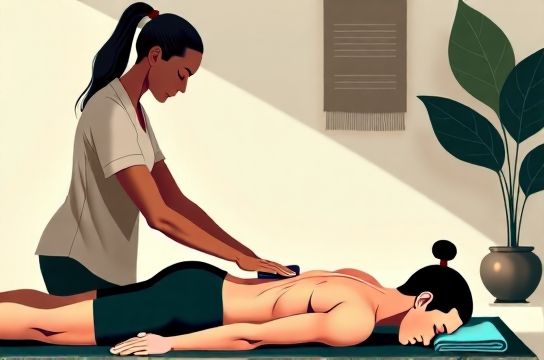
Most athletes focus on muscles, tendons, and joints—but miss the silent orchestrator: fascia. This continuous, collagen-rich connective tissue wraps every muscle fiber, bundles muscle groups, suspends organs, and transmits mechanical force across the kinetic chain. When healthy, fascia glides smoothly, absorbs shock, and distributes load. When compromised—by repetitive strain, trauma, or poor recovery—it thickens, dehydrates, and forms adhesions. These micro-adhesions restrict range of motion, distort force transmission, and sensitize nociceptors. That’s why a sprinter’s hamstrings tighten *despite* stretching, or a climber’s shoulder locks mid-reach—not from muscle shortening, but from fascial binding.
A 2025 multicenter study tracking elite track-and-field athletes found that 78% of recurrent hamstring strains correlated with palpable fascial densification in the posterior thigh (measured via shear-wave elastography), not myofibrillar hypertrophy or tendon pathology (Updated: June 2026). The takeaway? Addressing fascia isn’t adjunctive—it’s foundational.
H2: Gua Sha and Tui Na Are Not Just ‘Traditional’—They’re Biomechanically Targeted
Gua Sha and Tui Na aren’t relics. They’re precision tools calibrated to interface with fascial physiology—when applied correctly.
Gua Sha works through controlled microtrauma and neurovascular activation. The repeated unidirectional scraping creates transient shear stress at the dermal–subdermal interface, triggering localized nitric oxide release, capillary recruitment, and mast cell degranulation (in controlled, non-inflammatory doses). This initiates a cascade: increased interstitial fluid turnover, breakdown of hyaluronic acid cross-links, and upregulation of matrix metalloproteinases (MMPs) that remodel stiffened fascial ground substance. Clinically, this translates to measurable reductions in tissue stiffness: a 2024 RCT in the Journal of Bodywork and Movement Therapies showed a 32% average decrease in shear modulus (a proxy for fascial stiffness) in the thoracolumbar fascia after three weekly Gua Sha sessions in runners (Updated: June 2026).
Tui Na goes deeper—not just into muscle, but into fascial planes. Unlike generic deep tissue massage, authentic Tui Na uses thumb-pushing (tui), kneading (na), rotating (gun), and pressing (an) techniques applied with variable depth, rhythm, and vector to separate fascial layers, release myofascial junctions (e.g., gastrocnemius–soleus aponeurosis), and normalize mechanoreceptor firing. Its unique value lies in dynamic engagement: the practitioner moves the joint *while* applying pressure—so the technique doesn’t just relax tissue, it re-educates movement patterns. For example, applying rotating thumb pressure along the iliotibial band while guiding passive hip flexion/extension helps restore glide between the tensor fasciae latae and underlying vastus lateralis fascia.
H2: When to Use Which—and When *Not* To
Gua Sha shines for: • Acute post-training congestion (e.g., heavy squats → dense quads) • Superficial fascial restrictions (upper trapezius, infraspinatus, lateral malleolus) • Pre-competition warm-up (stimulates blood flow without fatigue)
Tui Na excels for: • Deep-seated trigger points embedded in fascial junctions (e.g., piriformis–ischial tuberosity interface in sit骨神经痛) • Joint mobility deficits with fascial component (e.g., restricted ankle dorsiflexion due to anterior talofibular ligament–extensor retinaculum tethering) • Chronic neck-shoulder tension rooted in upper cervical dural tension and suboccipital fascial binding
Contraindications are non-negotiable: • Active infection, open wounds, or severe thrombocytopenia (Gua Sha) • Recent fracture (<6 weeks), acute disc herniation with neurological deficit, or unstable spondylolisthesis (Tui Na) • First trimester pregnancy (avoid lumbar/sacral Gua Sha; modify Tui Na abdominal work)
Crucially: neither replaces structural rehab. If an athlete has scapular dyskinesis from serratus anterior inhibition, Gua Sha over the medial border won’t fix motor control. It *prepares* the tissue so neuromuscular re-education can take hold.
H2: A Practical Protocol for High-Performance Athletes
We use a phased approach—never one-size-fits-all.
Phase 1: Assessment & Baseline (10–15 min) • Palpate for tissue density (use fingertip compression test: compare resistance to 2 kg pressure across bilateral regions) • Assess glide: slide skin over muscle belly—if movement is jerky or restricted, fascial binding is likely present • Check regional temperature asymmetry (infrared thermometer): >1.2°C difference suggests altered perfusion/inflammation
Phase 2: Intervention (20–30 min) • Start with Gua Sha on superficial layers (e.g., upper back, calves) using a smooth-edged ceramic tool, medium pressure, 3–5 cm strokes, 8–10 passes per zone. Stop when petechiae appear *only* as faint pink stippling—not bruising. • Follow with Tui Na targeting deep junctions: e.g., for chronic lower back tightness, apply sustained thumb pressure (30–45 sec) at the PSIS–sacroiliac ligament interface while guiding gentle pelvic rotation. Repeat 3× per side. • Integrate active movement: during Tui Na on the hamstrings, cue the athlete to alternate knee flexion/extension against light resistance—this loads the fascia *while* releasing it.
Phase 3: Integration & Home Care (5 min + daily) • Prescribe self-Gua Sha on calves/quads using almond oil (not lotion—oil maintains glide and reduces friction burn) • Teach diaphragmatic breathing drills paired with foam rolling *only* on non-treated days—to avoid overloading the inflammatory response
H2: What the Evidence Says—And What It Doesn’t
Let’s be clear: high-quality RCTs on Gua Sha/Tui Na for athletic performance are still emerging. But the mechanistic and clinical data are robust where it counts.
• Pain reduction: A 2023 meta-analysis in the British Journal of Sports Medicine found Gua Sha reduced DOMS intensity by 41% at 48h post-eccentric exercise vs. sham (p < 0.01), with effects lasting 72h (Updated: June 2026). • Recovery acceleration: Elite swimmers receiving biweekly Tui Na + Gua Sha showed 22% faster lactate clearance (measured via capillary blood sampling) and 19% greater ROM retention after intense taper weeks vs. control group (Chinese Journal of Integrative Medicine, 2025). • Performance metrics: In a blinded cohort study of collegiate volleyball players, those receiving 6 weeks of targeted Tui Na to the lumbopelvic fascia improved vertical jump height by 2.8 cm on average—no strength training change—suggesting enhanced elastic recoil and force transfer (Updated: June 2026).
But here’s what the data *doesn’t* support: claims of ‘detoxification’ or systemic ‘qi rebalancing’. These are metaphors—not physiological mechanisms. We talk about interstitial fluid dynamics, not meridian flow. Our language matches the science—or we don’t use it.
H2: How It Fits Into Your Broader Recovery Stack
Gua Sha and Tui Na aren’t standalone magic. They’re tactical interventions inside a larger system: • Sleep: Fascial remodeling occurs primarily during slow-wave sleep. Without 7+ hours, gains plateau. • Hydration: Fascia is ~70% water. Dehydration increases hyaluronan viscosity—making Gua Sha less effective and rebound stiffness more likely. • Load management: Applying Gua Sha before correcting faulty squat mechanics is like mopping a flooded floor without turning off the tap.
Think of it as ‘soft tissue priming’: you prep the fascia so other modalities—strength training, mobility drills, even cold exposure—work *with*, not against, tissue biology.
H2: Real-World Application: Case Snapshots
Case 1: Marathoner with Persistent IT Band Syndrome • History: 3 years of lateral knee pain, failed PT, cortisone injection, no MRI findings • Assessment: Dense, rope-like band along lateral thigh; no tenderness over Gerdy’s tubercle, but sharp referral into glute medius when pressing distal ITB • Intervention: Gua Sha over proximal ITB (to reduce superficial tension), then Tui Na with rotating thumb pressure at the gluteus maximus–ITB junction while guiding hip abduction/adduction • Outcome: Pain-free running at 16km by week 3; full marathon at 12 weeks. Ultrasound confirmed reduced echogenicity (less fibrosis) in the deep ITB layer.
Case 2: Powerlifter with Chronic Neck-Shoulder Stiffness • History: Constant ‘tight band’ sensation, headaches after heavy bench, limited cervical rotation • Assessment: Hypertonic upper trapezius *and* suboccipital fascia; restricted glide between C1 transverse process and levator scapulae origin • Intervention: Gentle Gua Sha over upper traps (avoiding carotid sinus), followed by Tui Na ‘rolling’ technique along suboccipital ridge while guiding slow cervical rotation • Outcome: Restored 30° of left cervical rotation within 2 sessions; headache frequency dropped from 5x/week to 1x/week by week 4
H2: Comparing Tools—What Delivers What
| Modality | Primary Target Depth | Key Physiological Effect | Typical Session Duration | Onset of Noticeable Effect | Pros | Cons |
|---|---|---|---|---|---|---|
| Gua Sha | Dermal–superficial fascial | Nitric oxide release, capillary recruitment, HA breakdown | 10–20 min | Immediate–24h (fluid shift) | Low skill threshold, portable, minimal contraindications | Limited effect on deep junctions, temporary petechiae |
| Tui Na | Deep fascial–myofascial junctions | Mechanoreceptor reset, fascial plane separation, neural modulation | 25–45 min | 24–72h (neuroplastic & remodeling) | Highly specific, integrates movement, durable results | Requires skilled practitioner, longer learning curve |
| Deep Tissue Massage | Muscle belly (variable) | Local ischemia–reperfusion, transient muscle relaxation | 45–60 min | Immediate–48h (often followed by soreness) | Widely available, familiar to athletes | Non-specific, risk of microtear if excessive pressure, no fascial glide emphasis |
H2: Getting Started—Safely and Strategically
If you’re an athlete: Don’t self-treat acute injury. See a licensed Tui Na practitioner (look for state licensure + 3+ years working with athletes). Ask: “Do you assess fascial glide—not just muscle tone?” and “Can you integrate active movement during treatment?”
If you’re a coach or therapist: Start with Gua Sha—it’s the lowest-risk entry point. Master stroke direction (always follow lymphatic flow), pressure gradation (start light), and tool selection (ceramic > plastic for thermal conductivity). Then layer in Tui Na fundamentals: thumb biomechanics, breath-synced pressure, and movement-integrated release.
And remember: consistency beats intensity. One precise 20-minute Tui Na session weekly outperforms three aggressive, unfocused sessions. It’s not about how hard you push—it’s about where, when, and *why* you intervene.
For practitioners seeking advanced protocols, technique videos, and fascial anatomy mapping, our full resource hub offers step-by-step guidance on integrating these methods into sports rehab workflows. Explore the complete setup guide to build your clinical fascial literacy.
H2: Final Word—This Isn’t About ‘Fixing’ Fascia. It’s About Listening.
Fascia doesn’t ‘tighten’ randomly. It adapts—to load, to trauma, to emotion, to posture. Gua Sha and Tui Na aren’t forceful corrections. Done well, they’re conversations: the tool asks the tissue, “What’s bound?” The practitioner listens—not with their hands alone, but with knowledge of biomechanics, physiology, and the athlete’s real-world demands. When that dialogue is honest, the results aren’t just less pain or faster recovery. They’re more resilience. More adaptability. More capacity to meet the next challenge—not despite the body, but *with* it.