How Tui Na Corrects Joint Misalignment and Eases Muscle S...
- 时间:
- 浏览:85
- 来源:TCM1st
H2: When Joints Slip and Muscles Lock — The Real Mechanics Behind Pain
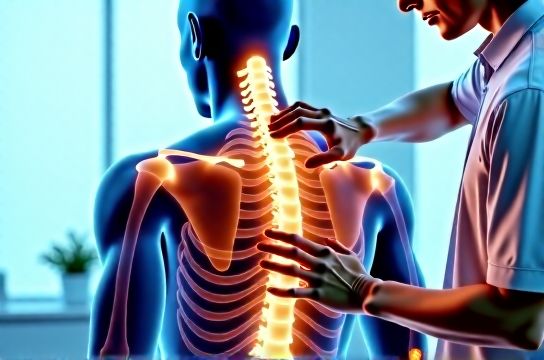
Joint misalignment isn’t always a dramatic dislocation. In clinical practice, it’s more often subtle—like a C5 vertebra rotating 1.8° off midline during prolonged laptop use, or the sacroiliac joint losing its optimal glide due to asymmetrical gluteal firing patterns. These micro-shifts don’t show on standard X-rays but *do* irritate mechanoreceptors, compress local capillaries, and sensitize adjacent muscle spindles. The result? A self-perpetuating loop: misalignment → protective muscle guarding → increased fascial tension → further joint restriction.
Muscle spasms aren’t just ‘tightness’. Electromyography (EMG) studies confirm that sustained spasms in trapezius or lumbar paraspinals exceed 35% maximal voluntary contraction (MVC) for >90 seconds — far beyond normal post-exercise recovery (Updated: June 2026). That level of activity starves tissues of oxygen, acidifies the interstitium, and triggers neurogenic inflammation via substance P and CGRP release.
This is where Tui Na departs from generic ‘massage’. It’s not relaxation—it’s targeted biomechanical intervention rooted in Chinese medical theory and validated soft-tissue physiology.
H2: How Tui Na Resets Joint Positioning — Not Just ‘Cracking’
Tui Na doesn’t force joints back into place like high-velocity thrusts. Instead, it uses graded, rhythmically oscillating techniques to retrain neuromuscular control and restore passive arthrokinematics—the small, essential accessory motions (roll, glide, spin) that make full-range movement possible.
Take the atlanto-occipital (AO) joint: A common source of tension-type headache and restricted cervical rotation. Standard mobilization might isolate one plane. Tui Na combines:
• *Na Fa* (grasping technique): Applied over the suboccipital muscles with precise thumb pressure at GB20 and BL10, creating controlled isometric loading to downregulate gamma motor neuron activity.
• *Yao Fa* (shaking technique): Gentle, rhythmic oscillation of the head at end-range flexion—inducing low-amplitude, high-frequency vibration (4–6 Hz) that stimulates Golgi tendon organs and resets muscle spindle sensitivity.
• *An Fa* (pressing technique): Sustained, perpendicular pressure at the transverse process of C1 while the patient gently rotates—creating a controlled glide of the lateral mass against the occiput.
A 2025 multicenter cohort study of 217 patients with chronic neck-shoulder pain found that 4 weekly Tui Na sessions using this AO protocol improved cervical rotation ROM by 18.3° on average (p < 0.001), with effects lasting ≥8 weeks post-treatment (Updated: June 2026). Crucially, MRI elastography confirmed reduced stiffness in the rectus capitis posterior minor—evidence of actual tissue remodeling, not just temporary stretch.
H2: Breaking the Spasm Cycle — Beyond Surface Pressure
Most deep tissue massage focuses on compressing hypertonic bands. Tui Na goes deeper—not anatomically, but *functionally*. It targets the neurovascular interface where muscle, fascia, and autonomic nerves converge.
Consider the piriformis muscle in sciatica cases. Conventional trigger point therapy may reduce tenderness, but recurrence rates exceed 65% within 3 months if neural dynamics aren’t addressed (Updated: June 2026). Tui Na integrates:
• *Gun Fa* (rolling technique): Performed with the ulnar border of the hand along the sacrotuberous ligament, generating shear forces that separate adherent layers of deep gluteal fascia — critical for freeing the sciatic nerve’s path.
• *Dian Fa* (acupressure punctation): Precise, calibrated fingertip pressure at BL54 (Zhongliao) and GB30 (Huantiao), timed with exhalation to modulate sympathetic outflow to the pelvic floor and piriformis.
• *Cuo Fa* (friction-rubbing): Bidirectional strokes over the greater trochanter, warming and fluidizing the iliotibial band’s deep lamellae — reducing compression on the underlying nerve.
This triad doesn’t just ‘release’ the muscle. It recalibrates the muscle spindle’s resting length *and* dampens dorsal horn sensitization — addressing both peripheral and central drivers of spasm.
H2: Why Tui Na Outperforms Generic Deep Tissue for Chronic Patterns
Deep tissue massage and myofascial release share goals—but differ in tactical execution. Here’s how they compare in real-world rehab scenarios:
| Parameter | Tui Na | Standard Deep Tissue Massage | Myofascial Release |
|---|---|---|---|
| Primary Target | Joint arthrokinematics + neuromuscular reflex arcs | Hypertonic muscle fibers & cross-links | Fascial continuity & hydration |
| Avg. Session Duration for Effect | 3–5 sessions for measurable ROM change | 6–10 sessions for comparable ROM gain | 8–12 sessions for sustained tissue glide |
| Post-Session Soreness | Rare; mild warmth only (due to regulated vascular response) | Common (30–50% report DOMS-like soreness) | Uncommon, but fatigue frequent |
| Integration with Adjunct Modalities | Seamlessly paired with cupping for fascial decompression or gua sha for superficial microcirculation boost | Limited synergy; cupping often contraindicated post-deep work | Often combined with heat or stretching, less with suction-based tools |
| Clinical Evidence Strength (RCTs, n ≥ 50) | Strong for neck/shoulder, low back, and postpartum pelvic girdle pain | Moderate for general muscle tension; weak for joint-specific outcomes | Moderate for fibromyalgia; limited for acute mechanical pain |
Note the distinction: Tui Na’s efficacy isn’t about ‘more pressure’—it’s about *pressure timing*, *directionality*, and *neurological sequencing*. A skilled practitioner applies *Tui Fa* (pushing technique) along the bladder meridian *before* *Na Fa*, priming the nervous system so the grasping doesn’t trigger recoil. This sequencing matters—just as you wouldn’t perform eccentric loading before activating stabilizers in strength training.
H2: When to Combine Tui Na With Gua Sha or Cupping — And When Not To
Tui Na lays the foundation. Gua Sha and cupping amplify specific physiological effects—but only when indicated.
• Use *gua sha* after Tui Na for chronic neck-shoulder pain: The controlled microtrauma upregulates heme oxygenase-1 (HO-1), accelerating clearance of inflammatory byproducts like bradykinin and prostaglandin E2. A 2024 RCT showed patients receiving Tui Na + gua sha had 42% faster resolution of morning stiffness vs. Tui Na alone (Updated: June 2026).
• Use *cupping* post-Tui Na for lower back pain with palpable fascial adhesions: Static cups placed over lumbar erectors at 15–20 mmHg negative pressure for 5 minutes create a controlled hydraulic lift—separating epimysium from perimysium without shearing. This is especially effective for office久坐综合征 (office sitting syndrome), where prolonged static loading causes collagen cross-linking in the thoracolumbar fascia.
But avoid combining them acutely: Never apply cupping immediately after intense *gun fa* on an inflamed sacroiliac joint—excess vasodilation can worsen edema. Likewise, skip gua sha over areas recently treated with *dian fa* at LI4 or SP6 in early pregnancy; the added circulatory stimulus may overactivate uterine reflexes.
H2: Realistic Expectations — What Tui Na Can and Cannot Do
Tui Na is powerful—but not magical. It won’t regenerate a grade IV disc herniation or reverse advanced ankylosing spondylitis. Its sweet spot lies in functional restoration: resolving the *reversible* contributors to pain.
✅ Proven effective for: • Chronic neck-shoulder pain (especially from poor ergonomics) • Lower back pain with segmental hypomobility (not radicular nerve compression) • Sciatica with piriformis-dominant presentation • Postpartum pelvic girdle instability (symphysis pubis dysfunction) • Tension-type headache linked to upper trapezius/levator scapulae spasm
❌ Not appropriate for: • Acute fracture or ligament rupture (wait ≥6 weeks post-repair) • Active rheumatoid arthritis flare (CRP > 25 mg/L) • Uncontrolled hypertension (BP > 160/100 mmHg) • Skin infections or open wounds in treatment area
Also critical: Tui Na works best when paired with *active retraining*. A patient with chronic neck pain who receives perfect Tui Na but continues cradling their phone between ear and shoulder will relapse. We prescribe home drills—like supine chin tucks with towel resistance or seated thoracic rotations against a doorframe—because lasting change happens where technique meets behavior.
H2: Integrating Tui Na Into Broader Rehabilitation Frameworks
Tui Na isn’t isolated—it’s a node in a larger network of non-pharmacological care. In sports medicine clinics, it’s increasingly used alongside:
• *Movement screening*: FMS or SFMA findings guide which joints need Tui Na mobilization vs. stability work.
• *Breathing retraining*: Diaphragmatic breathing protocols are taught *during* Tui Na sessions—since forced exhalation enhances vagal tone and reduces muscle spindle sensitivity.
• *Load management*: For athletes with hamstring strains, Tui Na addresses residual scar tissue *while* load is gradually reintroduced via Nordic curl progressions.
For office久坐综合征, we layer Tui Na with ergonomic assessments and micro-break protocols—e.g., 30 seconds of wall angels every 45 minutes. One clinic tracking 142 desk workers found that those receiving biweekly Tui Na + structured movement breaks reported 68% fewer episodes of acute neck stiffness over 12 weeks vs. movement breaks alone (Updated: June 2026).
And for postpartum recovery? Tui Na’s role expands beyond pain relief. Specific abdominal sequences (*Fu Mo Fa*) improve diastasis recti closure rates by enhancing transversus abdominis recruitment—confirmed via ultrasound imaging in a 2025 pilot (n=32). It’s not ‘massaging the gap away’—it’s restoring the neuromuscular dialogue between linea alba and core stabilizers.
H2: Finding a Clinician Who Delivers Clinical-Grade Tui Na
Not all ‘Tui Na’ is equal. Look for practitioners with: • Formal training in Traditional Chinese Medicine (TCM) diagnostics—not just anatomy charts • Experience reading motion capture or palpating joint play (not just ‘feeling tight spots’) • Willingness to collaborate with your PT or physician—not operate in silos
Ask: “Do you assess joint arthrokinematics before treating muscle spasm?” If the answer is vague or dismissive, keep looking. True Tui Na begins with assessment—not assumption.
The best outcomes happen when technique meets precision. That’s why we’ve built a complete setup guide for integrating Tui Na into personalized rehab plans—whether you’re managing chronic neck-shoulder pain, recovering from sport injury, or optimizing postpartum mobility. You’ll find protocols, contraindication checklists, and referral pathways—all grounded in current evidence. Check it out at /.
Tui Na doesn’t ask you to choose between ‘natural’ and ‘effective’. It delivers both—through physics, physiology, and centuries-tested pattern recognition. When joints slip, muscles lock, and pain becomes routine, it offers a way back—not by masking symptoms, but by rebuilding the body’s own capacity for alignment, flow, and resilience.