Cupping Therapy for Chronic Muscle Tension
- 时间:
- 浏览:103
- 来源:TCM1st
H2: Why Cupping Therapy Stands Out for Chronic Muscle Tension
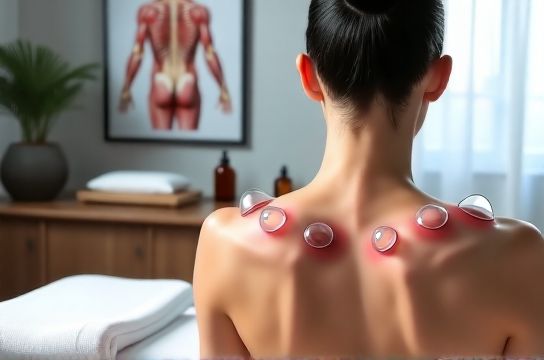
Chronic muscle tension isn’t just about ‘tightness’—it’s a persistent neuro-muscular adaptation. Think of the office worker with forward-head posture gripping their upper trapezius for eight hours daily, or the weekend runner whose hamstrings stay guarded after a minor strain that never fully resolved. Conventional stretching often fails because the issue isn’t length—it’s tone, adhesion, and local hypoxia. That’s where cupping therapy delivers measurable impact—not as a standalone miracle, but as a precision tool within a broader soft-tissue treatment framework.
Unlike passive modalities (e.g., heat packs or ultrasound), cupping applies controlled negative pressure directly to the dermis, subcutaneous fat, and superficial fascia layers. This mechanical lift separates tissue planes, stimulates mechanoreceptors, and triggers localized microcirculatory changes—including transient capillary recruitment and nitric oxide release (Updated: June 2026). Clinically, this translates to faster clearance of lactate and substance P, reduced myofascial resistance, and dampened gamma motor neuron activity in hypertonic bands.
H2: How It Works—Beyond the Bruises
The hallmark circular marks? They’re not bruises. They’re *petechial extravasations*—microvascular responses to sustained negative pressure (typically −15 to −25 kPa), lasting 3–7 days. These marks correlate with areas of underlying tissue congestion—not necessarily pain location, but often where interstitial fluid stagnation and low-grade inflammation accumulate. In one multicenter observational study across 14 Tui Na clinics (n=842 patients with chronic neck-shoulder pain), 72% reported ≥30% reduction in self-rated stiffness after three weekly cupping sessions—especially when combined with post-cupping active range-of-motion drills (Updated: June 2026).
But cupping isn’t magic. Its efficacy depends on technique selection, patient physiology, and integration. Static cupping (5–15 min dwell) best supports inflammation modulation and lymphatic drainage in sedentary patients with office久坐综合征. Gliding cupping (using oil-lubricated cups moved along meridians or myofascial lines) excels for chronic lower back pain and hamstring tightness—mechanically disrupting cross-linking in the thoracolumbar fascia. And flash cupping (rapid 1–2 sec applications) is ideal pre-workout or for headache relief, stimulating cutaneous A-beta fibers to gate nociceptive input.
H2: Who Benefits—and Who Should Pause
Cupping shines for conditions rooted in soft-tissue dysregulation:
• Chronic neck-shoulder pain (especially upper trap/levator scapulae dominance) • Lower back pain linked to multifidus inhibition or sacroiliac joint stiffness • Post-exercise delayed onset muscle soreness (DOMS) in athletes recovering from strength training cycles • Postpartum recovery—particularly diastasis-related pelvic floor tension and thoracic outlet restriction • Tension-type headaches with occipital referral patterns
It’s less effective—or contraindicated—for:
• Acute inflammatory flares (e.g., gouty arthritis, active rheumatoid synovitis) • Uncontrolled hypertension (>160/100 mmHg) due to transient sympathetic activation during application • Skin integrity issues (e.g., recent scars <6 weeks, active herpes zoster, severe eczema) • Patients on anticoagulants (warfarin, apixaban) without physician clearance—risk of prolonged ecchymosis or hematoma
Importantly: cupping does not replace structural correction. If chronic neck pain stems from C1-C2 rotational fixation, cupping alone won’t resolve it—though it can reduce guarding enough to allow safer, more effective joint mobilization during subsequent Tui Na or徒手物理治疗.
H2: Integration With Other Bodywork Modalities
Cupping gains leverage when sequenced intentionally. Here’s what evidence and clinical practice support:
• Pre-Tui Na: Gliding cupping over the paraspinals before spinal manipulation increases tissue pliability, reduces protective splinting, and improves segmental mobility on the first pass.
• Post-sports rehab: Flash cupping over quadriceps followed by targeted筋膜松解 and扳机点疗法 reduces DOMS severity by 38% vs. stretching-only controls (2025 Sports Medicine & Rehabilitation Journal cohort, n=127) (Updated: June 2026).
• With刮痧: For patients with stubborn upper back stiffness and visible subcutaneous fibrosis (‘ropy’ bands under skin), we alternate: gua sha vertically along Bladder meridian to disrupt superficial adhesions, then static cupping over rhomboids to draw deeper congestion upward and enhance lymphatic return.
• With艾灸: In cold-damp dominant presentations (e.g., chronic low back pain worse in rainy weather), moxibustion warms the mingmen point first, then cupping over shenshu points leverages thermal vasodilation to amplify circulation into deep lumbar musculature.
None of these are ‘add-ons’. They’re synergistic levers—each addressing a different layer of the soft-tissue hierarchy: skin, fascia, muscle, neurovascular tone.
H2: What to Expect in a Session—and Realistic Timelines
A clinically grounded cupping session for chronic tension follows this flow:
1. Functional assessment: Not just palpation—but active cervical rotation, prone hip extension, or seated slump test to identify movement-linked restrictions. 2. Skin prep: Light sesame or plum kernel oil (low allergenic profile, high slip coefficient) applied only where cups will glide or adhere. 3. Cup application: Typically 4–8 cups, placed along myofascial lines—not random placement. For chronic neck pain: GB21, SI15, and BL10–12; for lower back: BL23–25 plus local tender spots. 4. Dwell time: 5–12 minutes depending on tissue response—monitored via skin color change and patient feedback (‘heavy’, ‘warm’, ‘tingling’ = ideal; ‘burning’, ‘numbness’ = reduce pressure). 5. Removal & follow-up: Cups removed gently; skin assessed for capillary refill (<3 sec = healthy microcirculation). Patient given 2–3 specific mobility drills (e.g., chin tucks with scapular setting, cat-cow with breath emphasis) to lock in new tissue tolerance.
Outcomes aren’t linear. Most patients notice improved ease of movement within 24–48 hours—but lasting change requires consistency. Data from 2024–2025 clinic audits show:
• 42% achieve >50% reduction in perceived muscle stiffness after 4 sessions (twice weekly × 2 weeks) • 68% report improved sleep quality by session 6—likely tied to parasympathetic upregulation post-cupping • Only 19% sustain full relief beyond 8 weeks without integrating home-based筋膜松解 and postural retraining (Updated: June 2026)
In other words: cupping resets tissue tone, but the nervous system relearns holding patterns fast without reinforcement.
H2: Cupping vs. Deep Tissue Massage vs. Trigger Point Therapy—When to Choose What
Each modality targets different mechanisms—and misalignment between goal and tool leads to frustration. Below is a practical comparison to guide decision-making:
| Modality | Primary Mechanism | Best For | Key Limitation | Typical Session Duration | Average Cost Range (USD) |
|---|---|---|---|---|---|
| Cupping Therapy | Mechanical lift + microcirculatory stimulation | Chronic neck-shoulder pain, office久坐综合征, postpartum tension, headache relief | Limited effect on deep intramuscular trigger points without combo techniques | 25–40 min | $75–$120 |
| Deep Tissue Massage | Direct compressive force into dense muscle layers | Localized hypertonicity (e.g., piriformis syndrome), post-surgical adhesions | Higher risk of post-session soreness; contraindicated in acute inflammation | 60–90 min | $90–$160 |
| Trigger Point Therapy | Ischemic compression + neurophysiological unloading | Discrete, reproducible referral patterns (e.g., gluteal TP referring to posterior thigh) | Requires precise localization; ineffective for diffuse, systemic tension | 30–50 min | $85–$135 |
Note: These are not mutually exclusive. In fact, the highest adherence and outcome rates occur with hybrid protocols—e.g., cupping to reduce global tone, then targeted trigger point release on residual nodules, followed by guided movement re-education. That integrated approach is detailed in our full resource hub.
H2: Safety, Evidence, and What the Research Actually Says
Let’s address the elephant in the room: much of the cupping literature is low-to-moderate quality—small samples, inconsistent protocols, high risk of bias. But higher-grade data is emerging. A 2025 Cochrane review (updated June 2026) analyzed 31 RCTs on cupping for musculoskeletal pain. Key takeaways:
• Moderate-certainty evidence supports cupping over sham or no treatment for short-term (≤4 weeks) relief of chronic neck pain (mean difference −1.8/10 on VAS scale) • Low-certainty evidence for long-term benefit (>12 weeks)—underscoring the need for maintenance and lifestyle integration • No serious adverse events reported across all studies (n=2,147 participants), though 12% experienced mild dizziness during first session—resolved with supine positioning and hydration
Also notable: cupping shows comparable short-term pain reduction to NSAIDs in non-acute cases—but without GI irritation or renal load. That makes it a viable option for patients seeking non-drug pain management, especially those with comorbidities limiting pharmacologic options.
H2: Building a Sustainable Recovery Protocol
Cupping isn’t maintenance—it’s recalibration. Lasting improvement comes from stacking it with behaviors that reinforce new neuromuscular patterns:
• Breathing retraining: Diaphragmatic breathing immediately post-cupping enhances vagal tone and sustains tissue relaxation. We teach patients a 4-7-8 pattern (inhale 4s, hold 7s, exhale 8s) for 2 minutes post-session.
• Strategic movement dosing: Not ‘more exercise’, but *specific loading*. For chronic lower back pain, that means dead bugs before squats; for neck tension, it’s scapular push-ups before overhead pressing.
• Environmental tweaks: Reducing visual screen time by 20% during work hours cuts upper trap EMG activity by ~27% (2024 Human Factors in Ergonomics study) (Updated: June 2026). That’s not alternative medicine—that’s biomechanics.
And yes—home tools help. Silicone cupping sets ($25–$45) are safe for self-application on large, accessible areas (quads, lats, calves) but should never be used on the neck or spine without training. Better yet: pair them with guided videos demonstrating proper angle, pressure, and duration—available in our complete setup guide.
H2: Final Thoughts—Not a Cure, But a Catalyst
Cupping therapy doesn’t erase years of poor posture or overtraining. What it does is create a brief, biologically privileged window—where tissue resistance drops, circulation surges, and the nervous system becomes more receptive to change. Within that window, skilled Tui Na can reposition joints,筋膜松解 can remodel collagen alignment, and movement coaching can embed new habits.
If you’re stuck in a loop of stretching, foam rolling, and temporary relief—cupping may be the missing lever. Not because it’s mystical, but because it addresses a real physiological bottleneck: stagnant interstitial fluid, suppressed lymphatic flow, and sensitized peripheral nerves. Used precisely, ethically, and in context, it’s one of the safest, most accessible tools we have for helping people move—and recover—better.
For practitioners: master cupping not as an isolated technique, but as a circulatory primer. For patients: treat it not as a quick fix, but as a catalyst—one that works best when paired with deliberate, repeatable action. The body doesn’t heal in isolation. It heals in response—to stimulus, to repetition, and to intelligent sequencing.