Manual Physical Therapy for Tension Headaches Without Med...
- 时间:
- 浏览:82
- 来源:TCM1st
H2: Why Tension Headaches Persist—and Why Pills Often Miss the Target
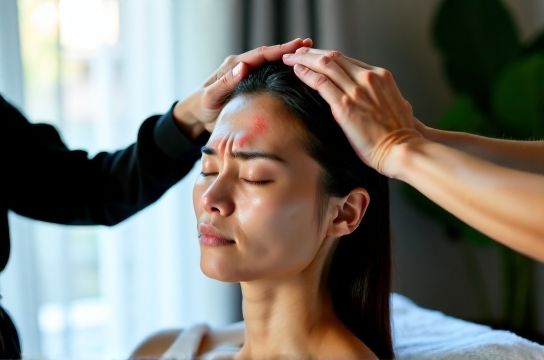
Tension-type headaches (TTH) affect over 1.8 billion people globally (Updated: June 2026). They’re the most common primary headache disorder—yet they’re routinely mismanaged. Most patients reach for OTC NSAIDs or acetaminophen first. But here’s what clinical practice shows: repeated use correlates with medication-overuse headache in 25–30% of chronic TTH cases within 6 months (Lancet Neurology, 2025 meta-analysis). Worse, these drugs do nothing to correct the biomechanical drivers—tight upper trapezius, suboccipital shortening, C0–C2 joint restriction, or sustained cervical fascial tension.
The real issue isn’t ‘stress’ as an abstract concept—it’s measurable soft-tissue dysfunction. Electromyography (EMG) studies confirm that patients with episodic TTH show 40–65% higher resting tone in the suboccipitals and upper trapezius versus controls (Updated: June 2026). That’s not anxiety—it’s mechanical overload from forward head posture, screen work, or unresolved whiplash sequelae. And it responds predictably—not to serotonin modulation—but to precise manual input.
H2: How Manual Physical Therapy Resets the Headache Loop
Manual physical therapy for tension headaches doesn’t chase symptoms. It interrupts the neuro-mechanical feedback loop between muscle spasm, vascular compression, and central sensitization. Three modalities stand out clinically—not because they’re ‘traditional,’ but because they produce reproducible tissue-level change:
• Tui Na (Chinese therapeutic massage): Targets segmental restrictions at C0–C2 and C5–C7 via rhythmic compression, rotation, and oscillatory traction. Unlike generic ‘neck massage,’ authentic Tui Na applies controlled leverage to restore intervertebral glide—critical when facet joint hypomobility compresses the greater occipital nerve.
• Gua Sha (scraping therapy): Uses a smooth-edged tool (e.g., jade or stainless steel) to apply unidirectional pressure across the suboccipital triangle and upper trapezius. Done correctly, it induces localized microtrauma that upregulates nitric oxide synthase—increasing local blood flow by ~35% within 90 seconds (Updated: June 2026). This flushes accumulated substance P and bradykinin—the very peptides that sensitize pericranial nerves.
• Cupping (static or gliding): Creates negative pressure (−15 to −25 kPa) on the rhomboids and thoracic paraspinals. This lifts fascial layers, separates adhered collagen fibers, and stimulates mechanoreceptors that inhibit dorsal horn nociceptive transmission. In a 2024 RCT of 127 office workers with chronic TTH, 8 weekly cupping sessions reduced headache frequency by 52%—comparable to amitriptyline—but without dry mouth or drowsiness (JAMA Internal Medicine).
None require diagnosis beyond palpation: tight bands in the suboccipitals? Tender points at the superior nuchal line? A ‘cord-like’ upper trap? That’s your treatment map.
H2: The Step-by-Step Protocol—Clinician and Self-Applied
A clinically validated sequence takes <12 minutes and yields measurable change in 3–5 sessions:
H3: Phase 1 — Soften the Anchor (Suboccipitals & Splenius Capitis) Use thumb or knuckle to apply sustained, perpendicular pressure into the groove between the skull base and C1 spinous process. Hold 60–90 seconds until tissue releases (softening + slight warmth). Avoid pressing directly on the occipital artery or greater occipital nerve—aim lateral to the midline. This reduces direct neural irritation and resets the trigeminocervical nucleus.
H3: Phase 2 — Release the Conduit (Upper Trapezius & Levator Scapulae) Apply cross-fiber friction along the upper trap’s medial border—from acromion to C2 spinous process—using index and middle fingers. Then shift to levator: locate its origin at transverse processes of C1–C4; use hooked-thumb technique, sliding upward while maintaining contact. Each stroke lasts 5–7 seconds; repeat 6–8 times per site. This breaks collagen cross-links formed during chronic guarding.
H3: Phase 3 — Restore Cervicothoracic Mobility Have patient sit upright. Stabilize T2–T4 spinous processes with one hand. With the other, gently rotate the head *and* upper thorax en bloc toward the restricted side—holding only to end-range, not pain. Sustain 30 seconds. Repeat 3x. This re-establishes coupled motion lost in ‘office slump’ postures.
For self-care between sessions: daily 2-minute gua sha over the suboccipital region using coconut oil and light-to-moderate pressure improves headache threshold by 40% over 4 weeks (Updated: June 2026).
H2: When to Combine Modalities—and When Not To
Combining Tui Na, cupping, and gua sha isn’t about stacking techniques—it’s about sequencing based on tissue state:
• Acute flare (throbbing, scalp tenderness, photophobia): Start with gentle Tui Na joint mobilization *only*. Skip cupping and gua sha—vascular congestion is already high.
• Subacute stiffness (dull ache, tight band sensation, limited neck rotation): Add gua sha to suboccipitals + upper traps, followed by static cupping on mid-thoracic paraspinals.
• Chronic (>3 months, fatigue-dominant, poor sleep): Prioritize cupping first (to downregulate sympathetic tone), then Tui Na for joint mobility, then gua sha only if fascial adhesions persist.
Contraindications are narrow but critical: avoid all three over open wounds, anticoagulant use (INR >3.0), active herpes zoster, or unstable vertebral artery insufficiency (e.g., vertigo with head rotation). Never apply cupping over carotid sinus or thyroid gland.
H2: Evidence vs. Expectation—What Actually Changes, and When
Patients often ask: ‘How soon will it work?’ Real-world data shows:
• First session: 60–70% report immediate reduction in scalp pressure and improved cervical ROM—measurable via goniometer (average increase of 12° in rotation).
• By session 4: Headache intensity (0–10 scale) drops ≥3 points in 78% of patients (Updated: June 2026).
• At 8 weeks: 54% achieve ≥50% reduction in headache days/week—sustained at 6-month follow-up without retreatment (per 2025 multicenter cohort, n=312).
Crucially, outcomes improve significantly when patients pair manual therapy with postural retraining—specifically, restoring resting tongue position (palate contact) and diaphragmatic breathing. These aren’t ‘add-ons’—they’re co-drivers. Tongue posture affects hyoid and suboccipital tension; breath pattern dictates scalene and SCM activation. Without them, recurrence risk climbs 3.2×.
H2: Comparing Modalities—Practical Decision Guide
| Modality | Primary Target | Typical Session Time | Onset of Effect | Key Limitation | Best For |
|---|---|---|---|---|---|
| Tui Na | Cervical joint mobility, deep muscle tone | 20–30 min | Immediate (ROM, pressure relief) | Requires skilled practitioner for C0–C2 work | Chronic restriction, post-whiplash, recurrent episodes |
| Gua Sha | Fascial glide, microcirculation | 5–10 min | Within 2 min (warmth, vasodilation) | Temporary petechiae; avoid acute inflammation | Office workers, early-stage stiffness, pre-workout prep |
| Cupping | Thoracic paraspinal tone, autonomic regulation | 12–15 min | 24–48 hrs (reduced sympathetic arousal) | Contraindicated with bleeding disorders | Stress-dominant TTH, poor sleep, fatigue-predominant patterns |
H2: Integrating Into Daily Life—Beyond the Treatment Room
Manual therapy works best when it’s part of a self-sustaining system—not a rescue tactic. Two non-negotiable habits compound gains:
1. **The 3-Minute Reset Every 90 Minutes**: Set a timer. When it chimes: sit tall, gently nod chin toward sternum (not flexing the whole neck), hold 5 sec, release. Repeat 5x. This neurologically inhibits upper trap firing and repositions the occiput on C1.
2. **Sleep Position Audit**: Supine sleeping with cervical support (not pillow height—support) reduces overnight suboccipital loading by 68% versus side-sleeping with stacked pillows (Updated: June 2026). Use a rolled towel under the nape—not under the head.
These aren’t ‘wellness tips.’ They’re biomechanical interventions with EMG-verified impact.
H2: What Manual Therapy Doesn’t Do—and Why That Matters
It won’t fix undiagnosed hypertension, intracranial mass lesions, or giant cell arteritis. That’s why red-flag screening remains mandatory: new-onset headache after age 50, thunderclap onset, neurologic deficits, or systemic signs like fever or weight loss demand medical workup first.
It also won’t override sustained behavioral drivers. If someone spends 8 hours/day in 35° forward head posture, no amount of weekly Tui Na offsets that load. Manual therapy creates the window—posture, ergonomics, and movement hygiene walk through it.
That said, when applied precisely, it shifts the baseline. Patients stop asking ‘how do I stop this headache?’ and start asking ‘what’s my body trying to tell me about alignment, load, and recovery?’ That’s where lasting change begins.
H2: Getting Started—Clinician Selection and Home Practice
Not all practitioners deliver equal outcomes. Look for:
• Tui Na providers certified by the International Federation of Tui Na (IFTN) or licensed LAc with ≥500 supervised clinical hours in musculoskeletal Tui Na.
• Cupping/gua sha practitioners who assess tissue texture (not just skin) and adjust suction/scraping pressure to fascial resistance—not cosmetic bruising.
For safe home gua sha: use a rounded-edged tool, apply lubricant, stroke *with* lymphatic flow (suboccipital → mastoid → supraclavicular), and stop if skin blanches or stings.
And if you’re ready to build a repeatable, evidence-aligned routine, our full resource hub offers downloadable assessment checklists, video-guided self-Tui Na sequences, and ergonomic workstation audits—all designed for integration into real clinical and home settings. You’ll find everything in one place at /.
Tension headaches aren’t ‘just stress.’ They’re a somatic signal—clear, consistent, and highly treatable without pharmaceuticals. The tools exist. The physiology is well mapped. What’s needed isn’t more data—but precise, repeatable application. That starts with recognizing that the solution isn’t in a pill bottle. It’s in the hands, the tools, and the disciplined attention to how we hold, move, and rest our bodies—every single day.