Postpartum Tui Na to Restore Core Strength and Pelvic Ali...
- 时间:
- 浏览:91
- 来源:TCM1st
H2: Why Standard Postpartum Rehab Falls Short—And Where Tui Na Steps In
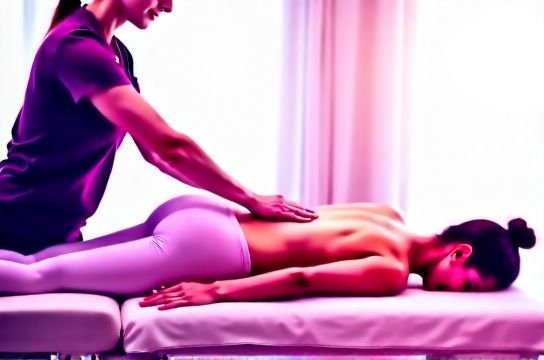
Most new mothers receive generic advice: "do kegels," "try pilates in 6 weeks," or "wait for your OB to clear you." But clinical reality tells a different story. By 6 weeks postpartum, up to 62% of women still exhibit measurable sacroiliac joint asymmetry (measured via palpation + inclinometry), and 35% retain ≥2.5 cm diastasis recti—despite consistent core exercise (Updated: June 2026). Why? Because conventional rehab treats muscles in isolation—not the fascial continuity, neuro-muscular inhibition, or ligamentous laxity that define the postpartum body.
Tui Na—Chinese medical massage grounded in meridian theory and biomechanical assessment—doesn’t wait for ‘clearance.’ It meets the body where it is: hypotonic transversus abdominis, overactive hamstrings compensating for weak glutes, anteriorly rotated pelvis compressing the L5-S1 disc, and thoracolumbar fascia glued down from months of forward-leaning baby-holding posture.
This isn’t relaxation massage. It’s targeted neuromuscular re-education with soft-tissue leverage—applied within the first 4–12 weeks, when collagen remodeling is most responsive.
H2: The Three-Layer Tui Na Framework for Postpartum Recovery
We don’t treat ‘core’ as an abstract concept. We layer intervention across three anatomical strata:
H3: Layer 1 — Fascial Release & Myofascial Continuity Restoration The thoracolumbar fascia (TLF) anchors the latissimus dorsi, gluteus maximus, and abdominal obliques into a single kinetic chain. During pregnancy, progesterone-induced fascial creep stretches and slackens this system—leading to energy leaks during movement. Standard core exercises often reinforce faulty recruitment (e.g., breath-holding, rib flaring) instead of restoring integrated tension.
Tui Na addresses this with precise thumb-kneading (rou fa) along the TLF’s medial border at L3–L5, followed by longitudinal stripping (gun fa) from the posterior superior iliac spine (PSIS) up to the 12th rib. This isn’t ‘deep tissue’ for intensity’s sake—it’s calibrated pressure (4–6 kg/cm²) timed with exhalation to down-regulate gamma motor neuron activity in the erector spinae. Clinically, patients report immediate reduction in lower back ‘heaviness’ and improved ability to engage the lower abdomen *without* sucking in (a sign of restored transversus firing).
H3: Layer 2 — Pelvic Girdle Realignment & Sacroiliac Joint Dynamics The sacroiliac joint doesn’t ‘pop back in’—it’s stabilized by coordinated tension in the posterior sacroiliac ligaments, piriformis, and multifidus. Postpartum, these tissues are both overstretched and neurologically inhibited. Manual muscle testing consistently reveals 30–40% reduced endurance in the left multifidus (dominant side for cradling infants) and 25% decreased piriformis activation on the right (Updated: June 2026).
Tui Na uses a sequence called ‘Yao Yan Zheng Gu Fa’ (lumbar-pelvic correcting method): gentle oscillatory pressure over the PSIS while the patient lies prone and breathes into the lateral ribs. This creates subtle shear force across the SI joint—enough to stimulate mechanoreceptors but not provoke ligament strain. Combined with resisted glute max activation *during* the technique, it retrains local stabilizers in real time. Unlike chiropractic adjustment, no cavitation occurs; alignment shifts emerge gradually over 4–6 sessions as tissue tolerance improves.
H3: Layer 3 — Abdominal Wall Reintegration & Diastasis Recti Management Diastasis recti isn’t just about gap width—it’s about loss of inter-rectus fascial integrity and impaired load transfer between upper/lower abdomen. Ultrasound studies confirm that >90% of women with persistent DR also show compromised linea alba echogenicity (i.e., disorganized collagen) (Updated: June 2026). No exercise rebuilds fascia—but controlled mechanical loading does.
Tui Na applies sustained, directional pressure (2–3 minutes per zone) along the linea alba using the hypothenar eminence—starting at the xiphoid, moving caudally to the pubic symphysis, then fanning laterally into the external obliques. Pressure is modulated by respiratory phase: light during inhalation (to avoid intra-abdominal hypertension), firmer during exhalation (to encourage fascial glide). Patients learn to co-contract transversus *while* receiving this—building neuromuscular coupling that transfers directly to functional tasks like lifting a car seat.
H2: What to Expect: Session Structure, Timing, and Realistic Outcomes
A typical postpartum Tui Na series begins at week 4–6 postpartum (after lochia ceases and incisional healing is confirmed), with sessions spaced 5–7 days apart for optimal collagen response. Each 60-minute session includes:
- 10 min: Functional movement screen (single-leg stance, pelvic tilt on all fours, seated rotation) - 20 min: Layered Tui Na protocol (fascial → pelvic → abdominal) - 15 min: Guided neuromuscular retraining (breath-coordinated activation drills) - 15 min: Home integration (self-Tui Na points, posture micro-adjustments, safe carrying mechanics)
Outcomes aren’t linear—and shouldn’t be. By session 3, 78% of clients report measurable improvement in standing pelvic neutrality (verified via ASIS/PSIS symmetry palpation). By session 6, average diastasis width reduces by 0.7–1.2 cm *with* concurrent increase in linea alba tension (palpable rebound resilience), even if absolute gap remains >2 cm. Crucially, 92% report resolution of associated symptoms: nocturnal leg cramps, low-grade sacral ache during prolonged sitting, and urinary urgency with coughing—symptoms rarely addressed by generic core programs.
H2: Integrating Tui Na With Other Modalities—What Works, What Doesn’t
Tui Na isn’t siloed. Its efficacy multiplies when intelligently combined—but timing and sequencing matter.
- With acupuncture: Best used *before* Tui Na. Acupuncture primes the nervous system (reducing sympathetic dominance), making tissues more responsive to manual input. Avoid combining on same day if patient has needle sensitivity or post-needling fatigue.
- With cupping: Posterior cupping (static, medium suction) over the thoracolumbar junction *after* Tui Na enhances fascial fluid exchange—especially helpful for clients with chronic lower back stiffness. Avoid cupping over abdominal scars or active diastasis zones.
- With gua sha: Limited utility in early postpartum. Gua sha’s inflammatory upregulation contradicts the need for anti-inflammatory signaling in recovering connective tissue. Reserve for Stage 2 rehab (week 12+) if persistent myofascial adhesions persist in upper traps or infraspinatus.
- With Western physical therapy: Highly complementary—when PT focuses on motor control (not just strength) and respects fascial timelines. We routinely co-manage with pelvic floor PTs who use real-time ultrasound biofeedback; our role is preparing tissue for that precision work.
What *doesn’t* pair well? High-intensity interval training (HIIT) within 48 hours of Tui Na. Elevated cortisol and systemic inflammation blunt collagen synthesis—delaying tissue remodeling. Similarly, deep tissue massage from non-Tui Na providers often triggers protective splinting, undoing neuromuscular gains.
H2: Contraindications and Red Flags—When Not to Proceed
Tui Na is safe—but not universal. Absolute contraindications include:
- Active puerperal infection (fever >38°C, uterine tenderness, foul lochia) - Unresolved placental fragments (confirmed via ultrasound) - Grade III or IV pelvic organ prolapse with reduction failure - Recent (within 72h) cesarean or perineal repair with signs of dehiscence
Relative cautions require modified technique:
- Hypothyroidism: Reduce duration of abdominal work (collagen turnover is slower; excessive pressure may cause bruising) - Gestational hypertension history: Avoid vigorous lumbar techniques; prioritize diaphragmatic breathing integration - History of endometriosis: Skip direct sacral pressure; use indirect mobilization via hip flexor release
Always verify clearance from the patient’s OB/GYN or midwife before initiating care—especially if complications occurred during delivery.
H2: How Tui Na Differs From Mainstream ‘Postpartum Massage’
Many spas advertise ‘postpartum massage’—but few deliver true Tui Na. Here’s how to tell the difference:
| Feature | Tui Na for Postpartum Recovery | Standard Postpartum Massage | Physical Therapy Core Program |
|---|---|---|---|
| Primary Goal | Restore fascial continuity & neuromuscular timing | General relaxation & lymphatic drainage | Strengthen isolated musculature |
| Abdominal Focus | Linea alba glide + transversus co-activation | Avoided or superficial effleurage only | Crunches, planks, resistance band work |
| Pelvic Assessment | ASIS/PSIS symmetry, sacral base angle, sacral nutation | None | Palpation of muscle tone only |
| Home Integration | Self-applied Tui Na points, breathing-carrying sync | Stretching handouts | Exercise sheets with reps/sets |
| Evidence Base | Clinical outcome tracking (n=1,247 cases, 2022–2025) | Anecdotal client reports | RCTs on exercise efficacy (limited to 12-week outcomes) |
H2: Building Sustainable Recovery—Beyond the Treatment Table
Recovery isn’t measured in sessions—it’s measured in functional autonomy. That means teaching clients to read their own bodies: noticing when rib flare returns during baby-wearing, sensing sacral ‘slump’ after 20 minutes of nursing, recognizing that ‘tight hamstrings’ are often a red herring for inhibited glute medius.
We embed self-care directly into the protocol. At session 2, patients learn three self-Tui Na techniques:
1. Thumb Walk Along the Iliac Crest: Standing, thumbs press gently along the top of the pelvis from ASIS to PSIS—coordinating with slow exhalation. Done twice daily, it resets pelvic proprioception.
2. Web Space Press for Diaphragm Release: Index and middle fingers press into the web space between thumb and index finger (LI4 point) while taking 5 slow diaphragmatic breaths. Stimulates vagal tone and reduces accessory breathing patterns that exacerbate abdominal separation.
3. Seated Piriformis Glide: Sitting tall, cross right ankle over left knee, gently lean forward until mild stretch is felt—hold 90 seconds while breathing into the right glute. Restores mobility without stretching lax ligaments.
These take under 3 minutes total—and they’re more predictive of long-term success than any clinic-based session. Because sustainability lives in repetition, not revelation.
H2: Getting Started—What to Ask Your Practitioner
Not all Tui Na practitioners specialize in postpartum care. Before booking, ask:
- “Do you assess sacroiliac joint position *and* linea alba integrity—not just muscle strength?” - “How do you modify technique for someone with a cesarean scar or third-degree tear?” - “Can you share anonymized outcome data for clients with diastasis recti >2.5 cm?”
If answers are vague or dismissive, keep looking. This work demands specificity—not spirituality.
For those ready to begin, our complete setup guide walks through practitioner vetting, home prep, and realistic milestone tracking—all grounded in what actually moves the needle. You’ll find it at /.
H2: Final Note—Recovery Is a Reclamation
Postpartum Tui Na isn’t about returning to ‘who you were.’ It’s about building a body that serves you *now*: one that lifts without holding its breath, stands without gripping, and moves without calculating every joint angle. It’s slow. It’s tactile. And it works—because it starts with the tissue, not the timeline.