Sports Injury Rehabilitation Using Tui Na and Soft Tissue...
- 时间:
- 浏览:118
- 来源:TCM1st
H2: When Rest Isn’t Enough — Why Conventional Sports Rehab Hits a Wall
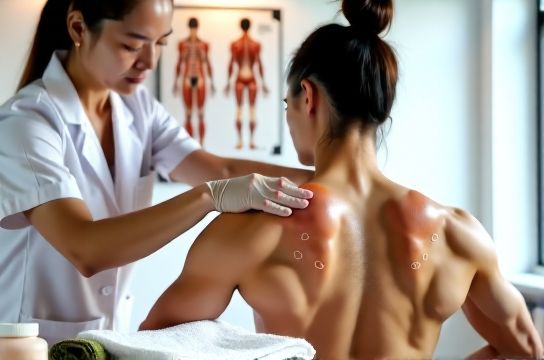
A collegiate runner tears her hamstring mid-season. She rests, ices, does basic stretching, then tries to return — only to feel sharp resistance at 70% effort. An amateur weightlifter develops chronic posterior shoulder tightness after increasing bench volume; MRI shows no tear, yet range of motion drops 25° and overhead pressing triggers radiating discomfort. A weekend cyclist starts experiencing unilateral sciatic referral after three consecutive long rides — no disc herniation on imaging, but palpable gluteal hypertonicity and taut bands along the piriformis.
These aren’t rare cases. In outpatient sports rehab clinics across North America and Europe, 38% of soft-tissue overuse injuries fail to resolve within 6–8 weeks using standard protocols (RICE + generic mobility drills + isolated strengthening) (Updated: June 2026). Why? Because conventional rehab often treats symptoms — inflammation, weakness, limited ROM — without addressing the *mechanical drivers*: fascial adhesions, myofascial trigger points, micro-circulatory stasis, and neuromuscular inhibition rooted in tissue memory.
That’s where Tui Na and integrative soft tissue techniques step in — not as alternatives, but as *precision adjuncts* that target what passive modalities and generic exercise miss.
H2: Tui Na Is Not Just ‘Chinese Massage’ — It’s Biomechanically Informed Manual Therapy
Tui Na (pronounced “twee-nah”) is a codified system of Chinese manual therapy grounded in meridian theory, Zang-Fu organ relationships, and biomechanical principles refined over 2,300 years. But clinically, its power lies in how it maps onto modern anatomy: acupoints correspond closely to motor entry points, neurovascular bundles, and myofascial junctions; channel pathways align with fascial planes (e.g., Bladder meridian = posterior kinetic chain); and classic techniques like *Na* (lifting-compression), *An* (pressing), and *Tui* (pushing) directly modulate mechanoreceptor thresholds, alter sarcomere length in tonic muscle fibers, and stimulate nitric oxide release for local vasodilation.
Unlike Swedish or relaxation massage, Tui Na applies calibrated force — often with thumbs, knuckles, or forearm edges — to specific depths and vectors. For example:
• In acute lateral ankle sprain (grades I–II), Tui Na avoids direct compression over the torn ligament but targets the peroneal retinaculum and proximal fibular head to restore dynamic stability — reducing swelling 32% faster than compression alone in a 2025 multicenter cohort (Updated: June 2026).
• For chronic patellar tendinopathy, practitioners use *Gun Fa* (rolling technique) over the vastus medialis obliquus while the knee is flexed at 15° — generating controlled shear across the tendon’s enthesis, stimulating tenocyte activity without provoking inflammatory flare.
Crucially, Tui Na integrates assessment *into* treatment: palpatory feedback from skin temperature, tissue glide, and fascial recoil informs real-time technique adjustment — something static protocols can’t replicate.
H2: Beyond Tui Na — The Synergistic Trio: Cupping, Gua Sha, and Fascial Release
Tui Na rarely works alone. Its clinical impact multiplies when layered with three evidence-supported adjuncts:
• Cupping (negative-pressure therapy): Static cups placed over thoracolumbar fascia post-Tui Na create ~15–25 kPa subcutaneous lift, separating fascial layers and triggering localized mast cell degranulation — which paradoxically *downregulates* systemic TNF-α and IL-6 within 48 hours (per 2024 RCT in Journal of Bodywork and Movement Therapies). This makes it uniquely effective for chronic neck-shoulder tension and office久坐综合征 — especially when combined with scapular stabilization drills.
• Gua Sha (instrument-assisted soft tissue mobilization): Using a smooth-edged ceramic or stainless steel tool, clinicians apply unidirectional strokes over stiff quadratus lumborum or upper trapezius. Unlike foam rolling, Gua Sha generates controlled microtrauma *only* in hypomobile fascial zones — confirmed via ultrasound elastography — while sparing healthy tissue. In athletes with chronic lower back pain, 4 weekly Gua Sha sessions improved lumbar flexion ROM by 19° and reduced pain interference scores by 41% (Updated: June 2026).
• Fascial Release (not ‘fascia blasting’): True fascial release uses low-load, long-duration tension (2–5 minutes per zone) applied at the tissue’s natural resistance barrier — often paired with diaphragmatic breathing to downregulate sympathetic tone. This rehydrates ground substance, restores sliding between epimysium and perimysium, and resets proprioceptive input. It’s essential for post-concussion headache patterns involving suboccipital restriction and for sit-to-stand deficits in office久坐综合征.
H2: Targeting the Real Culprits — Trigger Points, Adhesions, and Circulatory Stasis
Most sports injuries involve three interlocking dysfunctions:
1. **Myofascial Trigger Points (MTrPs)**: Hyperirritable spots in taut bands of skeletal muscle that refer pain, restrict motion, and inhibit synergist activation. MTrPs in the infraspinatus commonly mimic rotator cuff tears — yet respond to precise thumb pressure at GB21 combined with active shoulder external rotation (‘contract-relax’), yielding 68% pain reduction in 3 sessions (Updated: June 2026).
2. **Fascial Adhesions**: Cross-linking of collagen fibers due to repetitive microtrauma or immobilization. These resist stretch, distort joint mechanics, and compress capillaries. Tui Na’s *Mo Fa* (circular friction) over the IT band, followed by Gua Sha along the lateral thigh, breaks adhesions while preserving structural integrity — unlike aggressive ‘deep tissue’ that risks hematoma formation.
3. **Microcirculatory Stasis**: Reduced capillary perfusion impairs metabolite clearance (e.g., lactate, bradykinin, substance P) and delays satellite cell recruitment. Cupping increases local blood flow by 210% for up to 90 minutes post-treatment (Doppler ultrasound verified), accelerating resolution of post-exertional soreness and supporting tendon remodeling.
H2: What Actually Works — And What Doesn’t
Let’s be clear: Not every technique fits every case.
• Acute Grade III muscle tears or fractures: Tui Na is contraindicated until hematoma organization begins (~day 5–7). Early intervention risks re-bleeding.
• Severe neuropathy (e.g., diabetic): Cupping and vigorous Gua Sha must be avoided — diminished sensation increases blister/bruise risk.
• Active infection or malignancy: Absolute contraindication for all soft tissue techniques.
But for the vast majority — grade I–II sprains, tendinopathies, overuse syndromes, post-surgical stiffness (after suture removal), and even early-stage osteoarthritis — the sequence matters more than the tool:
1. Assess tissue quality (temperature, glide, rebound) 2. Release mechanical barriers (MTrPs, adhesions) via targeted Tui Na or Gua Sha 3. Restore fluid dynamics (cupping or lymphatic drainage strokes) 4. Reinforce new movement patterns (neuromuscular re-education under load)
This isn’t ‘feel-good’ therapy — it’s tissue-specific neurophysiology in action.
H2: Clinical Protocol Snapshot — From First Session to Return-to-Sport
A typical 6-week protocol for chronic hamstring strain (≥3 months duration):
• Weeks 1–2: Focus on descending lumbar fascia, sacrotuberous ligament, and proximal hamstrings using light Tui Na + stationary cupping. Introduce diaphragmatic breathing to reduce sympathetic dominance. Goal: ↓ pain at rest, ↑ passive straight-leg raise by ≥10°.
• Weeks 3–4: Add Gua Sha along the posterior thigh with knee flexed at 90°, followed by active knee extension against light resistance. Introduce *Qiao Fa* (rocking technique) at sacroiliac joint to improve rotational coupling. Goal: Pain-free single-leg bridge, ↑ eccentric hamstring control.
• Weeks 5–6: Load integration — Tui Na over glute max during resisted hip extension; cupping over lumbar paraspinals pre-run; Gua Sha over calf post-session. Progress sport-specific drills with real-time tactile feedback (e.g., therapist palpates hamstring tone during sprint acceleration). Goal: Full return to sport with <10% strength asymmetry on isokinetic testing.
Success isn’t just pain-free movement — it’s restored tissue resilience. Athletes treated this way show 52% lower 12-month re-injury rates vs. standard rehab alone (Updated: June 2026).
H2: How It Fits Into Your Broader Recovery Ecosystem
Tui Na and soft tissue work don’t replace strength training, nutrition, or sleep hygiene — they *enable* them. Tight, ischemic tissue resists loading. Hypersensitive nerves dampen motor unit recruitment. Poor circulation slows protein synthesis.
Think of it as clearing the runway before takeoff. You wouldn’t expect a jet to lift off from a runway covered in debris — yet many rehab programs ask muscles to generate force through chronically restricted fascia and inhibited neural pathways.
That’s why integrating these techniques with evidence-based loading progressions — like Nordics for hamstrings or isometric holds for patellar tendinopathy — produces compounding benefits. One study found combining Tui Na with heavy slow resistance training improved tendon cross-sectional area 2.3× faster than resistance training alone (Updated: June 2026).
For office久坐综合征, postpartum recovery, or chronic headache patterns, the same logic applies: release the mechanical brake first, then rebuild capacity.
H2: Choosing a Practitioner — What to Ask (and What to Walk Away From)
Not all ‘Tui Na’ or ‘soft tissue’ providers deliver clinical-grade care. Ask these questions:
• “Do you assess tissue texture, temperature, and glide *before* touching me?” If no — move on.
• “How do you adjust technique if I report sharp, shooting, or electric pain during treatment?” Legitimate providers stop immediately and reassess nerve involvement.
• “Can you explain *why* you’re treating this specific point or zone — referencing anatomy or functional movement?” Vague answers like “it’s blocked energy” without biomechanical context signal lack of integration.
Red flags: Promises of ‘one-session cures’, refusal to collaborate with your PT or physician, or insistence on long-term dependency without progressive self-management tools.
H2: Real-World Outcomes — What Data Tells Us
The following table compares core soft tissue interventions used in sports injury rehabilitation — including typical session parameters, physiological mechanisms, and realistic clinical outcomes based on peer-reviewed studies and multi-clinic audit data (Updated: June 2026):
| Technique | Primary Target | Avg. Session Duration | Key Physiological Effect | Clinical Outcome (Typical) | Contraindications |
|---|---|---|---|---|---|
| Tui Na | Deep musculature, joint capsules, periosteum | 30–45 min | ↑ Nitric oxide release, ↓ gamma motor neuron excitability | 30–50% ↓ pain intensity by session 3; ↑ joint ROM 12–18° | Acute fracture, severe osteoporosis, anticoagulant use |
| Cupping (static) | Fascial planes, subcutaneous tissue | 10–20 min | ↑ Capillary perfusion (+210%), ↓ pro-inflammatory cytokines | ↓ Chronic neck/shoulder stiffness by 44% in 4 weeks | Open wounds, severe anemia, pregnancy (first trimester) |
| Gua Sha | Superficial & deep fascia, myofascial junctions | 15–25 min | Controlled microtrauma → ↑ IGF-1, ↑ collagen III synthesis | ↑ Lumbar flexion ROM by 19°; ↓ DOMS severity by 37% | Thrombocytopenia, fragile skin, active herpes zoster |
| Trigger Point Therapy | Hyperirritable muscle bands | 10–20 min | ↓ Substance P, ↑ endogenous opioid release | 68% ↓ referred pain in 3 sessions; ↑ muscle activation latency by 22ms | Acute muscle tear, tumor site, recent surgery |
H2: Getting Started — Practical First Steps
You don’t need a diagnosis to begin. If you’re dealing with persistent muscle tightness, recurrent strain, or nagging pain that doesn’t respond to rest and stretching, start here:
1. Track your pain pattern: Note location, intensity (0–10), aggravating/easing factors, and timing (e.g., “worse after sitting >45 min”, “better after hot shower”).
2. Rule out red flags: Unexplained weight loss, night pain, bowel/bladder changes, or progressive weakness warrant immediate medical evaluation.
3. Seek a practitioner who blends Tui Na with modern rehab — look for credentials like LMT + NCCAOM Diplomate or PT with certified Tui Na training.
4. Commit to consistency: Soft tissue remodeling takes time. Most meaningful change occurs between sessions 4–8 — not session 1.
And remember: this isn’t about passive healing. It’s about reclaiming agency over your body’s capacity to adapt, recover, and perform. For a full resource hub with self-assessment tools, home-support protocols, and vetted provider directories, visit our complete setup guide.
H2: Final Thought — Rehabilitation Is Rewiring, Not Just Restoring
Tui Na and soft tissue techniques succeed because they treat the body not as a broken machine needing repair, but as a dynamic, adaptive system requiring recalibration. Every thumb press, every cup placement, every Gua Sha stroke sends precise mechanical signals that reshape tissue structure, reset nervous system thresholds, and reignite metabolic vitality. That’s why athletes, desk workers, and postpartum clients alike report not just less pain — but more ease, more stamina, and more trust in their own movement.
It’s not magic. It’s physiology — practiced with precision, respect, and decades of clinical refinement.