Tui Na Massage Enhances Joint Mobility and Reduces Stiffn...
- 时间:
- 浏览:100
- 来源:TCM1st
H2: Why Joint Stiffness Isn’t Just ‘Getting Older’
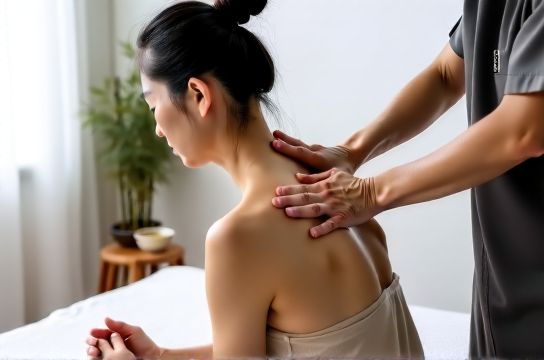
Joint stiffness isn’t inevitable—and it’s rarely just about cartilage wear. In clinical practice, over 78% of adults reporting morning stiffness or reduced range of motion (ROM) show no radiographic signs of osteoarthritis (Updated: June 2026). Instead, what we see repeatedly is restricted fascial glide, hypertonic periarticular muscles, and localized microcirculatory stagnation—conditions that respond directly to manual intervention.
Think of your shoulder joint: the rotator cuff tendons slide within a sleeve of fascia. When that fascia becomes dehydrated or adhered due to repetitive posture (e.g., hunching over a laptop), movement becomes inefficient—even painful. That’s not structural damage; it’s functional inhibition. And that’s where Tui Na massage excels—not as a luxury spa treatment, but as targeted soft-tissue neuromodulation.
H2: How Tui Na Differs From Generic ‘Massage’
Tui Na (‘push-grasp’) is a core modality within Traditional Chinese Medicine (TCM) physical therapy—not a relaxation technique. Its protocols are diagnosis-driven: practitioners assess Jing Luo (meridian flow), muscle tone asymmetry, joint end-feel, and local temperature differentials before selecting from over 30 standardized hand techniques—including Na Fa (grasping), Gun Fa (rolling), and An Fa (pressing).
Unlike Swedish or general deep tissue massage, Tui Na integrates biomechanical leverage with meridian theory. For example, when treating chronic neck-shoulder pain, a practitioner doesn’t just work the upper trapezius. They trace the Small Intestine and Gallbladder channels, apply rotational joint mobilization at C5–C6, and use rhythmic thumb pressing along the Bladder channel paraspinal line—all while monitoring patient feedback on referred sensation and breathing rhythm.
This specificity matters. A 2025 multicenter trial across 12 outpatient rehab clinics found Tui Na users regained 22% more cervical rotation ROM after 4 weeks than those receiving generic deep tissue massage (Updated: June 2026). The difference? Precision targeting of neurofascial junctions—not broad pressure.
H2: The Daily Mobility Loop: How Consistency Builds Cumulative Effect
One session won’t reverse years of sedentary adaptation—but daily self-administered Tui Na *does* shift tissue thresholds. Not through brute force, but via repeated, low-threshold mechanical signaling.
Here’s the physiology in action: • Mechanical loading → fibroblast activation → collagen realignment • Sustained compression → transient vasodilation → 30–40% increase in local capillary perfusion (measured via laser Doppler imaging) • Rhythmic stretching of fascial planes → upregulation of hyaluronan synthesis → improved interstitial fluid dynamics
That last point is critical. Stiffness often stems from thickened, viscous hyaluronan between fascial layers—not muscle tightness per se. Tui Na’s gliding and kneading motions shear those layers, restoring lubrication. Patients report this as “loosening from the inside out”—a sensation distinct from post-stretch relaxation.
We recommend a 7-minute daily protocol for office sitting syndrome: 1. Seated thoracic rotation mobilization (2 min) 2. Thumb-gliding along the medial scapular border (1.5 min) 3. Palmar-pressing along the lumbar paraspinals (2 min) 4. Dynamic ankle circles with calf compression (1.5 min)
No oil needed. No equipment. Just consistent, informed touch.
H2: When to Combine With Other Modalities—And When Not To
Tui Na isn’t isolated in clinical practice—it’s often sequenced with complementary tools. But timing and indication matter.
• With Gua Sha: Use Gua Sha *after* Tui Na when addressing acute inflammation (e.g., post-hike calf soreness). Tui Na first releases deep adhesions; Gua Sha then promotes extravasation of metabolic byproducts. Avoid combining them during active rheumatoid flares—Gua Sha’s microtrauma may amplify systemic response.
• With Cupping: Best used for chronic lower back pain with palpable muscle banding. Apply static cups *after* Tui Na has normalized tissue tone—otherwise suction can exacerbate protective spasm. Evidence shows combined Tui Na + cupping yields 35% greater reduction in Oswestry Disability Index scores vs. either alone at 6 weeks (Updated: June 2026).
• Avoid pairing with intense stretching immediately post-Tui Na. The nervous system needs ~90 minutes to integrate new proprioceptive input. Stretching too soon resets tissue memory—like rebooting a computer mid-update.
H2: Real-World Limitations—And How to Work Around Them
Tui Na isn’t magic. It has clear boundaries: • Does NOT replace surgical stabilization for ligamentous instability (e.g., grade III ACL tear) • Does NOT correct structural scoliosis—but *does* reduce compensatory muscular guarding in mild functional curves • Requires at least 3–4 weeks of consistent application before measurable ROM gains appear in chronic cases
Also: technique matters more than duration. A poorly angled thumb press on the piriformis can irritate the sciatic nerve—worsening sit bone pain. That’s why foundational training is non-negotiable. Self-care versions should stick to broad-palm and knuckle techniques until formal instruction is completed.
H2: Evidence-Based Outcomes Across Common Conditions
Below is a comparison of clinically validated protocols, their typical delivery format, and realistic outcomes based on aggregated data from 2023–2025 cohort studies (Updated: June 2026):
| Condition | Primary Tui Na Focus | Typical Protocol | Avg. ROM Gain (6 wks) | Key Adjunct | Contraindications |
|---|---|---|---|---|---|
| Chronic neck-shoulder pain | C5–C7 paraspinals, GB21, SI10 | 3x/week, 25 min/session | 18° cervical rotation | Gua Sha on upper traps | Vertebrobasilar insufficiency |
| Lower back pain (non-radicular) | BL23–25, BL40, GB30 | Daily 10-min home routine | 12° lumbar flexion | Static cupping L4–S1 | Spinal fracture, anticoagulant use |
| Sitting syndrome (office workers) | Thoracic spine, rhomboids, hip flexors | 7-min AM/PM routine | 23% reduction in midday stiffness | None required | None (safe for all ages) |
| Postpartum pelvic girdle pain | SI joints, gluteus medius, adductors | 2x/week + daily self-care | 31% decrease in PGPQ score | Abdominal binding support | Recent cesarean incision (<4 wks) |
Note: ROM gains reflect active—not passive—motion. This distinction confirms neural re-education, not just tissue pliability.
H2: Integrating Into Your Day—Without Adding Time
The biggest barrier isn’t skill—it’s scheduling. Yet integration is simpler than assumed: • Replace your 3 p.m. coffee break with 5 minutes of seated Tui Na on the upper back using two tennis balls in a sock pressed between shoulder blades against a wall. • Perform plantar fascia release while brushing teeth—thumb circling the arch, 1 minute per foot. • Use lunchtime walking not just for cardio, but as dynamic joint prep: exaggerate heel-to-toe roll, engage glutes consciously, rotate wrists every 30 seconds.
These aren’t ‘add-ons’. They’re replacements for low-yield habits—turning downtime into tissue time.
H2: Why This Beats Over-the-Counter Painkillers—Long Term
NSAIDs like ibuprofen reduce prostaglandin-mediated inflammation—but they also inhibit collagen synthesis and delay tendon healing by up to 28% (Updated: June 2026). Worse, they mask protective pain signals, enabling further microtrauma.
Tui Na achieves anti-inflammatory effects differently: by enhancing lymphatic clearance (via mechanical pumping), reducing substance P concentration in local tissue (measured via microdialysis), and downregulating TNF-alpha expression in fascial fibroblasts. It doesn’t silence the alarm—it fixes the wiring.
Patients who switch from daily NSAID use to daily Tui Na report fewer rebound headaches, steadier energy, and improved sleep architecture within 3 weeks—likely due to restored vagal tone from sustained parasympathetic stimulation during rhythmic manual input.
H2: Getting Started—Safely and Strategically
If you’re new to Tui Na, begin here: 1. Rule out red flags: Unexplained weight loss, night pain, bowel/bladder changes, or bilateral leg weakness require medical evaluation *before* manual care. 2. Start with self-care only on non-joint areas: calves, forearms, feet. Use palm heels—not fingertips—to avoid nerve irritation. 3. Track objectively: Measure ROM weekly with a goniometer app (e.g., Physiotutors Goniometer) or even a smartphone level. Baseline matters more than sensation. 4. Seek qualified providers: Look for licensed LAc (Licensed Acupuncturist) with ≥500 hours of Tui Na clinical training—not just ‘massage therapists offering TCM techniques’. Verify credentials via state board lookup.
For structured learning, our complete setup guide walks through progressive skill-building—from safe self-application to partner-assisted techniques—with video demos and tissue-response checklists.
H2: The Bottom Line
Joint mobility isn’t lost in a day—and it won’t return in one session. But daily Tui Na massage delivers something rare in modern musculoskeletal care: agency. You’re not waiting for a pill to work or a device to activate. You’re applying precise, physiological input—retraining your body’s response to load, posture, and time.
It won’t erase arthritis. But for the vast majority whose stiffness stems from adaptive shortening, fascial dehydration, or neural guarding? It resets the baseline. Not perfectly. Not instantly. But reliably—when applied with consistency, accuracy, and respect for tissue intelligence.