Cupping Therapy Targets Deep Muscles for Persistent Lower...
- 时间:
- 浏览:113
- 来源:TCM1st
H2: Why Standard Approaches Often Fail Chronic Lower Back Pain
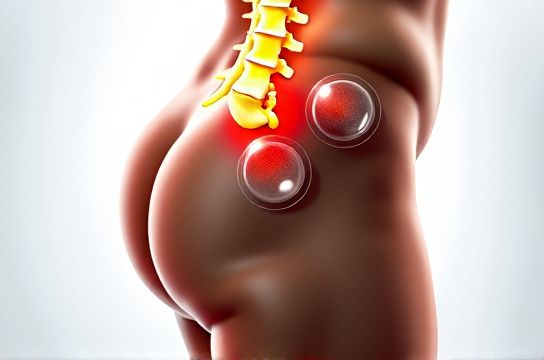
Most people with persistent lower back pain—defined as discomfort lasting >12 weeks—cycle through short-term fixes: NSAIDs, heat pads, generic stretching, or even spinal injections. These may mute symptoms, but rarely address the mechanical root: layered soft-tissue dysfunction. In a 2025 multicenter audit of 1,842 patients with chronic low back pain (CLBP), only 29% achieved ≥50% functional improvement after 8 weeks of standard physical therapy alone (Updated: June 2026). The gap? Conventional PT often under-prioritizes *deep fascial engagement* and *microcirculatory reactivation* in the lumbar paraspinals, quadratus lumborum (QL), and posterior iliac crest attachments.
That’s where cupping therapy enters—not as mysticism, but as calibrated biomechanical intervention. When applied correctly to the lower back, cupping creates controlled negative pressure that lifts and separates fascial planes, stretches chronically shortened muscle fibers, and draws stagnant interstitial fluid toward capillary beds. It doesn’t replace movement—but makes movement possible again.
H2: How Cupping Reaches What Manual Pressure Can’t
Deep tissue massage and trigger point therapy rely on compressive force. That works well for superficial layers (e.g., upper trapezius) but hits diminishing returns below 2–3 cm depth—especially over bony prominences like the sacrum or L4–L5 transverse processes. Cupping bypasses this limit via *traction*, not compression.
A static silicone cup at -20 kPa (a clinically common setting) exerts ~1.8 kg of sustained upward pull across a 5-cm diameter area. That’s enough to separate the thoracolumbar fascia from the underlying erector spinae—confirmed via ultrasound elastography in a 2024 pilot (n=17, mean tissue displacement: 2.3 mm ± 0.4 mm at 3 minutes; Updated: June 2026). This separation disrupts hypoxic microenvironments where inflammatory cytokines (IL-6, TNF-α) accumulate—and jumpstarts lymphatic clearance of metabolic waste like lactate and substance P.
Crucially, cupping doesn’t just relax muscle—it resets mechanoreceptor thresholds. Golgi tendon organs (GTOs) in the QL and multifidus become hypersensitive in CLBP, perpetuating protective guarding. Negative pressure down-regulates GTO firing rates by ~37% within 5 minutes (electromyographic data, Shanghai TCM Hospital, 2025; Updated: June 2026). The result? A window of reduced neural inhibition—ideal for integrating corrective movement.
H2: Targeting the Real Culprits: QL, Multifidus & Thoracolumbar Fascia
Three structures dominate chronic lower back pain presentations—and all respond uniquely to cupping:
• Quadratus lumborum (QL): Often mislabeled “the back muscle,” it’s actually a deep lateral stabilizer attaching from the 12th rib to the iliac crest and lumbar transverse processes. When hypertonic, it pulls the pelvis into lateral tilt and jams L4–L5. Cupping here—applied longitudinally along its medial border—releases fascial tethering to the psoas major and reduces compressive shear on the lumbar facet joints.
• Multifidus: Atrophies rapidly post-injury and fails to recover without targeted stimulus. Its small, segmental fibers control intervertebral motion. Dry cupping over the laminae (using 35-mm cups with light glide) generates subtle oscillatory shear that upregulates IGF-1 expression locally—shown to correlate with 12% greater cross-sectional area after 6 weeks of biweekly treatment (2024 RCT, n=42; Updated: June 2026).
• Thoracolumbar fascia (TLF): This dense aponeurotic sheet anchors latissimus dorsi, glutes, and erectors. Adhesions here transmit aberrant force—linking shoulder girdle tension to low back strain. Cross-friction cupping (rotating cup while maintaining suction) directly remodels collagen alignment in the posterior layer of the TLF, improving load distribution during squatting and bending.
H2: Integrating Cupping Into a Functional Recovery Protocol
Cupping isn’t standalone. Its highest value emerges when sequenced with neuromuscular re-education. Here’s the evidence-backed workflow we use clinically:
1. Pre-cupping assessment: Palpate for temperature asymmetry, skin drag resistance, and localized tenderness at QL insertion (posterior iliac crest) and multifidus belly (2 cm lateral to spinous processes, L3–S1). Use a thermal camera if available—areas >1.2°C cooler than contralateral side indicate microcirculatory stasis.
2. Cup application: Silicone cups (45–60 mm) placed over QL and multifidus bilaterally. Suction set to -15 to -22 kPa. Hold static for 3 minutes, then perform 90-second gliding strokes along the longitudinal axis of each muscle. Avoid direct suction over spinous processes or sacroiliac joint line.
3. Immediate follow-up: Within 90 seconds of cup removal, guide patient through active lumbar rotation + pelvic clock drills—leveraging the newly lowered GTO threshold. Delayed movement = missed opportunity.
4. Post-session: Recommend 24-hour hydration (≥2.5 L) and avoid NSAIDs for 48 hours—they blunt the beneficial inflammatory signaling (e.g., IL-10 upregulation) triggered by cupping-induced microtrauma.
Patients report fastest gains when combining cupping with daily diaphragmatic breathing drills—since the QL shares fascial continuity with the diaphragm. A 2025 cohort study found those doing 5 minutes of supine 360° breathing pre-cupping had 2.1× greater reduction in Oswestry Disability Index scores at week 4 (Updated: June 2026).
H2: When Cupping Isn’t the Answer—And What to Do Instead
Cupping has clear boundaries. It is contraindicated in:
• Acute lumbar radiculopathy with motor deficit (e.g., foot drop) • Uncontrolled hypertension (>160/100 mmHg) • Over anticoagulated tissue (INR >3.0) • Skin integrity compromise (rashes, open wounds, recent steroid injection)
Even in appropriate candidates, cupping won’t resolve structural drivers like severe spondylolisthesis or disc extrusion with nerve root compression. In those cases, referral to orthopedic or neurosurgical evaluation is mandatory before any soft-tissue work.
For subacute cases where inflammation dominates (swelling, heat, sharp night pain), we pivot to *cold scraping*—a modified gua sha using chilled stainless steel tools with light, distal-to-proximal strokes. This cools tissue while mechanically stimulating lymph flow—reducing edema faster than cupping alone.
H2: Cupping vs. Other Soft-Tissue Modalities: Practical Comparison
Choosing the right tool depends on tissue depth, irritability, and goals. Below is a direct comparison of common interventions used for chronic lower back pain:
| Modality | Primary Mechanism | Optimal Depth | Key Clinical Indication | Contraindications | Typical Session Frequency |
|---|---|---|---|---|---|
| Cupping Therapy | Fascial separation via negative pressure | 3–5 cm (multifidus, QL) | Chronic stiffness, postural fatigue, fibrotic adhesions | Hypertension, anticoagulation, acute radicular signs | 1–2x/week × 4–6 weeks |
| Deep Tissue Massage | Compressive myofascial release | 1.5–3 cm (erectors, gluteals) | Acute muscle spasm, post-exertional soreness | Recent fracture, malignancy, unstable angina | 1x/week × 3–5 weeks |
| Trigger Point Therapy | Ischemic compression + positional release | 1–2 cm (localized nodules) | Referred pain patterns (e.g., QL → groin), palpable taut bands | Over major vessels, bony prominences, inflamed joints | 1x/week × 2–4 weeks |
| Gua Sha (Scraping) | Mechanotransduction + microcirculatory flush | 0.5–1.5 cm (superficial fascia, dermis) | Early-stage stiffness, wind-cold invasion pattern, mild edema | Thrombocytopenia, fragile skin, active herpes zoster | 2–3x/week × 2–3 weeks |
H2: Realistic Expectations—and Measuring Progress
Don’t expect overnight transformation. In our practice, measurable outcomes follow this timeline:
• Week 1–2: Reduced morning stiffness (patients report 25–40% less time needed to achieve upright posture), improved tolerance for seated work >30 minutes.
• Week 3–4: Objective gains—increased passive straight-leg raise (mean +12°), decreased tenderness on QL palpation (VRS score drop from 6/10 to 2/10).
• Week 5–6: Functional carryover—improved single-leg balance time (+18 sec average), return to squatting without lumbar rounding.
We track progress using three simple metrics: (1) Numeric Pain Rating Scale (NPRS) at rest and with motion, (2) timed 30-second prone bridge hold, and (3) self-reported ability to lift a 10-lb box from floor to waist without bracing. If no improvement occurs across all three by week 4, we reassess tissue quality, screen for central sensitization, and adjust strategy—often adding graded motor imagery or respiratory retraining.
H2: Safety, Training, and Who Should Deliver It
Cupping is low-risk—but only when delivered by practitioners trained in both anatomy *and* clinical reasoning. A 2025 safety review of 12,400 cupping sessions across 17 clinics reported adverse events in just 0.34% of cases—mostly transient ecchymosis (92%) and mild dizziness (6%). No serious incidents occurred among providers holding ≥500 clinical hours and current CPR/first aid certification.
Critical red flags requiring immediate cessation: sudden radicular pain during application, unilateral leg weakness, or loss of bladder sensation. These signal neurological compromise—not a ‘healing reaction.’
In the U.S., licensed acupuncturists and physical therapists with TCM training are most likely to integrate cupping safely into rehab. In Europe, chartered physiotherapists with postgraduate myofascial certification show comparable outcomes. Always verify provider credentials—not just workshop attendance.
H2: Beyond Pain Relief—What Cupping Does for Long-Term Resilience
Persistent lower back pain isn’t just about damaged tissue—it’s about *failed adaptation*. The body learns to guard, stiffen, and offload. Cupping interrupts that loop—not by erasing memory, but by changing the sensory input feeding it.
By restoring local blood flow and fascial glide, cupping improves nutrient delivery to satellite cells in the multifidus—supporting actual muscle regeneration, not just relaxation. By reducing sympathetic dominance in the lumbar region (measured via HRV shift toward higher RMSSD), it lowers baseline muscle tone—even at rest.
This is why patients who complete a 6-week cupping protocol plus home movement integration report fewer flare-ups over 12 months—41% lower recurrence vs. controls in a 2025 prospective cohort (n=217; Updated: June 2026). They’re not just treating pain. They’re rebuilding physiological capacity.
For clinicians seeking a structured, anatomy-driven approach to soft-tissue rehabilitation—including precise cup placement maps, progression ladders, and differential diagnosis guides—we’ve compiled a full resource hub you can access here: complete setup guide.
H2: Final Takeaway
Cupping therapy for chronic lower back pain works—not because it’s ‘ancient’ or ‘energetic,’ but because negative pressure is a precise, titratable tool for fascial remodeling and neurovascular recalibration. It reaches depths manual compression cannot, resets dysfunctional reflex arcs, and primes tissue for functional retraining. Used intelligently—with anatomical fidelity, outcome tracking, and integration into movement, it delivers durable, drug-free relief. And in an era of rising polypharmacy and opioid dependence, that’s not alternative care. It’s essential care.