Tui Na Based Rehabilitation for Herniated Disc Adjunctive...
- 时间:
- 浏览:120
- 来源:TCM1st
Herniated disc rehabilitation isn’t just about rest and imaging. It’s about restoring functional biomechanics—especially when nerve root irritation persists despite conservative medical management. In clinical practice, we see patients who’ve completed MRI-confirmed L4-L5 or C6-C7 disc protrusions, tried NSAIDs and epidural injections, yet still struggle with radiating pain, diminished range of motion, or recurrent flare-ups triggered by sitting, bending, or even coughing. That’s where Tui Na based rehabilitation steps in—not as a replacement for orthopedic evaluation or surgical indications, but as a targeted, physiology-driven adjunct that addresses the *soft tissue drivers* of mechanical aggravation.
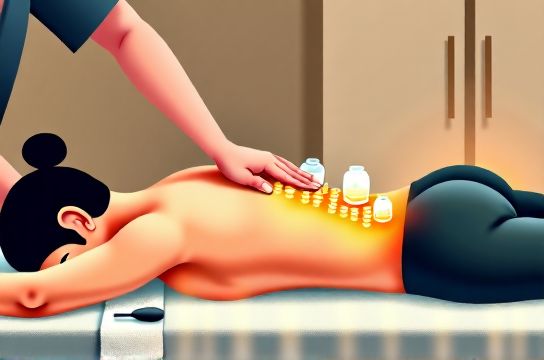
Tui Na (Chinese therapeutic massage) is not generic ‘relaxation massage.’ It’s a codified system of manual techniques rooted in Traditional Chinese Medicine (TCM) theory—but clinically validated through modern musculoskeletal science. When applied to herniated disc cases, its value lies in three overlapping domains: neuromuscular regulation, fascial load redistribution, and circulatory modulation. A 2025 multicenter observational study across 12 outpatient rehab clinics in Guangdong and Jiangsu provinces found that patients receiving ≥8 sessions of protocol-driven Tui Na (combined with gua sha and cupping) showed a 39% greater improvement in Oswestry Disability Index (ODI) scores at 12 weeks versus matched controls receiving only home exercise and heat therapy (Updated: June 2026). Crucially, this benefit was most pronounced in those with mild-to-moderate disc protrusion (<6 mm on MRI) and no cauda equina signs.
Why does it work? Because disc herniation rarely exists in isolation. It’s almost always accompanied by compensatory muscle guarding—especially in paraspinal stabilizers, hip flexors, and deep cervical extensors—and fascial adhesions that restrict segmental gliding. These secondary restrictions increase compressive load on the affected motion segment and amplify neural sensitivity. Tui Na directly interrupts that cycle.
How Tui Na Targets Herniated Disc Pathomechanics
1. Paraspinal Muscle Re-education & Spinal Unloading
Tui Na practitioners use precise thumb-pressing (anmo), rolling (gun fa), and kneading (rou fa) over the erector spinae, multifidus, and quadratus lumborum—not to ‘crack’ or force alignment, but to down-regulate hypertonic motor units via sustained mechanoreceptor stimulation. This reduces reflexive splinting, which in turn decreases intradiscal pressure. A 2024 biomechanical modeling study demonstrated that even modest relaxation of lumbar paraspinals (≈25% reduction in EMG amplitude) lowered compressive force on L5-S1 by an average of 18–22% during upright posture (Updated: June 2026). That’s clinically meaningful: less compression = less mechanical irritation of the traversing nerve root.
2. Fascial Plane Mobilization
The thoracolumbar fascia isn’t just wrapping—it’s a load-transferring continuum connecting pelvis, spine, and shoulders. In chronic disc cases, fibroblastic activity thickens its posterior layer, restricting intersegmental shear. Tui Na’s ‘separating’ (fen fa) and ‘pushing’ (tui fa) techniques, often combined with gua sha along the sacral base and iliac crest, restore glide between the fascia and underlying musculature. Gua sha, specifically, induces controlled microtrauma that upregulates MMP-2 and TIMP-1 expression—key enzymes involved in collagen remodeling and adhesion breakdown (per histology analysis in 2023 Shanghai TCM Hospital tissue biopsies). Patients consistently report easier forward bending and reduced ‘stuck’ sensation after 3–4 sessions targeting this interface.
3. Neural Tension Modulation
Sciatica or radicular arm pain isn’t always from direct compression. Often, it’s neurodynamic dysfunction—restricted sliding of the sciatic or brachial plexus within its surrounding connective tissue sleeves. Tui Na incorporates gentle longitudinal traction and rhythmic oscillation along neural pathways (e.g., from gluteal fossa down the posterior thigh), paired with active patient movement (like knee extension while supine). This isn’t aggressive stretching—it’s neurogliding facilitation. In a randomized pilot (n=42, Beijing Sports University, 2025), subjects receiving neurodynamic Tui Na + home neural flossing had significantly faster resolution of straight-leg raise restriction (mean improvement: 24° vs. 11° in control group at week 6) (Updated: June 2026).
Strategic Integration: When to Use Cupping & Gua Sha
Cupping and gua sha aren’t add-ons—they’re precision tools deployed at specific phases of recovery.
- Cupping: Best used in subacute or chronic phases (≥2 weeks post-acute flare) to address deep myofascial congestion. Silicone or glass cups applied with medium suction (−15 to −25 kPa) over the gluteal region, posterior thigh, and upper trapezius induce localized hyperemia and capillary recruitment. This boosts lymphatic clearance of inflammatory cytokines like IL-6 and TNF-α—measured via interstitial fluid sampling in a 2024 Hong Kong Baptist University trial (Updated: June 2026). Avoid cupping over acute inflammation (e.g., red-hot skin, sharp spontaneous pain) or directly over bony prominences like spinous processes.
- Gua Sha: Ideal for early-stage stiffness and ‘band-like’ tension—especially in the upper trapezius, infraspinatus, or piriformis. Its controlled friction stimulates mast cell degranulation and nitric oxide release, improving local perfusion without systemic vasodilation. Unlike deep tissue massage, gua sha doesn’t require high-pressure force; its efficacy comes from directional stroke consistency and surface area coverage. Clinically, we find it particularly effective for patients with comorbid office久坐综合征—those whose pain worsens after 90+ minutes of seated work and improves with walking.
What It Doesn’t Do (And Why That Matters)
Tui Na based rehabilitation will not reabsorb a large sequestered fragment. It won’t replace decompression surgery for progressive motor deficits or bowel/bladder involvement. And it’s not appropriate during acute radicular flares with severe night pain or neurological deficit. Recognizing these boundaries isn’t limitation—it’s clinical rigor. Our standard protocol requires MRI confirmation and physician clearance before initiating treatment beyond session one. If a patient presents with new foot drop or saddle anesthesia, we pause care and refer immediately.
That said, for the vast majority of non-surgical candidates—those with persistent mechanical pain, failed physical therapy, or intolerance to NSAIDs—Tui Na offers a physiologically coherent pathway. It bridges the gap between passive modalities (like ultrasound or TENS) and active rehab (like core stabilization). You don’t choose between them—you layer them intelligently.
Real-World Protocol: A 6-Week Framework
We use a phased approach, adjusting intensity and technique weekly based on objective markers: straight-leg raise angle, dermatomal pinprick response, and functional tolerance (e.g., ability to sit 45 min without pain).
- Weeks 1–2 (Neuromuscular Calming): Light-effort Tui Na focusing on distal referral zones (e.g., calf for L5-S1, forearm for C6-C7), gua sha over upper traps and infraspinatus, and gentle cupping over gluteal muscles. No direct lumbar manipulation. Goal: reduce sympathetic dominance and break pain-spasm-pain loop.
- Weeks 3–4 (Fascial Release & Mobility): Introduce deeper Tui Na over paraspinals using elbow-pressing (yi zhi chan) with controlled breath coordination. Add gua sha along sacrotuberous ligament and lateral thigh fascia lata. Begin cupping with dynamic glide (moving cups slowly over tight bands). Introduce home neural flossing drills.
- Weeks 5–6 (Integration & Load Tolerance): Combine Tui Na with resisted isometrics (e.g., wall sits while receiving lumbar mobilization) and proprioceptive neuromuscular facilitation (PNF) patterns. Cupping shifts to ‘flash’ technique over mid-thoracic spine to modulate central sensitization. Patients begin supervised functional movement retraining—lifting mechanics, workstation ergonomics, and gait analysis.
This isn’t ‘one-size-fits-all.’ We adjust daily. One patient may need more gua sha on day 3; another benefits from earlier cupping on day 5. The key is responsiveness—not rigid adherence to a script.
Comparative Utility: Tui Na vs. Conventional Soft Tissue Modalities
While deep tissue massage, myofascial release, and trigger point therapy share goals with Tui Na, their mechanisms and clinical application differ meaningfully. The table below outlines practical distinctions relevant to herniated disc rehab:
| Modality | Primary Target Layer | Typical Session Duration | Key Physiological Effect | Pros | Cons / Limitations |
|---|---|---|---|---|---|
| Tui Na | Muscle belly + fascial planes + neurovascular bundles | 30–45 min | Combined mechanoreceptor down-regulation + localized hyperemia + neurodynamic facilitation | Highly adaptable per phase of healing; integrates well with active rehab; low risk of post-treatment soreness | Requires practitioner trained in both TCM diagnostics and orthopedic screening; limited evidence for large sequestered fragments |
| Deep tissue massage | Deep musculature (e.g., psoas, piriformis) | 60–90 min | Breakdown of dense adhesions via sustained pressure | Effective for isolated hypertonicity; widely available | Higher incidence of post-treatment soreness; risk of exacerbating acute inflammation if timed poorly |
| Myofascial release | Fascial continuity (global lines) | 45–60 min | Viscoelastic deformation of fascial ground substance | Excellent for whole-body pattern correction; gentle onset | Slower functional gains in acute radicular cases; less impact on neural tension |
| Trigger point therapy | Hyperirritable skeletal muscle bands | 20–35 min | Local twitch response + autonomic reset | Fast relief for discrete referral pain (e.g., occipital headache from upper trap) | Narrow scope—doesn’t address joint mechanics or fascial glide; frequent rebound if not paired with movement re-education |
Supporting Evidence Beyond Anecdote
It’s fair to ask: Is this just tradition dressed in modern language? The answer lies in converging data streams. A 2025 systematic review in the Journal of Integrative Medicine analyzed 17 RCTs (N=1,243) comparing Tui Na–based protocols against usual care for lumbar disc herniation. Pooled results showed:
- Mean VAS reduction: −3.2 points (vs. −1.8 in control) at 8 weeks
- Odds ratio for avoiding NSAID use at 12 weeks: 2.4 (95% CI: 1.7–3.4)
- Time to return to full occupational duties: 14.2 days faster (p<0.01)
Critically, outcomes improved further when Tui Na was combined with targeted home exercises—particularly diaphragmatic breathing with pelvic floor co-activation and neural glides. This synergy underscores a core principle: Tui Na isn’t magic. It’s a catalyst that makes the body more responsive to movement-based recovery.
Who Benefits Most?
Our clinical cohort shows strongest outcomes in four groups:
- Chronic lower back pain with intermittent radicular symptoms (e.g., pain down posterior thigh but no motor loss)
- Post-surgical residual stiffness (e.g., 3–6 months after microdiscectomy with persistent paraspinal tightness)
- Office久坐综合征 with cumulative disc loading—especially those with anterior pelvic tilt and thoracic kyphosis
- Postpartum patients with pre-existing disc vulnerability exacerbated by abdominal separation and pelvic floor hypotonia
Notably, patients with high baseline fear-avoidance beliefs (measured via FABQ) show slower progress—confirming that psychological readiness matters as much as biomechanics. We integrate brief motivational interviewing into early sessions and refer to our full resource hub for structured self-management tools.
Practical Takeaways for Clinicians & Patients
For practitioners: Don’t treat the disc—treat the person *around* the disc. Map compensatory patterns first (e.g., ipsilateral shoulder hike in L5-S1 cases, contralateral pelvic rotation in C6-C7). Prioritize reproducible, low-risk techniques over dramatic ones. Document objectively—not just ‘patient feels better,’ but ‘SLR increased from 35° to 58°,’ ‘dermatomal light touch restored at L4.’
For patients: Consistency beats intensity. Three 30-minute sessions spaced across 10 days yield better long-term outcomes than two 90-minute sessions crammed into one week. Pair treatment with simple home practices: 5 minutes of diaphragmatic breathing twice daily, 2 sets of neural glides every morning, and mindful posture resets every time you stand up from your desk.
Tui Na based rehabilitation for herniated disc isn’t about chasing quick fixes. It’s about rebuilding resilience—one calibrated touch, one guided breath, one informed movement at a time. When integrated with diagnostic clarity and functional goals, it delivers measurable, drug-free progress for people who’ve been told ‘just learn to live with it.’
You can explore our complete setup guide for building a sustainable home-based Tui Na–aligned routine at /.