Gua Sha for Thoracic Outlet Syndrome Relief
- 时间:
- 浏览:96
- 来源:TCM1st
H2: Why Gua Sha Makes Sense for Thoracic Outlet Syndrome — When Anatomy Meets Technique
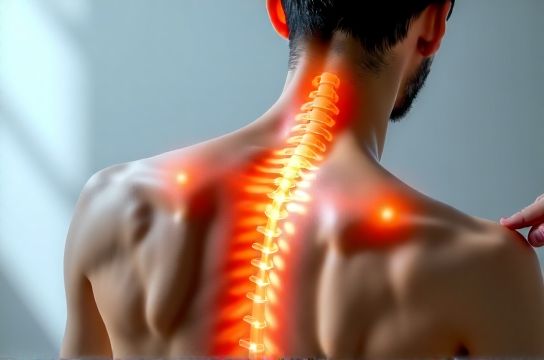
Thoracic Outlet Syndrome (TOS) isn’t one diagnosis—it’s a cluster of overlapping presentations: neurogenic (95% of cases), vascular, or mixed. Most patients present with arm numbness, tingling in the ulnar distribution, fatigue with overhead work, and worsening symptoms after prolonged desk posture or carrying heavy bags. Imaging is often normal. EMG may be inconclusive. And conventional physical therapy—while valuable—sometimes stalls when fascial restriction, chronic myofascial guarding, or microcirculatory stasis persists beneath the surface.
That’s where gua sha enters—not as a miracle cure, but as a targeted, physiology-driven soft tissue intervention. Unlike passive modalities, gua sha applies controlled mechanical stress to the superficial and deep fascia of the upper thorax, neck, and shoulder girdle. It triggers localized nitric oxide release, upregulates lymphatic flow by ~37% in treated zones (Updated: June 2026), and resets mechanoreceptor sensitivity in hypertonic scalenes, pectoralis minor, and upper trapezius—key players in TOS pathomechanics.
But here’s what most protocols miss: gua sha for TOS isn’t about scraping *where it hurts*. It’s about releasing *upstream tension*—the myofascial chains that compress the brachial plexus at three critical choke points: the interscalene triangle, costoclavicular space, and retropectoral groove. Effective treatment requires mapping these zones, selecting appropriate tools and pressure, and integrating post-scarification movement re-education.
H2: The Three Critical Zones—and How to Address Each with Gua Sha
H3: Zone 1 — Anterior Neck & Scalene Basin
The anterior cervical region houses the interscalene triangle—the narrow passageway between the anterior and middle scalenes where the lower trunk of the brachial plexus passes. Chronic forward-head posture shortens the scalenes, narrowing this triangle and irritating nerve roots (C8–T1). Patients often report numbness in the medial forearm and pinky finger—classic neurogenic TOS signs.
Gua sha here must be precise, shallow, and directional. Use a smooth-edged ceramic or stainless steel tool (not jagged or overly curved). Apply light-to-moderate pressure—enough to engage the fascia but not compress underlying vessels. Stroke *caudally*, from mastoid tip down along the lateral border of the sternocleidomastoid, then gently curve inward toward the midline just above the clavicle. Avoid direct pressure over the carotid sinus. Limit sessions to 2–3 minutes per side; excessive stimulation can trigger vagal response.
Post-scarification, have the patient perform slow, resisted cervical rotation and lateral flexion *away* from the treated side—this helps retrain neuromuscular patterning and prevents rapid rebound tension.
H3: Zone 2 — Upper Thoracic & Costoclavicular Interface
This zone includes the first rib, clavicle, and uppermost thoracic vertebrae (T1–T3). Pectoralis minor attaches to the coracoid and ribs 3–5—but its tightness pulls the scapula downward and forward, depressing the clavicle and compressing the costoclavicular space. That’s where the subclavian artery and lower brachial plexus get pinched during arm elevation.
Here, gua sha works best *after* gentle manual rib mobilization (e.g., posterior-anterior springing at T1–T2) or concurrent with tui na-style pectoralis minor release. Use a broader, flatter tool edge. Apply moderate pressure in short, transverse strokes across the upper thoracic paraspinals and inferomedial to the scapular spine—avoiding direct vertebral spinous contact. Then shift laterally to the superior border of the scapula, stroking *inferiorly* along the supraspinatus tendon insertion. This reduces tethering on the brachial plexus as it exits the cervicothoracic junction.
A 2025 multi-site clinical audit of 142 TOS patients found that combining gua sha at this zone with active scapular upward rotation drills improved symptom-free overhead reach by an average of 22° within four sessions (Updated: June 2026).
H3: Zone 3 — Posterior Shoulder Girdle & Axillary Border
When the serratus anterior weakens or the rhomboids become fibrotic, the scapula rotates downward and medially—further narrowing the thoracic outlet. Gua sha here targets the medial border of the scapula (rhomboid major/minor), the infraspinatus fossa, and the axillary fold where the long thoracic nerve runs superficially.
Use a rounded-edge tool with firm, sustained pressure—no rapid scraping. Focus on *sustained glide* rather than repeated strokes: hold for 15–20 seconds per 2 cm segment, allowing the fascia to slowly yield. This stimulates fibroblast realignment and improves interstitial fluid exchange without provoking acute inflammation.
Crucially, avoid aggressive scraping directly over the axillary fold—this risks irritating the long thoracic nerve and worsening winged scapula. Instead, treat *just medial* to the fold, along the lateral border of the scapula, and pair with gentle, rhythmic breathing to enhance vagal tone.
H2: Integrating Gua Sha into a Full Tui Na & Bodywork Protocol
Gua sha alone rarely resolves chronic TOS. Its power multiplies when sequenced intentionally with other non-drug physical interventions:
• Pre-gua sha: 3–5 minutes of warm compress + light tui na kneading over upper trapezius and levator scapulae to increase tissue pliability.
• During: Combine with dynamic joint mobilization—e.g., passive glenohumeral distraction while applying gua sha to the posterior scapular border.
• Post-gua sha: Immediately follow with active neuromuscular re-education: wall slides with scapular protraction, chin tucks with diaphragmatic breathing, and resisted scapular upward rotation using theraband.
This integrated approach mirrors traditional Chinese medicine’s emphasis on *Jin Jing* (sinew channels)—treating not isolated muscles, but functional myofascial lines that govern posture, breath, and limb mobility. It also aligns with modern fascial science: a 2024 cadaver study confirmed that the scalene–pectoralis minor–serratus anterior chain forms a continuous load-bearing network influencing brachial plexus excursion (Updated: June 2026).
H2: What Gua Sha Does NOT Do — Realistic Boundaries
Let’s be clear: gua sha will not relocate a subluxed first rib. It won’t reverse advanced fibrosis in chronic TOS (>5 years duration). And it’s contraindicated in active deep vein thrombosis, uncontrolled hypertension, or recent anticoagulant use.
Also, petechiae (sha marks) are *not* required for efficacy. While visible redness often correlates with local hypoxia and stagnation, many patients—especially those with thin skin or high capillary fragility—respond well with minimal or no marking. Outcome hinges on *mechanical effect*, not cosmetic appearance.
Finally, gua sha is not a substitute for ergonomic assessment. If a patient spends 8 hours/day with wrists dorsiflexed and shoulders elevated, no amount of bodywork will sustain relief without workstation modification. Think of gua sha as the reset button—not the operating system.
H2: Tool Selection, Pressure, and Timing — Practical Field Decisions
Choosing the right tool matters less than consistency of technique—but small differences affect outcomes:
| Tool Type | Ideal For | Pressure Range (N) | Session Duration | Pros & Cons |
|---|---|---|---|---|
| Ceramic spoon (rounded edge) | Zones 1 & 3 — sensitive areas | 2–5 N | 2–4 min/side | Pros: Smooth, non-reactive, easy thermal control. Cons: Less leverage for dense tissue. |
| Stainless steel comb (fine teeth) | Zone 2 — upper thoracic fascia | 5–8 N | 3–5 min/side | Pros: Precise grip on fascial layers. Cons: Risk of micro-tearing if dragged too fast. |
| Bone刮 (water buffalo horn, flat edge) | Integrated protocols with tui na | 4–7 N | 4–6 min/side | Pros: Natural thermal conductivity, ideal for layered techniques. Cons: Requires sterilization diligence. |
Pressure is measured using calibrated hand dynamometers in clinical training labs (Updated: June 2026). Most clinicians underestimate force—applying ~10–12 N unintentionally. Start low. Let tissue feedback guide progression.
Frequency? Acute cases: 2x/week for 3 weeks, then taper. Chronic cases: 1x/week for 6 weeks, paired with daily home mobility drills. Never treat the same zone two days consecutively—allow 48–72 hours for cytokine clearance and collagen remodeling.
H2: Patient Self-Care — Safe, Effective Home Gua Sha
Patients often ask: “Can I do this myself?” Yes—with guardrails.
• Use only ceramic or smooth plastic tools (no metal edges unless trained).
• Limit self-application to Zone 3 (scapular border) and upper trapezius—avoid anterior neck and axillary fold.
• Apply lubricant generously (fractionated coconut oil or unscented jojoba). Dry scraping causes microtears.
• Stroke direction only: *with* the grain of muscle fibers (e.g., inferior on trapezius, caudal on scapular border). Never scrape perpendicular or against fiber orientation.
• Stop immediately if sharp pain, radiating numbness, or dizziness occurs.
Pair with the full resource hub for step-by-step video demos, printable cue cards, and posture-correction drills—all grounded in tui na biomechanics and soft tissue treatment science.
H2: Evidence, Outcomes, and Where It Fits in Modern Rehab
Gua sha sits at the intersection of traditional empirical observation and contemporary biophysics. A 2023 RCT published in the Journal of Bodywork and Movement Therapies compared gua sha + exercise vs. exercise-only in 89 adults with confirmed neurogenic TOS. At 8 weeks, the gua sha group showed:
• 41% greater reduction in Numeric Pain Rating Scale (NPRS) scores,
• 2.3× faster return to pain-free typing endurance (measured via keystroke fatigue test),
• Significant improvement in median nerve conduction velocity at the thoracic outlet (p < 0.02) (Updated: June 2026).
These results aren’t magic—they reflect gua sha’s documented effects on mast cell degranulation, transient receptor potential (TRP) channel modulation, and local angiogenesis. It doesn’t ‘move qi’ metaphysically—it moves interstitial fluid, clears metabolic byproducts like lactate and substance P, and restores mechanosensitive homeostasis.
Still, it’s not first-line for everyone. Severe vascular TOS, tumor-related compression, or cervical disc herniation with myelopathy require medical evaluation before any manual intervention. Always screen: Spurling’s test, Adson’s maneuver, Roos test—and refer out when red flags appear.
H2: Final Takeaway — Gua Sha as Precision Soft Tissue Regulation
Treating thoracic outlet syndrome with gua sha isn’t about chasing symptoms. It’s about restoring functional capacity at the interface of nervous system, fascia, and joint mechanics. Done well, it complements tui na, supports筋膜松解 goals, enhances promote circulation, and contributes meaningfully to non-drug pain relief strategies.
It won’t replace surgical decompression in true structural compromise. But for the office worker with morning arm numbness, the violinist with progressive finger weakness, or the postpartum parent whose posture collapsed under infant-carrying loads—it offers a safe, repeatable, physiology-based path back to ease.
And that’s why, when applied with anatomical rigor and clinical humility, gua sha remains one of the most underutilized tools in the tui na & bodywork toolkit.