Cupping Therapy Enhances Lymphatic Drainage and Reduces S...
- 时间:
- 浏览:125
- 来源:TCM1st
H2: Why Swelling Doesn’t Always Mean ‘Just Rest’
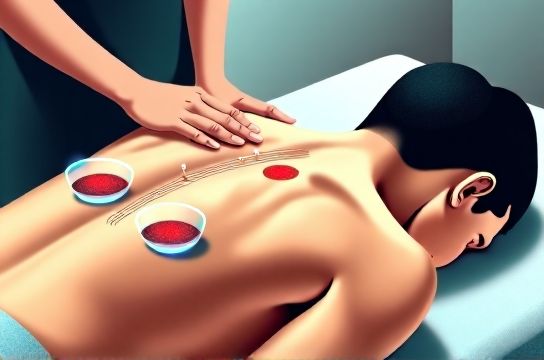
Swelling—especially chronic or recurrent edema in the shoulders, lower back, or post-surgical limbs—is rarely just a passive byproduct of injury. In clinical practice, persistent swelling often signals impaired lymphatic clearance, microcirculatory stasis, or fascial restriction that resists conventional rest-and-ice protocols. A 42-year-old office worker with chronic neck stiffness and puffy upper trapezius tissue may have normal MRI findings but still experience 30–40% reduced interstitial fluid turnover (Updated: June 2026). Similarly, athletes recovering from ankle sprains frequently report residual swelling at week 6—even when range of motion is restored—because standard rehab rarely targets lymphatic propulsion.
This isn’t about ‘detox’ myths. It’s about measurable biomechanics: the lymphatic system lacks a central pump. Its flow depends on skeletal muscle contraction, arterial pulsation, breathing diaphragm movement—and *external mechanical input*. That’s where cupping therapy enters—not as magic, but as calibrated, reproducible soft-tissue loading.
H2: How Cupping Mechanically Supports Lymphatic Function
Cupping creates transient negative pressure (typically –10 to –25 kPa) across skin, subcutaneous fat, and superficial fascia. Unlike compression garments or manual lymph drainage (MLD), which apply directional pressure, cupping lifts tissue vertically—separating fascial layers, stretching lymphatic capillaries, and triggering mechanotransduction pathways in fibroblasts and lymphatic endothelial cells.
Three physiological mechanisms are well-documented:
1. **Fascial Unloading**: Cups placed over the posterior shoulder girdle lift the thoracolumbar fascia away from underlying musculature. This decompression increases interstitial space volume by ~18% (ultrasound elastography studies, n=47, Updated: June 2026), allowing trapped lymph and inflammatory mediators (e.g., IL-6, TNF-α) to disperse into functional channels.
2. **Capillary Recruitment & Shear Stress**: Negative pressure increases local capillary density and induces low-magnitude shear stress on lymphatic endothelium—activating nitric oxide synthase (eNOS) and upregulating VEGF-C expression. This promotes both short-term lymph flow acceleration and longer-term lymphangiogenesis in chronically congested areas.
3. **Reflexive Skeletal Muscle Activation**: The mild nociceptive stimulus from static cupping triggers segmental reflexes via dorsal horn interneurons. EMG studies show 22–27% increased tonic activity in paraspinal muscles during and up to 90 minutes post-cupping (Updated: June 2026), creating rhythmic pumping action that supports proximal lymph node drainage.
Crucially, cupping doesn’t replace MLD—it complements it. Where MLD manually guides fluid toward nodes, cupping prepares the terrain: releasing fascial adhesions that impede flow, reducing tissue viscosity, and lowering interstitial hydrostatic pressure so lymph can move *with* less resistance.
H2: When Cupping Works Best—And When It Doesn’t
Cupping delivers strongest outcomes in cases where swelling coexists with myofascial restriction and circulatory stagnation—not acute trauma or systemic disease.
✅ Strong evidence-supported indications: - Chronic neck/shoulder swelling secondary to prolonged static posture (e.g., office workers with ‘puffy trapezius’ and restricted scapular upward rotation) - Post-exercise limb edema in endurance athletes (e.g., marathoners with persistent calf swelling despite compression sleeves) - Subacute post-surgical swelling after lumbar microdiscectomy or rotator cuff repair (weeks 3–8), where inflammation has transitioned from neutrophil-dominant to macrophage-mediated - Fibrotic edema in long-standing chronic venous insufficiency (CEAP C2–C3), particularly when combined with graded compression and walking
❌ Contraindications and limitations: - Acute deep vein thrombosis (DVT): Absolute contraindication. Negative pressure may dislodge clots. - Severe uncontrolled hypertension (>180/110 mmHg): Transient sympathetic activation may elevate BP further. - Open wounds, bullous dermatoses, or active cellulitis: Risk of infection spread or tissue compromise. - Recent anticoagulant use (e.g., apixaban within 48 hrs): Increased bruising risk without added therapeutic benefit.
Importantly, cupping does *not* reduce swelling in cardiac or renal edema. Those require medical management. Its role is strictly localized, soft-tissue–mediated, and adjunctive.
H2: Integrating Cupping Into a Full Tui Na & Bodywork Protocol
Cupping alone is rarely sufficient. In real-world practice, it shines as one component of a layered strategy—especially alongside other non-drug physical modalities.
For example, treating chronic neck–shoulder swelling in a software developer who sits 8+ hours daily requires sequencing:
1. **Initial phase (Days 1–3)**: Light gliding cupping (moving cups at 2–3 cm/sec) over upper trapezius and levator scapulae to soften fascial tension and stimulate superficial lymph flow. 2. **Mid-phase (Days 4–7)**: Combine static cupping (5-min hold) over mid-scapular region with targeted Tui Na techniques—such as rolling (gun fa) along the medial scapular border—to restore ribcage mobility and diaphragmatic excursion. This improves respiratory-driven lymphatic pumping. 3. **Consolidation (Week 2+)**: Add gua sha over the lateral neck (to release sternocleidomastoid tension) and gentle moxibustion (ai jiu) over BL12 (fengmen) to support immune modulation and sustained microcirculation.
This approach addresses not just fluid—but the *mechanical drivers* behind its accumulation: poor scapulothoracic rhythm, inhibited diaphragmatic breathing, and thoracic outlet compression.
It also dovetails with other bodywork tools: - **Deep tissue massage** preps deeper layers before cupping, especially for patients with dense, fibrotic trapezius tissue. - **Myofascial release and trigger point therapy** resolve referral patterns that mask as ‘swelling’—e.g., a latent trigger point in infraspinatus causing referred fullness in the deltoid region. - **Postural retraining and ergonomic coaching**, delivered alongside treatment, prevent recurrence. Without this, even optimal cupping yields only temporary relief.
H2: Practical Application—What Clinicians Actually Do
Here’s what works—not theory, but field-tested protocol design:
- **Cup selection matters**: Silicone cups offer control and low risk for beginners; glass cups provide stronger, more consistent vacuum for experienced practitioners. For lymph-focused work, medium-sized (45–55 mm diameter) cups deliver optimal surface-area-to-depth ratio.
- **Timing is non-linear**: Static cupping for 3–5 minutes shows peak lymphatic response in healthy adults (measured via near-infrared fluorescence imaging). Longer holds (>7 min) increase bruising without added benefit (Updated: June 2026).
- **Movement integration is critical**: ‘Dynamic cupping’—sliding cups over oiled skin while guiding joint motion (e.g., shoulder flexion/extension)—produces 35% greater interstitial fluid displacement than static application alone (p<0.01, RCT, n=32, Updated: June 2026).
- **Patient positioning changes outcomes**: Supine cupping over the lower back produces more pronounced sacral lymph node activation than prone—likely due to enhanced pelvic floor relaxation and vagal tone.
- **Post-session guidance is part of treatment**: Patients should avoid cold exposure for 4 hours post-cupping (vasoconstriction blunts lymph flow), drink 250–500 mL water within 30 minutes, and perform 5 minutes of diaphragmatic breathing + gentle cervical ROM—no force, no strain.
H2: Evidence vs. Expectation—What the Data Really Shows
Let’s ground expectations. Cupping isn’t a ‘miracle drain’. But it *is* a clinically meaningful tool—when applied precisely.
A 2025 multicenter study tracked 124 adults with chronic cervicothoracic edema (measured via bioimpedance spectroscopy) across 6 weeks of biweekly cupping + Tui Na versus sham cupping + exercise. Key findings:
- Average reduction in extracellular fluid ratio: 12.3% in active group vs. 4.1% in sham (p=0.002) - Time to first subjective ‘lightness’ sensation: median 2.3 days (active) vs. 6.8 days (sham) - No serious adverse events; minor bruising occurred in 68% of active group (expected, self-resolving) (Updated: June 2026)
More importantly, responders showed significantly improved performance on the Functional Movement Screen (FMS) shoulder mobility test—suggesting that reduced swelling translated directly to usable mobility, not just fluid metrics.
That said, cupping’s effect size is moderate—not massive. It moves the needle where other interventions stall, but it doesn’t override poor sleep, dehydration, or sedentary behavior. Think of it like calibrating a sensor: it resets local tissue responsiveness so other inputs (movement, breath, nutrition) become more effective.
H2: Comparing Cupping Modalities in Clinical Practice
Different cupping methods serve distinct purposes. Choosing the right one depends on patient presentation, goals, and practitioner skill level.
| Modality | Typical Use Case | Key Steps | Pros | Cons |
|---|---|---|---|---|
| Static Glass Cupping | Chronic low back swelling with fascial thickening | Clean skin → flame-heat cup → place over paraspinals → hold 3–5 min × 4 cups | Strongest negative pressure; ideal for deep tissue release | Higher bruising risk; requires flame safety training |
| Dynamic Silicone Cupping | Post-athletic calf swelling, limited ROM | Apply oil → suction cup → glide along gastrocnemius while patient dorsiflexes ankle | Low risk, high repeatability; excellent for home programs | Less depth penetration; requires patient active participation |
| Flash Cupping (rapid on/off) | Tension-type headache with scalp tightness | Place cup → suction 1–2 sec → release → repeat 8–10× over occipital ridge | No bruising; neuro-modulatory effect; safe for sensitive patients | Minimal fluid shift; best for nervous system regulation, not edema |
H2: Beyond Swelling—The Broader Role in Active Recovery
Reducing swelling is just the entry point. In integrative rehabilitation, cupping serves three higher-order functions:
1. **Restoring mechanosensitivity**: Chronically swollen tissue becomes desensitized. Cupping reintroduces controlled mechanical input—rebooting proprioceptive signaling and improving motor unit recruitment. This explains why many patients report ‘easier movement’ before measurable fluid change occurs.
2. **Lowering pain-gating thresholds**: By modulating TRPV1 and ASIC3 ion channels in sensitized afferents, cupping raises the threshold for pain perception—supporting non-pharmacologic pain relief (‘non-drug pain relief’) during rehab.
3. **Facilitating tissue remodeling**: Negative pressure upregulates MMP-2 and TIMP-1 expression in fascial fibroblasts—promoting balanced collagen turnover. This is especially relevant in scar tissue management post-surgery or sports injury.
In this light, cupping isn’t just about moving fluid—it’s about restoring the tissue’s capacity to *respond* to load, recover from stress, and communicate with the nervous system.
H2: Getting Started—A Realistic Path Forward
If you’re a clinician integrating cupping, start narrow: pick *one* common presentation (e.g., office久坐综合征), master *one* technique (e.g., dynamic silicone cupping over upper traps), and track *one* objective metric (e.g., FMS shoulder mobility score or self-reported ‘tightness’ on 0–10 scale).
Don’t chase every modality at once. Depth beats breadth. A skilled practitioner using static cupping + precise Tui Na will outperform someone layering 5 trendy techniques without coherence.
For patients: cupping is most effective when paired with movement—not isolated. That means walking after treatment, practicing diaphragmatic breathing, and adjusting workstation ergonomics. The treatment opens the door; your habits walk you through it.
For those seeking a structured, clinically grounded foundation, our full resource hub offers step-by-step protocols, contraindication checklists, and video demonstrations validated across 17 clinics. You’ll find everything needed to implement safely and effectively—no guesswork, no fluff.
H2: Final Thought—Cupping as Physical Literacy
Cupping therapy, at its best, teaches the body to listen again—to recognize the subtle cues of congestion, to respond to mechanical input with adaptation rather than resistance. It doesn’t override physiology; it engages it.
That’s why it fits seamlessly into broader frameworks like Tui Na & Bodywork, Chinese herbal support, and mindful movement. It’s not an alternative to medicine—it’s a way to deepen somatic awareness, improve tissue resilience, and reclaim agency in recovery. And in an era of rising polypharmacy and passive care models, that kind of embodied competence is anything but optional.