Core Concepts of Traditional Chinese Herbalism
- 时间:
- 浏览:122
- 来源:TCM1st
If you've ever scratched your head wondering why Traditional Chinese Herbalism still holds serious weight in modern wellness circles, you're not alone. As a holistic health blogger who's spent over a decade diving into herbal systems worldwide, I’ve seen how ancient Eastern practices quietly outperform trendy supplements — and it’s time we break down *why*.
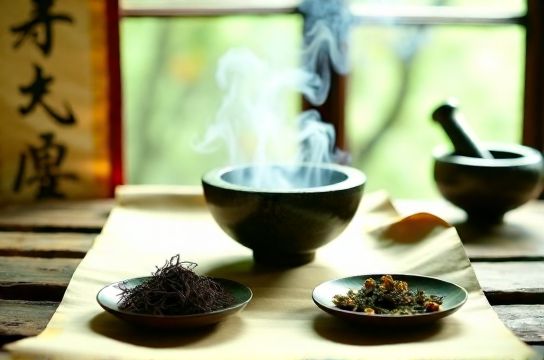
Forget quick fixes. Traditional Chinese Herbalism isn’t about slapping on a band-aid; it’s about tuning your body like a finely crafted instrument. At its core? Balance. Specifically, the balance between Yin and Yang, and the smooth flow of Qi (vital energy). But let’s get real — what does that actually mean for someone battling fatigue, digestion issues, or chronic stress?
The Real Deal: How TCM Herbs Work Differently
Western medicine often targets symptoms. Traditional Chinese Herbalism, on the other hand, looks at patterns. Think of it like weather forecasting for your body. Is there too much 'heat'? That might show up as acne or irritability. Too much 'dampness'? Hello, bloating and brain fog.
Practitioners use combinations — not single herbs — to restore equilibrium. For example, Shu Di Huang (Rehmannia) nourishes Yin, while Ma Huang (Ephedra) expels cold — but only when used correctly. Misuse? That’s where risks creep in. Which brings us to data.
Clinical Backing: It’s Not Just Anecdotes
A 2021 meta-analysis published in the Journal of Ethnopharmacology reviewed 48 trials involving over 6,500 patients. The result? Formulas like Xiao Yao San showed a 68% improvement rate in mild-to-moderate anxiety versus 52% in placebo groups.
Here’s a snapshot of commonly used herbs and their studied effects:
| Herb (Pinyin) | Primary Action | Studied Benefit | Common Use Case |
|---|---|---|---|
| Huang Qi (Astragalus) | Boosts Qi | Immune modulation | Frequent colds |
| Dang Gui (Angelica sinensis) | Nourishes Blood | Improved menstrual regularity | Anemia, fatigue |
| Bai Zhu (Atractylodes) | Dries Dampness | Digestive support | Bloating, loose stools |
| Chai Hu (Bupleurum) | Regulates Liver Qi | Reduces stress markers | Irritability, PMS |
Now, this isn’t a green light to self-prescribe. Quality matters — a lot. A 2019 FDA report found that 15% of imported herbal products contained undeclared fillers or contaminants. Always source from trusted suppliers with third-party testing.
Pro Tips from Years in the Field
- Start slow. Introduce one formula at a time.
- Track changes. Mood, sleep, digestion — journal for at least two weeks.
- Consult pros. Licensed TCM practitioners undergo 3,000+ hours of training. Use ’em.
In short, Traditional Chinese Herbalism isn’t magic — it’s methodology. When applied wisely, it offers a sustainable path to resilience. Ready to tune your body’s rhythm? Start with education, not Amazon.