Essential Tips for Using Chinese Herbs Guide Correctly at Home
- 时间:
- 浏览:140
- 来源:TCM1st
So you’ve picked up a few Chinese herbs or bought a starter kit online—maybe you’re into natural wellness, or perhaps your friend swore by Chinese herbs guide for better sleep and digestion. But here’s the real talk: using Chinese herbs at home isn’t just about boiling some roots and hoping for the best. Done wrong, they can do more harm than good. As someone who’s spent over a decade reviewing herbal practices and comparing clinical data, let me walk you through how to use them safely and effectively.
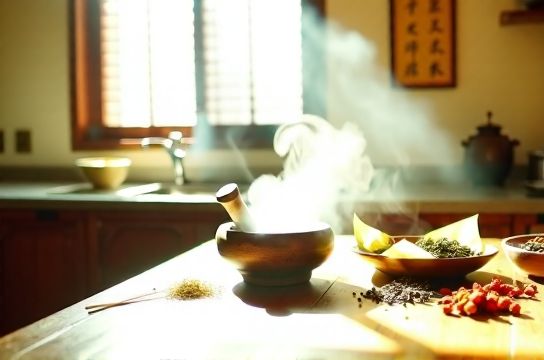
Why You Can’t Treat Chinese Herbs Like Tea Bags
Western herbalism often simplifies plant use—steep, sip, done. But Traditional Chinese Medicine (TCM) operates on pattern diagnosis. That means the same herb can be healing for one person and risky for another. Take ginger root (Sheng Jiang): great for cold-induced nausea, but not ideal if you have heat symptoms like inflammation or high blood pressure.
Top 5 Herbs Commonly Used at Home
Here are five widely available herbs with strong research backing—but only when used correctly:
| Herb (Pinyin) | Common Use | Dosage (Daily) | Caution |
|---|---|---|---|
| Huang Qi (Astragalus) | Immune support | 9–30g decocted | Avoid during fever or infection |
| Dang Gui (Angelica sinensis) | Women’s health | 6–12g | Not for pregnancy or heavy menstruation |
| Goji Berry (Gou Qi Zi) | Eye & liver health | 6–15g raw or steeped | May interact with blood thinners |
| Chai Hu (Bupleurum) | Stress & liver Qi stagnation | 3–9g | Long-term use may affect liver enzymes |
| Gan Cao (Licorice root) | Digestion & harmonizing formulas | 1.5–9g | Limit if hypertensive |
Data sourced from Chinese Pharmacopoeia (2020) and clinical reviews in the Journal of Ethnopharmacology.
Decoction vs. Powder: What Works Best at Home?
The gold standard? Decoction—simmering dried herbs for 30–60 minutes. It extracts active compounds like polysaccharides and saponins more effectively than powders or capsules. A 2022 study found decoctions of Huang Qi boosted immune markers 27% more than standardized extracts.
But let’s be real—nobody wants to spend an hour brewing herbs daily. That’s where granulated extracts come in. Reputable brands like Kangchen offer clinically tested granules that preserve potency. Just make sure they’re TCM-formulated, not isolated compounds.
Don’t Skip the “Why” Behind the Herb
One of the biggest mistakes? Treating symptoms in isolation. In TCM, fatigue isn’t just ‘low energy’—it could be Spleen Qi deficiency, Kidney Yang weakness, or Liver Blood insufficiency. Each needs a different approach. That’s why following a solid Chinese herbs guide based on patterns—not just symptoms—is crucial.
Final Safety Checklist
- ✔ Consult a licensed TCM practitioner before long-term use
- ✔ Buy from GMP-certified suppliers (look for COA labels)
- ✔ Avoid self-prescribing for chronic conditions
- ✔ Monitor for side effects: dizziness, rashes, digestive upset
Bottom line: Chinese herbs are powerful tools, but they’re not magic beans. Respect the tradition, understand your body type, and use them wisely.