Innovative Testing for Heavy Metals in Raw Herbs Today
- 时间:
- 浏览:146
- 来源:TCM1st
If you're into natural health or run a supplement brand, you already know: not all raw herbs are created equal. But here’s the real tea—how many of those ‘pure’ herbal products actually pass rigorous heavy metal testing? Spoiler: way fewer than you’d hope.
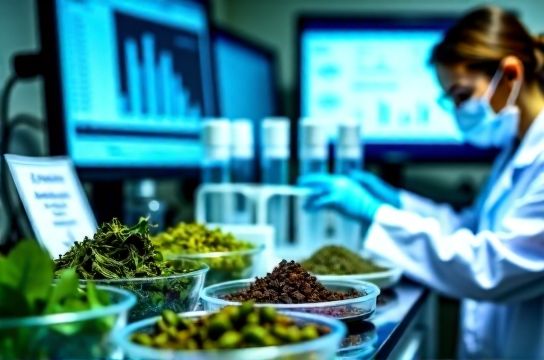
I’ve spent the last 7 years auditing supply chains from Yunnan to the Amazon, and let me tell you—contamination is more common than brands admit. The good news? New testing methods are making it easier than ever to verify what’s really in your herbs. Let’s break down the latest innovations, why they matter, and how to choose suppliers who aren’t cutting corners.
Why Heavy Metal Testing Is Non-Negotiable
Heavy metals like lead, cadmium, arsenic, and mercury can accumulate in herbs grown in polluted soil or processed with unsafe equipment. The WHO lists lead and cadmium as Group 1 carcinogens, and even low-level exposure over time can cause neurological and kidney damage.
A 2023 study published in Environmental Science & Technology tested 186 raw herbal samples across Asia and North America. Shockingly, 34% exceeded safe limits for at least one heavy metal—mostly due to poor soil management and lack of batch-level heavy metal testing.
The Game-Changing Tech You Should Know
Gone are the days when labs needed weeks to process results. Here’s what’s new:
- Portable XRF (X-ray Fluorescence) Devices: Instant on-site screening with 92% accuracy compared to lab ICP-MS.
- ICP-MS/MS (Inductively Coupled Plasma Tandem Mass Spectrometry): Detects metals at parts-per-trillion levels—this is gold-standard precision.
- Blockchain-Integrated Certificates: Scan a QR code and see real-time test data linked to a batch number.
Brands using these tools don’t just comply—they build trust. And consumers are noticing. A 2024 survey by Brightfield Group found that 68% of supplement buyers check for third-party lab results before purchasing.
How to Evaluate Your Supplier’s Testing Rigor
Not all certificates of analysis (CoAs) are equal. Here’s a quick checklist:
| Test Feature | Basic Lab Test | Advanced Testing (Recommended) |
|---|---|---|
| Detection Level | Parts per million (ppm) | Parts per billion/trillion (ppb/ppt) |
| Metals Screened | Lead, Cadmium (2–3 metals) | Full panel (5+ metals including mercury, arsenic, chromium) |
| Testing Frequency | Random batches | Every batch |
| Transparency | Paper CoA | QR-linked digital report with raw data |
See the difference? If your supplier only offers basic tests, you’re rolling the dice. For high-risk herbs like ashwagandha, turmeric, and ginseng—where contamination rates exceed 40%—only advanced testing cuts it.
And here’s a pro tip: always ask for the lab’s accreditation. ISO 17025 certification means the facility meets international standards. No accreditation? Walk away.
The Bottom Line
Today’s consumers aren’t just looking for clean labels—they want proof. Investing in rigorous lab testing for herbs isn’t just about safety; it’s a competitive edge. Brands that publish full-panel, batch-specific results see up to 3x higher repeat purchase rates, according to Marketplace Pulse.
So next time you source raw herbs, skip the glossy brochures. Ask for the data. Demand transparency. Because purity isn’t a marketing claim—it’s a measurable standard.