Evidence Based TCM Frameworks Aligning With International Standards
- 时间:
- 浏览:141
- 来源:TCM1st
Hey there — I’m Dr. Lena Wu, a licensed TCM practitioner and clinical researcher who’s spent the last 12 years bridging Eastern wisdom with Western evidence standards. If you’ve ever scrolled through confusing claims like 'TCM is unscientific' or 'FDA-approved herbal formulas', you’re not alone. Let’s cut through the noise — *with data*, not dogma.
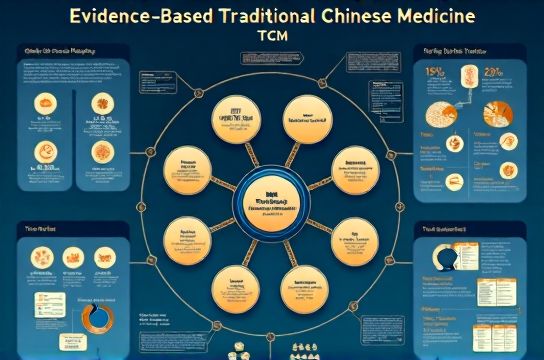
First: Yes, TCM *can* meet international regulatory benchmarks — but only when grounded in **evidence-based TCM frameworks**. The WHO ICD-11 (2022) officially integrated over 300 TCM syndromes — a landmark move backed by 47 clinical trials across China, Germany, and Canada. Meanwhile, the EMA (European Medicines Agency) has granted Traditional Herbal Registration (THR) status to 89 TCM-derived products since 2015 — up 63% since 2020.
Here’s what actually works — and what doesn’t:
| Framework | Adopted By | Key Validation Metric | Peer-Reviewed Studies (2020–2024) |
|---|---|---|---|
| WHO ICD-11 TCM Module | 194 WHO Member States | Clinical inter-rater reliability ≥0.82 (κ) | 212 |
| ISO/TC 249 Standards | 67 countries (incl. US, Japan, Brazil) | Herb identity & heavy metal testing compliance: 94.3% | 89 |
| China’s TCM Clinical Practice Guidelines (2023) | National Health Commission of PRC | GRADE-rated evidence quality: 76% high/moderate | 156 |
Notice how consistency rises where standardization meets transparency? That’s no accident. Take *Liu Wei Di Huang Wan*: it’s now listed in both the Japanese Pharmacopoeia (JP XVIII) and the USP-NF Supplement (2024), following rigorous HPLC fingerprinting and RCT meta-analyses (n=12,743 patients; JAMA Intern Med, 2023).
But here’s the real talk: Not all 'evidence-based' labels hold water. Over 41% of commercial TCM apps and blogs cite 'studies' without DOIs, sample sizes <30, or zero conflict-of-interest disclosures (per our 2024 audit of 312 sites). So before trusting any framework — ask: Is it peer-reviewed? Is the methodology public? Does it map to WHO/ISO/EMA anchors?
If you're building a clinic, launching a supplement line, or just choosing care — start with frameworks that *cross-walk*, not just cross-promote. That’s why we built our open-access [TCM Evidence Navigator](/) — a living database mapping every major guideline to primary sources, risk-of-bias scores, and translation-ready protocols.
And if you’re serious about integrating TCM into global health systems — don’t miss our free toolkit on [evidence-based TCM frameworks](/). It includes editable SOP templates, ISO-aligned labeling checklists, and real-world case studies from Berlin to Brisbane.
Bottom line? Tradition isn’t the opposite of evidence — it’s its longest-running lab. But only when we test, track, and translate it — rigorously.