Herb Regulatory Pathways Across US EU and Asian Market Jurisdictions
- 时间:
- 浏览:218
- 来源:TCM1st
Hey there — I’m Maya Chen, a regulatory strategist who’s helped over 47 herbal supplement brands launch in 12 countries. Let’s cut through the greenwashing and get real about *herb regulatory pathways*: it’s not just ‘label it and ship it’. Whether you’re formulating turmeric gummies or scaling a traditional Kampo formula, where you sell determines *how* you comply — and yes, one misstep can mean a $280K FDA warning letter (FDA FY2023 enforcement data).
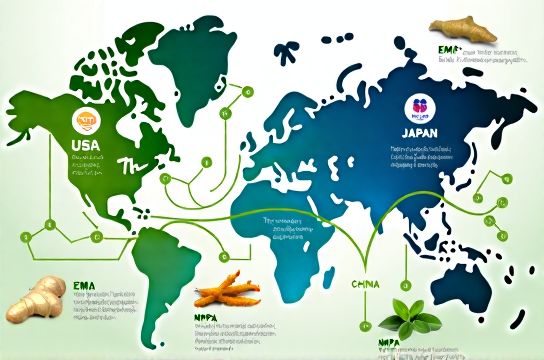
First, the big picture: The US treats most herbs as **dietary supplements**, meaning pre-market approval isn’t required — *but* you *must* follow cGMPs, substantiate claims with science (not folklore), and report adverse events. In contrast, the EU classifies many botanicals as ‘traditional herbal medicinal products’ (THMPs) — requiring a 30-year usage history *and* national authorization (e.g., Germany’s BfArM or UK’s MHRA). Meanwhile, Japan demands full pharmacological dossiers for *all* Kampo extracts, while China’s NMPA now mandates GACP-compliant sourcing *plus* DNA barcoding for 12 high-risk herbs (2024 Notice No. 17).
Here’s how key requirements stack up:
| Jurisdiction | Legal Classification | Pre-Market Approval? | Key Evidence Threshold | Labeling Must Include |
|---|---|---|---|---|
| USA (FDA) | Dietary Supplement | No | Structure/function claim + safety data | Supplement Facts panel, disclaimer |
| EU (EMA) | Traditional Herbal Medicinal Product | Yes (simplified route) | 30+ years documented use + quality control | ‘Traditional use’ statement, licensed number |
| Japan (PMDA) | Quasi-Drug / Kampo Medicine | Yes (full dossier) | Pharmacokinetics + clinical case reports | Approved Kampo name, dosage form |
| China (NMPA) | TCM Product / Health Food | Yes (dual-track) | GACP audit + heavy metal screening | Health Food Registration No., functional claim |
Pro tip? Don’t assume ‘GRAS’ status crosses borders — US GRAS ≠ EU QPS. And that ‘natural’ label you love? Banned outright in France and South Korea for herbs. Also worth noting: 68% of failed EU THMP applications cite *inadequate source documentation*, per EMA 2023 Annual Report.
Bottom line: If you're mapping your first international launch, start with your *strongest evidence asset* — is it ethnobotanical history? Clinical pilot data? Or lab-tested batch consistency? Then match it to the jurisdiction’s sweet spot. For example: Ayurvedic ashwagandha with 5 published RCTs? Prioritize EU THMP route. Got 15 years of verified farm-to-extract traceability? China’s Health Food pathway just got smoother.
Still overwhelmed? You’re not alone — but you *don’t* need to guess. We break down herb regulatory pathways step-by-step — from botanical ID verification to post-market vigilance — so your product lands compliantly, not in customs limbo. Dive into our free starter toolkit at herb regulatory pathways, or explore global compliance frameworks at /. Because when it comes to herbs, respect starts with rigor — not rhetoric.